
Background
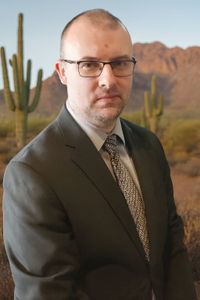
David Redkey was born in Bloomington, Indiana. He attended Sunnyslope High School, earned an associate degree from Glendale Community College in 2014, a bachelor's degree from Arizona State University in 2016, a master's degree from Arizona State University in 2019, and a graduate certificate from Northern Arizona University in 2023. His career experience includes working in advocacy.[1][2]
- Graduate:
- Arizona State University, 2019
- Associates:
- Glendale Community College, 2014
- Bachelor's:
- Arizona State University, 2016
- High school:
- Sunnyslope High School
Campaign money
- Raised
- $0
- From individuals
- $0
- From PACs & party
- $0
- Own money
- —
FEC filings through July 1, 2026.
View on FEC.gov(opens in new tab)In their own words
U.S. House District 3
David Redkey has not yet completed [the profile publisher]'s 2026 Candidate Connection survey.
Send a message to David Redkey asking him to fill out the survey.
If you are David Redkey, click here to fill out [the profile publisher]'s 2026 Candidate Connection survey.
Who fills out the candidate survey?
Any candidate running for elected office, at any level, can complete [the profile publisher]'s Candidate Survey. Completing the survey will update the candidate's [the profile publisher] profile, letting voters know who they are and what they stand for. More than 32,000 candidates have taken [the profile publisher]'s candidate survey since we launched it in 2015. Learn more about the survey here.
You can ask David Redkey to fill out this survey by using the button below or emailing davidredkey4congress@outlook.com.
U.S. House District 1
Who are you? Tell us about yourself.
I am David Wayne Redkey, a candidate for the U.S. House of Representatives in Arizona’s 1st Congressional District. I am a public-school teacher, small business owner, and disability advocate who is running for Congress to fight corruption, restore accountability in our courts, and strengthen the working and middle classes. My campaign — centered on what I call “Foundational Economics” — focuses on practical reforms that improve everyday economic security for families in Arizona.I earned an Associate of Arts (2014), concurrent B.A. degrees in English and Communication from Arizona State University (2016, summa cum laude), a Master of Education in Secondary Education (2019), and a Graduate Certificate in Rhetoric, Writing, and Digital Media Studies (2023). I have worked in education and public service and run TBI Writer LLC. My experience navigating the Arizona probate system after a debilitating injury led me to become an outspoken advocate for conservatorship reform and greater judicial transparency. I serve as director of Clean Up Our Courts Arizona and have made reforming private conservatorship practice a central element of my platform.Top priorities:End the private, for-profit conservatorship system and create stronger protections for vulnerable Arizonans; promote transparency and return misused funds to families.Advance “Foundational Economics” policies that strengthen wages, reduce predatory financial practices, and expand economic opportunity for working families.Increase accountability and transparency in government and the courts, including stronger oversight of fiduciaries and lawyers who serve vulnerable people.Support practical, classroom-focused education policies that improve outcomes for students and equip teachers which strengthen family choice without sacrificing the tools for public educators.Protect individual rights and access to essential healthcare while pursuing common-sense, evidence-based reforms -- such as universal healthcare.I live in Arizona with my wife, Agatha, and our son. I’m running to turn courtroom experience into common sense policy that protects families, restores trust, and creates opportunity across AZ-1.
Please list below 3 key messages of your campaign. What are the main points you want voters to remember about your goals for your time in office?
Foundational Economics: Our economy doesn’t grow from the top down — it grows from the middle out. I’m running to put working families first: the teachers, nurses, veterans, small business owners, and laborers who are the foundation of this country. For too long, billionaires and corporate lobbyists have rigged the system. I will fight for a living wage, real labor rights, quality public schools, and healthcare that doesn’t bankrupt you — because when the foundation is strong, America stands tall.Every child deserves a strong public school — no matter their zip code. I will fight to fund public schools equitably, end patchwork funding, and pay teachers what they’re worth. I support a statewide salary schedule so great educators don’t have to "school shop" for better pay. Education thrives on consistency — and good teachers should be able to stay and build strong schools in every Arizona community. I’ll also push to make trade schools and community colleges tuition-free, so every student has a pathway to success.Families should build wealth, not lose it to rigged systems. I’ll close tax loopholes for billionaires and corporations that offshore profits — and instead reward companies that hire American workers. I’ll expand the Child Tax Credit, the Earned Income Tax Credit, and help first-time homebuyers achieve the American Dream. But I’ll also fight to end abusive conservatorships and probate cartels that prey on families. If the state takes away a person’s rights, it should pay the cost — not the family’s estate. No one should be exploited just for growing old or surviving an injury.
What areas of public policy are you personally passionate about?
Foundational Economics means building from the bottom up. I’ll raise the minimum wage, secure paid family leave, and end worker exploitation. I’ll fully fund public schools, raise teacher pay, and make trade schools and community college tuition-free. I support Medicare-for-All or a strong public option, with caps on costs and no more medical bankruptcy. I’ll close billionaire tax loopholes, expand child and earned income tax credits, and make homeownership attainable. I’ll break up monopolies, protect pensions, and give working families power over how their tax dollars are spent. The middle and working class are the foundation — when they thrive, America stands strong.
Who do you look up to? Whose example would you like to follow, and why?
I look up to Carl Sagan. His ability to communicate science with wonder, humility, and moral clarity left an indelible mark on how I view the world. His words in Pale Blue Dot are forever etched in my memory: a reminder that, in the vastness of space, Earth is the only home we have — and we are the only stewards who can protect it. That perspective fuels my sense of urgency when it comes to climate, democracy, and the fragility of the systems we take for granted.
When I was a student at David Crockett Elementary School in Phoenix, I had the opportunity to attend a special event where Carl Sagan spoke to children from schools across the Valley. It was held at what was then known as America West Arena, now the PHX Arena.
He was answering questions from young students — making science feel accessible, alive, and deeply human. I was next in line to ask a question, but the session ended just before my turn. It’s a moment that still haunts me. I often think, “If I had just stepped forward sooner, I could have spoken to someone who shaped how millions of people understand our place in the universe.”
Even though I never got to speak with him, that experience shaped me. Sagan taught me that science is not just about facts, but about perspective — about recognizing how small we are, and how precious everything around us is. His example reminds me that public service, like science, must be rooted in truth, compassion, and a responsibility to future generations. I try to carry that spirit in everything I do.
We need more leaders with that kind of vision — who speak with clarity, act with humility, and always keep the big picture in mind. That is the kind of representative I aspire to be.
Is there a book, essay, film, or something else you would recommend to someone who wants to understand your political philosophy?
Yes. I often return to The Nicomachean Ethics by Aristotle. While it may seem like an unusual choice in today’s political climate, it contains timeless lessons about virtue, justice, and the role of character in leadership. Aristotle argued that ethics and politics are inseparable. Good governance begins with self-governance, and that true happiness comes from a life of virtue, not wealth, power, or pleasure.
Aristotle believed that leadership requires finding the right balance — the golden mean — between extremes. That principle resonates deeply with me, especially in today’s polarized environment. A representative must balance courage with humility, action with reflection, and loyalty to constituents with service to the common good. It is not enough to have good intentions. One must cultivate the habits and character traits that support fairness, wisdom, and civic responsibility.
The Nicomachean Ethics also teaches that we are social beings, that we achieve our highest potential not in isolation but through relationships, community, and shared purpose. I carry that belief into my campaign and my policy vision. My platform — Foundation Economics — is rooted in the idea that our democracy and economy must serve people first. It means investing in families, teachers, small businesses, and workers. We should not just try to stimulate GDP; we must foster a more just, thriving society.
So much of today’s politics rewards spectacle over substance, cruelty over compassion, and short-term gain over long-term good. But Aristotle reminds us that ethics is about action, habit, and character. A good society requires good leaders, and good leaders must strive toward the virtues that strengthen the community as a whole.
That is what I hope to bring to public service — not perfection, but a commitment to do right by the people, guided by principle, character, and justice.
What characteristics or principles are most important for an elected official?
Integrity, transparency, and a deep commitment to public service are non-negotiable traits for anyone elected to represent the people. An elected official must be someone who tells the truth even when it's inconvenient, listens before speaking, and never forgets who they work for. That means showing up; not just for press conferences or fundraisers; but for working families, teachers, small business owners, caregivers, veterans, and those who feel forgotten by the system. It also means publishing what you’re doing, being clear about how you vote, who you meet with, and why you make the decisions you do.
As a former public school teacher, I didn't have a team of lobbyists pushing my agenda and neither do most Arizonans. That's exactly who I fight for. The role of a representative is not to climb a ladder or build a brand. No, it's to strengthen the foundation of our country: the working and middle class.
I call this approach Foundation Economics — the idea that if we don't invest in the people who build, teach, care, grow, serve, and protect, then the entire system is vulnerable. As I often say: "It doesn’t matter if the house has the best roof in the world... If the foundation is crumbling, the house will fall."
My political compass points toward rebuilding that foundation with honesty, accountability, and an unwavering dedication to justice and equity for all.
What qualities do you possess that you believe would make you a successful officeholder?
I bring three essential qualities that would make me a successful officeholder: lived experience, relentless integrity, and a refusal to be silenced by power.
I am not a career politician. I’m a certified teacher, a husband, a father, and an advocate for families who have been harmed by the very systems meant to protect them. I’ve lived through the injustice of conservatorship abuse, seen family wealth drained by court-appointed professionals, and witnessed a legal system that rewards silence and punishes truth. But instead of walking away, I stood up. I’ve filed motions, exposed corruption, worked for reform, and launched a grassroots campaign to give people a voice. This isn’t a platform built on theory—it’s built on survival and service.
As a teacher, I know how to communicate with clarity and compassion. I’ve taught hundreds of students, helping them understand complex topics and build confidence in themselves. That same skill guides how I engage with voters and advocate for foundational economics, public education, and government transparency. I speak plainly and boldly, because the truth should never be buried under political spin. I know how to listen, how to lead, and how to stand my ground.
I am also resilient. For nearly two decades, I’ve challenged institutions with no political protection and no corporate funding behind me. I’ve stood alone in rooms where everyone else had power or paychecks at stake. I’ve taken that fight to the courts, the public, and the ballot. I’ve told my story to media, filed bar complaints, launched petitions, and used every tool available—from legal briefs to TikTok—to expose injustice.
I do not pretend to have all the answers. But I will never stop asking the right questions, and I will never forget who I work for: the people. I bring grit, clarity, and a heart grounded in public service. That’s what Congress needs now more than ever.
What do you believe are the core responsibilities for someone elected to this office?
The core responsibilities of a member of the U.S. House of Representatives begin with listening. Before proposing solutions, a representative must understand the challenges that individuals, families, and communities face each day. That means actively engaging with constituents, hosting town halls, returning calls and emails, and showing up in neighborhoods across the district. Being accessible is not optional; it is the job.
Next, a representative must write and support legislation that directly improves the lives of the people they serve. That includes fighting for fair wages, affordable healthcare, accessible housing, strong public schools, and safe communities. Legislation should reflect the needs and values of everyday Arizonans, not the demands of corporate donors or political elites. I believe in what I call Foundation Economics — strengthening the working and middle class by building policy from the bottom up, not the top down.
A representative must also secure federal funding and resources for their district. Whether it is infrastructure, broadband, water security, or educational investment, our district deserves its fair share, and someone who will fight to bring it home.
Oversight is another critical duty. Congress is entrusted with checking waste, fraud, abuse, and corruption. Oversight should be aggressive, honest, and based on facts, not political theater or headlines. This includes protecting the public interest in areas like veterans’ services, Social Security, Medicare, and federal contracts.
Finally, communication is key. A representative must explain votes, policy positions, and updates in clear, plain language. Constituents should never feel like they are being left in the dark. Transparency is how trust is earned.
Above all, this office is a service position. It is not about personal ambition, but about representing real people who need a government that sees them, hears them, and works for them.
What legacy would you like to leave?
I want to leave a legacy that proves ordinary people can do extraordinary things — not by playing the political game, but by standing up, telling the truth, and fighting for those too often ignored. My journey has not been easy. I suffered a traumatic brain injury in a devastating car accident and was placed into a conservatorship by the Maricopa County Probate Court. For years, I navigated a system designed to silence, discredit, and control people like me. But I refused to be defined by that experience. I used it to fuel my determination to fight back.
I came back. I earned multiple college degrees, including graduate-level education. I went from someone some dismissed as broken to someone who won awards in forensics, excelled in competitive speech and debate, published poetry, and became a certified teacher serving students from low-income communities. All the while, the court claimed I was “incapacitated” as probate professionals drained nearly a million dollars from my estate. I kept fighting—teaching, mentoring, advocating, and using every platform I could to speak for the voiceless. Through it all, I never forgot where I came from or who I fight for.
I hope my legacy is one of fearless advocacy and lasting reform. I want to be remembered as someone who exposed abuse in conservatorships and guardianships, who held corrupt actors accountable, and who helped protect what families have worked so hard to build. I want to help build a system where people are not punished for being vulnerable, where transparency is the standard, and where justice is not reserved for the wealthy.
I also want to be known for advancing Foundation Economics — an approach that centers teachers, workers, and small business owners over hedge funds and billionaires. I want young people and survivors to know: you can rise. You can fight back. And you can win. That is the legacy I intend to leave — not just in words, but in law, in lives, and in the future we build together.
What is the first historical event that happened in your lifetime that you remember? How old were you at the time?
The first major historical event I remember is the Gulf War in 1991. I was around 10 years old. I vividly recall watching news reports on television showing the launch of Operation Desert Storm. It was the first time I saw war footage in real time, with bright tracer fire lighting up the night sky over Baghdad. I didn’t fully understand the politics at that age, but I understood that something serious was happening — that people were in danger, and the whole world was watching.
What struck me most was how everyone around me reacted — teachers, neighbors, and relatives were glued to their TVs. It was the first moment I realized that events far away could impact people everywhere, including my own family and community. That early awareness shaped my sense of responsibility and curiosity about world events, justice, and the role of government in people’s lives.
What was your very first job? How long did you have it?
Customer Service, one year.
What is your favorite book? Why?
My favorite isn’t a single book, but the Lord of the Rings trilogy. It’s a timeless story of resilience, sacrifice, and the quiet strength of ordinary people facing overwhelming odds. It reminds me that even in the darkest times, courage and hope can carry us forward.
If you could be any fictional character, who would you want to be?
Frodo Baggins
What was the last song that got stuck in your head?
The last piece of music that got stuck in my head wasn’t a pop song or something from the radio — it was the “O Fortuna” movement from Carl Orff’s Carmina Burana. For me, this piece is more than just music. It is a thunderous, haunting reminder of fate, power, and the fragility of the human condition. The rising choral fury, the clash of voices and orchestration — it’s the sound of destiny colliding with defiance. And for me, it is always tied to the greatest King Arthur film ever made: Excalibur.
What is something that has been a struggle in your life?
One of the greatest struggles in my life began on January 25, 2007, when I was hit by a commercial tow truck that ran a red light. I suffered a traumatic brain injury, fractured ribs, a lacerated liver, bleeding around my heart, and a brain contusion that nearly ended my life. I spent weeks in recovery, fighting not just for my health but to reclaim my identity. But the physical trauma was only the beginning. After we settled the case, I was placed into a conservatorship — described to me as a “soft” or “light” conservatorship, allegedly to protect my assets. In truth, it became a legal cage.
For more than a decade, I lived under court control, labeled incapacitated by a system that refused to acknowledge reality. During that time, I earned multiple college degrees, became a certified teacher, published poetry, won awards in forensics and debate, and worked full time. Meanwhile, the Probate Court of Maricopa County allowed professionals to drain nearly a million dollars from my estate. These weren’t isolated mistakes. They were systematic extractions of generational wealth, protected by silence, privilege, and lack of oversight.
The deeper struggle was psychological. I was forced to prove, over and over, that I was capable — while others profited from the presumption that I wasn’t. I had to become my own advocate, researcher, and eventually a candidate for public office. Through it all, I discovered a strength I didn’t know I had and a mission I never expected.
My greatest struggle became my life’s purpose. I am running for Congress not because I always dreamed of it, but because the systems that failed me are still failing others. I want to build a world where no one is punished for being vulnerable. That struggle gave me the fire to fight for justice, transparency, and lasting change — and I carry it with me in everything I do.
What qualities does the U.S. House of Representatives possess that makes it unique as an institution?
The U.S. House of Representatives is the most responsive and people-centered body in the federal government. Its members face reelection every two years, which keeps them directly accountable to the communities they serve. That relatively short term length is not a weakness. It is a deliberate feature designed to ensure that representatives remain in close, continual contact with the people they represent. The House is often the first branch of government where public frustration or momentum becomes visible, making it both a pressure valve and a proving ground for national ideas.
The Constitution grants the House the sole authority to originate revenue bills, placing it at the center of all budget and tax legislation. That is not just a procedural rule. It reflects the principle that decisions about how public money is raised and spent should begin with the chamber closest to the people. The power of the purse is a foundational duty in our democracy and allows the House to lead on issues such as infrastructure, public education, health care, and veterans’ services.
The House also plays a critical role in government oversight. It has the power to investigate agencies, subpoena witnesses, and uncover waste, fraud, or abuse of power. This oversight authority must be exercised with integrity. It should serve the public interest, not political gamesmanship. The House also holds the unique power to impeach federal officials, making it a vital safeguard within the system of checks and balances.
Perhaps most importantly, the House should be the nation's listening post. Each district brings its own voice to the table, and every representative carries the experiences, needs, and aspirations of their community into the national conversation. At its best, the House does not simply pass laws. It amplifies the will of the people and ensures that government remains of, by, and for the people.
Do you believe that it's beneficial for representatives to have previous experience in government or politics?
Prior experience in government or politics can be helpful, but it is not a requirement to be an effective representative. What truly matters is whether a person understands the lives of everyday Americans, has the courage to speak up, and the integrity to fight for what is right even when it is difficult. I am a teacher and a community advocate. I have worked in classrooms, navigated public institutions, raised a family, and dealt with systems that far too often fail the people they are supposed to serve. That kind of real-world experience is exactly what Congress needs more of.
I did not come from a political dynasty or corporate boardroom. I come from a place where I had to fight just to be heard. My battle against corruption in Arizona’s probate and conservatorship system has exposed me to a level of misconduct and institutional failure that most people could never imagine — and many would prefer to ignore. I have seen firsthand how powerful interests use legal systems to silence dissent, drain family wealth, and avoid accountability. And I have refused to back down.
That experience has shaped not only my campaign, but my entire view of public service. I understand how government can feel distant or even dangerous to people who have been ignored, exploited, or betrayed by it. That is why I believe Congress should include more people who have lived through the consequences of public policy — not just those who have written it from a distance.
If elected, I will bring not just ideas, but lived experience. I will bring the voice of those who have been overlooked and the resolve of someone who knows exactly what it takes to challenge injustice. A background in politics may provide useful knowledge. But a background in truth-telling, perseverance, and public service is what our democracy needs right now.
What do you perceive to be the United States' greatest challenges as a nation over the next decade?
Over the next decade, the United States must confront a shrinking middle class, extreme wealth concentration, and rising costs that make housing, healthcare, and education increasingly out of reach. In Arizona and the Southwest, water scarcity and climate change threaten long-term stability. Nationally, artificial intelligence and digital disinformation are eroding public trust and attacking the foundations of democracy. We also need a border policy that is both humane and secure — one that respects asylum rights while ensuring safety and order. Above all, we must restore faith in our government by holding public officials, corporations, and institutions accountable. Without trust, we cannot tackle these challenges. With it, we can rebuild a stronger and more just future for all.
Do you believe that two years is the right term length for representatives?
Yes, I believe two years is the right term length for members of the U.S. House of Representatives. The structure of the House was intentionally designed to ensure that elected officials remain closely connected to the people they serve. Facing reelection every two years forces representatives to stay in touch with their constituents, remain accountable for their votes and actions, and respond to the changing needs and concerns of their communities.
Frequent elections may seem demanding, but they are a vital mechanism for preserving trust and democratic legitimacy. When people feel unheard or neglected by their elected officials, they should not have to wait six years to make a change. The two-year term ensures that citizens can regularly reassess whether their representative is truly working on their behalf.
However, I also believe Congress must adapt its calendar to reflect this responsibility more effectively. Too often, the legislative schedule prioritizes fundraising and partisan maneuvering over listening and legislating. I support implementing a more balanced and transparent congressional calendar that includes guaranteed constituent weeks built into each session. These dedicated weeks would ensure that representatives spend meaningful time in their districts, holding town halls, visiting schools and businesses, meeting with local leaders, and staying grounded in the realities of the people they serve.
Public service should not be a remote operation. It should be visible, local, and engaged. With a structured calendar and term limits on congressional leadership, the two-year term can be a tool for responsive government rather than an excuse for perpetual campaigning.
Ultimately, the right term length is one that puts voters first. A two-year cycle does exactly that by offering frequent opportunities for the people to evaluate their representation and make their voices heard.
What are your thoughts on term limits?
I support term limits for congressional leadership positions such as Speaker of the House, Majority and Minority Leaders, and committee chairs. No one should hold concentrated power in Washington for decades. Leadership must be responsive to change, open to new voices, and grounded in the needs of the people rather than insulated within a permanent political class.
As for term limits for members of Congress, I am open to a reasonable, well-structured system — but only if it is paired with strict lobbying bans and stronger institutional support. Without those safeguards, term limits can actually increase the influence of special interests. When elected officials are quickly cycled out without experienced, independent staff or proper training, corporate lobbyists and entrenched bureaucrats often step in to fill the gap. That is not reform. That is trading one problem for another.
To prevent this, we need nonpartisan congressional staff who serve the public good, not party agendas. We also need required ethics training, public transparency, and a lifetime ban on lobbying for former members of Congress. It is not enough to rotate people through office; we must also close the revolving door that lets them profit from their public service afterward.
More fundamentally, I believe Congress should be a reflection of the society upon which it is built. Right now, it too often reflects wealth, status, and connections instead of lived experience. We need more teachers, nurses, farmers, veterans, caregivers, and small business owners in Congress because the people who understand what it means to live paycheck to paycheck, raise a family, and deal with systems that don’t always work. A government truly of, by, and for the people requires lead
On the 2026 ballot
Links
Compiled from the candidate’s published profile as of September 30, 2026 and FEC filings.
Source(opens in new tab)