
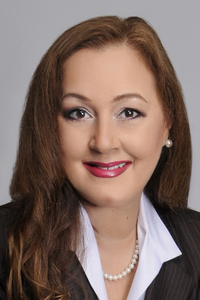
Background
Swaffar was born in New York, New York. She earned an associate degree from St. John's University in 1993 and attended Florida International University for business management. Her career experience includes working as the owner and president of Sunshine Insurance Associates. She has also worked in business banking, mortgages, corporate recruiting, accounting and finance, project management, and economic development. Swaffar has also worked as a medicare and health insurance expert.[1][2][3]
Swaffar has been affiliated with the following organizations:[2][3]
The Tower Club, member
South FL Puerto Rican Chamber of Commerce, member
Greater South FL Chamber of Commerce, member
Women's Prosperity Network, member
Elderly Service Resource Network ESRN, member
NAHU Palm Beach Chapter, member
Small Business Administration TED Women's Center, member
Republican National Hispanic Assembly, constitution member
National Federation of Republican Women, member
Coral Springs Parkland Republican Club, member
Boca Raton Regional Republican Club, member
Family Christian Coalition
Smart Florida
Puerto Rican Chamber of Commerce
Awards and honors
Swaffar has been awarded the following honors:[2]
Small Business Administration TED Women’s Center “Business Growth Award” May 2019
Monarch Care “Connector’s Award May 2019
Fort Lauderdale Finest Honoree, Cystic Fibrosis Foundation, June 2003
Winner of the 2001 VISTA Award, NAWBO
Winner of “In Focus Magazine’s” Technology Summit of the Americas, Year 2000 Latin Business & Technology Award.
Year 2000 Finalist - South Florida Business Journal “Up & Comers Awards.”
Community Service Awards from the Puerto Rican Chamber of Commerce of South Florida, December 1999, September 1999, December 1997, and July 1996
Finalist for the 1999 “Puerto Rican Woman of the Year” award being presented by the Greater Miami Chamber of Commerce in conjunction with the National Conference of Puerto Rican Women.
Presented with Manager Certificate for FIU’s “Foodrunners” which fed the homeless in Spring 1998.
Won 2nd place in FIU’s Business Plan Competition in April 1998
Presented with an award in October 1995 from the Caribbean Chamber of Commerce.
- Associates:
- St. John's University, 1993
Campaign themes
Darlene Cerezo Swaffar did not complete [the profile publisher]'s 2026 Candidate Connection survey.
Who are you? Tell us about yourself.
Swaffar is a successful business owner who can bring practical experience to create jobs and opportunity for our community.
An expert in Medicare, Health Insurance, Banking, Mortgages, Recruiting, Project Management and Entrepreneurship, Darlene is ready to implement real strategies to improve the lives of Florida District 23 Residents.
As a candidate who believes in Law and Order and Fiscal Responsibility, Swaffar feels that our nation needs to focus on: Border Security, Economic Development, and Job Creation; Controlling Inflation; Ending Drug and Sex Trafficking; Revamping Education for our Children; Providing Solutions to improve Medicare and Social Security to prevent insolvency; and providing more support for our Veterans.
Why Send Darlene to DC?
Drug-infested Brooklyn, NY in the early 1980's was a tough place to grow up, but Darlene Swaffar is thankful for the experience. Navigating the mean streets of the notorious ‘hood taught the young woman how to survive and thrive through the use of critical thinking and compassion for others. Today, Swaffar uses those skills like a superpower.
Darlene Swaffar is not a Politician. If fact, she is not an establishment pick. Swaffar has lived and worked in South Florida as an entrepreneur for the past 30 years, and she understands what every day Americans have to go through in their efforts to raise their children in safe communities while trying to earn a living. Now, she’s determined to do whatever she can to help.
Please list below 3 key messages of your campaign. What are the main points you want voters to remember about your goals for your time in office?
Border Security
1. Enhance Border Security and Enforcement:
Increase funding for border security measures, including the construction of physical barriers, deployment of advanced surveillance technology, and hiring additional Border Patrol agents.
2. Reform Immigration Laws and Policies:
Advocate for comprehensive immigration reform that addresses the root causes of illegal immigration while providing a pathway to legal status for documented immigrants already residing in the United States.
3. Combat Human Trafficking and Smuggling:
Increase resources for law enforcement agencies tasked with combating human trafficking and smuggling operations along the border.Improving Economy while Reducing Inflation
1. Promote Fiscal Responsibility and Limited Government Intervention:
Implement targeted spending cuts in non-essential areas of government expenditures.
Roll back unnecessary regulations that stifle innovation and competition.
Simplify the tax code by lowering tax rates and eliminating loopholes.
2. Strengthen Monetary Policy:
Advocate for a rules-based approach to monetary policy.
Encourage the Fed to gradually normalize interest rates to prevent excessive inflationary pressures.
3. Promote Free Market Solutions and Entrepreneurship:
Support initiatives to remove barriers to entry for entrepreneurs and small businesses.
Advocate for the negotiation of free trade agreements.Protect Medicare and Social Security:
Eliminate Penalties for Late Enrollment (Medicare Part B and Part D):
Issue: The current penalty structure disproportionately affects individuals who choose to delay Medicare enrollment, particularly those working with concierge doctors or those not requiring medication.
Revise IRMMA Income Adjustment (Medicare Part B and Part D Premiums):
Issue: The Income-Related Monthly Adjustment Amount (IRMMA) creates financial barriers for retirees, discouraging them from transitioning to Medicare and opting to stay on their Group Insurance.
Reducing Retirement Income Taxes and Enhancing Retirement Security
I propose a comprehensive plan to raise the benchmark income to $92,120.
What areas of public policy are you personally passionate about?
My focus is on less Government over-reach and protecting our God Given Freedoms
Some key points on our Platform include:
Securing the Border and tightening Immigration Policy
Restoring our Energy Independence
Ending the weaponization of our Government against American Citizens
Protecting and honoring our Veterans
Updating the Benchmark Income for Taxing Retirees
Medicare Reform to improve Solvency
Ending Trafficking - Sex trafficking and drug trafficking
Reducing the undue burden of double and triple taxation of American Citizens
Education Reform for our Children to equip them with a better future
Strengthening the American Family and providing programs to support parenting.
Environmental Stewardship and Organic Farming
Who do you look up to? Whose example would you like to follow, and why?
I look up to many leaders of faith in my community for leading Godly lives focusing on serving others. They do it selflessly. I also look up to retired Congressman Bob McEwen, Byron Donalds, Matt Gaetz, Rick Scott and other Conservative Leaders of Congress.
Is there a book, essay, film, or something else you would recommend to someone who wants to understand your political philosophy?
For understanding my political philosophy, I recommend exploring a range of resources:
Books: Consider reading works by authors such as William J. Federer, David Barton, Tim Barton, Michael Solomon, Congressman Bob McEwen, and Kris Anne Hall. These authors offer insights into conservative principles, constitutional history, and the importance of faith in governance.
Publications: Explore materials from institutions like Hillsdale College and The Heritage Foundation, which provide in-depth analyses of conservative values, limited government, and individual liberty. Additionally, resources from Prager University offer concise explanations of conservative perspectives on various political and social issues.
Bible: For a foundational understanding of moral and ethical principles underlying my political philosophy, the Bible serves as a fundamental guide. Its teachings on justice, righteousness, and the dignity of individuals inform my beliefs in governance and society.
By delving into these diverse sources, one can gain a comprehensive understanding of my political philosophy, rooted in conservative values, constitutional principles, and a deep appreciation for moral and ethical standards.
What characteristics or principles are most important for an elected official?
Integrity, honor, and statesmanship are indispensable traits for any elected official, irrespective of the political system. Integrity entails honesty, transparency, and adherence to moral and ethical principles. Elected officials must be honest in their dealings, truthful with their constituents, and transparent in their actions. Without integrity, trust between the public and the government erodes, leading to a breakdown in governance and accountability.
Honor is another vital characteristic, encompassing dignity, respect, and a commitment to serving the greater good. Honorable officials prioritize the needs of their constituents over personal gain, maintaining a sense of dignity in their conduct and interactions. They uphold the principles of fairness and justice, treating all individuals with respect regardless of their background or status. Honor inspires confidence in leadership and fosters a sense of unity and cooperation within society.
Statesmanship transcends political boundaries; it involves visionary leadership, diplomacy, and the ability to navigate complex challenges for the betterment of society. A statesman or stateswoman exhibits wisdom, foresight, and a deep understanding of the broader implications of their decisions. They prioritize long-term goals over short-term gains, working towards sustainable solutions that benefit current and future generations. Statesmanship requires the courage to make difficult choices, the humility to admit mistakes, and the resilience to persevere in the face of adversity.
In essence, elected officials must embody integrity, honor, and statesmanship to effectively serve their constituents and uphold ethical governance principles. These characteristics form the foundation of responsible leadership, fostering trust, unity, and progress within society. As stewards of public trust, elected officials have a profound responsibility to uphold these principles and act in the best interests of the people they represent.
What qualities do you possess that you believe would make you a successful officeholder?
I believe that several qualities I possess would contribute to my success as an officeholder. Foremost among these are integrity, honor, hard work, and passion. My commitment to upholding principles of integrity and honor guides my actions and decision-making, ensuring that I always prioritize the best interests of those I serve.
Additionally, my strong work ethic and dedication to hard work have been instrumental in achieving my goals and overcoming challenges. I approach every task with diligence and perseverance, striving for excellence in all endeavors.
Moreover, my passion for public service and making a positive impact drives me to advocate tirelessly on behalf of my constituents. I am deeply invested in addressing the needs of my community and working towards meaningful solutions to improve their lives.
Furthermore, as a descendant of ancestors who fought in the Revolutionary War and the War of 1812, I carry with me a sense of duty and honor to uphold the principles of liberty and democracy that they fought to defend. Their legacy inspires me to honor their sacrifices by serving my country and community with dedication and distinction.
Overall, I believe that my combination of integrity, honor, hard work, passion, and respect for my heritage equips me with the qualities necessary to be a successful and effective officeholder.
What do you believe are the core responsibilities for someone elected to this office?
Members of the US House of Representatives shoulder crucial responsibilities:
Representation: They represent constituents' interests, address concerns, and advocate in Congress.
Legislation: Draft, debate, and pass laws covering various issues, from healthcare to national security.
Oversight: Monitor executive branch actions, hold hearings, and ensure agencies comply with laws.
Constituent Services: Assist constituents with navigating federal agencies and addressing individual issues.
Budget and Appropriations: Play a role in budgeting, allocating federal funds, and setting spending priorities.
Public Outreach: Engage in public communication, hold town hall meetings, and use social media to inform constituents.
In summary, members of the US House of Representatives play a multifaceted role in representing their constituents, crafting legislation, overseeing the government, providing constituent services, managing the federal budget, and communicating with the public. These responsibilities are essential for ensuring effective governance, promoting democratic values, and serving the interests of the American people.
What legacy would you like to leave?
The legacy I aspire to leave is one of creating a more secure and free future for my son and future generations. I envision a legacy defined by my unwavering commitment to upholding principles of integrity, honor, and freedom. Through my actions and service, I aim to contribute to the advancement of policies and initiatives that promote prosperity, opportunity, and individual liberty for all. I aspire to leave behind a world where my son and future generations can thrive, unencumbered by the challenges and limitations of the past. By championing the values of freedom, justice, and equality, I hope to leave a lasting impact that inspires others to continue the fight for a better tomorrow.
What is the first historical event that happened in your lifetime that you remember? How old were you at the time?
Dr. Martin Luther King, Jr. speech "I had a dream" made a very big impact in my life. Hearing this speech brought tears to my eyes as a little girl and forever shaped the ideals of wanting a future where peace was at the forefront.
What was your very first job? How long did you have it?
My very first job was at 14 years old, working during the summer for the School Board of New York City. I served as a clerk, and the money I earned went towards purchasing my school clothes. This early experience instilled in me the value of hard work and its direct correlation to earning rewards. I held this job for the duration of the summer, and it provided me with invaluable lessons that have stayed with me throughout my life.
What is your favorite book? Why?
Positive Thinker by Alice Potter. It changed my life and made me understand how thoughts can change perspective as well as attitude.
What was the last song that got stuck in your head?
"Goodness of God" by CeCe Winans
What is something that has been a struggle in your life?
One of the struggles in my life has been overcoming adversity during my early years. Growing up in drug-infested Brooklyn, NY, particularly in the challenging environment of the early 1980s, presented significant obstacles. However, I am grateful for the experiences I endured during that time. Navigating the mean streets of the notorious neighborhood taught me invaluable lessons in survival and resilience. It forced me to develop critical thinking skills and instilled in me a deep sense of compassion for others facing similar challenges. Today, I draw upon those experiences as if they were a superpower, utilizing them to navigate life's obstacles with determination and empathy.
What qualities does the U.S. House of Representatives possess that makes it unique as an institution?
The U.S. House of Representatives possesses several qualities that make it unique as an institution:
Representation: As the lower house of Congress, the House of Representatives represents the interests of the American people at the federal level. Its members are elected to two-year terms and directly reflect the demographic diversity and geographic distribution of the nation.
Proportional Representation: The House is designed to provide proportional representation based on population, with each state allocated a number of seats based on its population size. This ensures that populous states have a greater voice in the legislative process while still providing representation for smaller states.
Origination of Revenue Bills: The House has the exclusive authority to originate revenue bills, including taxation and government spending measures. This power reflects the House's role as the chamber closest to the people and underscores its responsibility for fiscal matters.
Committee System: The House operates through a committee system, where legislation is first considered and debated in specialized committees before being brought to the full chamber for a vote. This allows for in-depth examination of policy issues and expertise-driven decision-making.
Majority Rule: The House operates on the principle of majority rule, where decisions are made based on the preferences of the majority party. This ensures efficiency in legislative proceedings but also requires cooperation and negotiation between parties to pass legislation.
Election Every Two Years: Unlike the Senate, where members serve six-year terms, members of the House are elected every two years. This frequent turnover reflects the Founders' intention for the House to be more responsive to the changing needs and preferences of the electorate.
Close Connection to Constituents: Due to the shorter terms and smaller constituencies, members of the House often have closer connections to their constituents.
Do you believe that it's beneficial for representatives to have previous experience in government or politics?
No, I believe Members of Congress should reflect their population and come from diverse professional backgrounds. While previous experience in government or politics can be beneficial in some cases, it should not be a prerequisite for serving in Congress. Entrepreneurs and small business owners, for example, bring valuable real-world experience and practical insight to the legislative process. Their common sense knowledge can offer innovative solutions to complex issues and ensure that the needs of everyday Americans are effectively addressed in Congress. By promoting diversity of experience and expertise among representatives, we can foster a more dynamic and responsive legislative body that better represents the interests of the people.
What do you perceive to be the United States' greatest challenges as a nation over the next decade?
Over the next decade, the United States faces multifaceted challenges:
Economic Recovery and Stability: Post-pandemic economic revival demands attention to job creation, fiscal policies, and income inequality.
Healthcare Access and Public Health Preparedness: Strengthening healthcare systems and ensuring access to affordable healthcare remain paramount amid ongoing health crises.
Technological Advancement and Cybersecurity: Balancing technological innovation with cybersecurity measures is critical to safeguarding national interests.
Global Competitiveness and Geopolitical Shifts: Navigating geopolitical changes while maintaining global competitiveness requires strategic diplomacy and economic resilience.
Democracy and Governance: Upholding democratic values, combatting political polarization, and restoring public trust in governance are pressing concerns.
Infrastructure Modernization and Resilience: Investing in resilient infrastructure and addressing environmental challenges while supporting organic farming and environmental stewardship.
Sustainable Agriculture: Promoting sustainable agricultural practices, including organic farming and environmental stewardship, is crucial for food security and environmental preservation.
Conservation and Preservation: Enhancing conservation efforts, preserving biodiversity, and mitigating environmental degradation are imperative for long-term sustainability.
Innovation and Technology: Driving innovation in clean energy technologies and fostering green initiatives are essential for mitigating climate change and reducing environmental impact.
Addressing these challenges demands collaborative efforts, innovative solutions, and a commitment to sustainable practices to ensure a prosperous and resilient future for all Americans.
Do you believe that two years is the right term length for representatives?
Yes
What are your thoughts on term limits?
My stance on term limits is nuanced:
Support for Term Limits: I believe in the importance of term limits to prevent the entrenchment of career politicians and promote fresh perspectives in government. Term limits help maintain accountability and prevent abuses of power.
Concerns about Loss of Experience and Leadership: However, I acknowledge the concern that term limits could lead to the loss of experienced legislators who provide valuable mentorship and leadership. Senior legislators often possess deep institutional knowledge and expertise that benefit the legislative process.
Balancing Act: Therefore, any implementation of term limits should strike a balance between ensuring turnover and preserving institutional knowledge. This could involve staggered term limits or other mechanisms to allow for the gradual transition of leadership while still maintaining continuity and stability in governance.
In essence, while I support the concept of term limits to promote accountability and prevent political stagnation, I recognize the need to address concerns about the potential loss of experienced leadership. Finding a balanced approach that preserves both accountability and institutional knowledge is essential.
Is there a particular representative, past or present, whom you want to model yourself after?
In addition to figures like Ronald Reagan, Barry Goldwater, and Newt Gingrich, I also look to contemporary Conservative Republicans in Congress for inspiration. Representatives such as Bob McEwen, Byron Donalds, and Marsha Blackburn, along with other Conservative women in Congress, have demonstrated exceptional leadership and dedication to conservative principles.
Bob McEwen, known for his strong advocacy for limited government and fiscal responsibility, has been a stalwart voice for conservative values throughout his tenure in Congress. Byron Donalds, a rising star in the Republican Party, has championed conservative policies that promote economic growth and individual freedom.
Marsha Blackburn, a steadfast defender of conservative values, has been a leading voice on issues such as pro-life advocacy, border security, and healthcare reform. Additionally, other Conservative women in Congress, including Elise Stefanik, Nancy Mace, and others, have made significant contributions to advancing conservative ideals and principles.
I admire their unwavering commitment to conservative values, their dedication to serving their constituents, and their willingness to stand firm in defense of our Constitution and freedoms. As I pursue a career in public service, I seek to emulate their integrity, leadership, and passion for making a positive difference in our nation.
Both sitting representatives and candidates for office hear many personal stories from the residents of their district. Is there a story that you’ve heard that you found particularly touching, memorable, or impactful?
Throughout my interactions with constituents, one story stands out for its profound impact. While knocking on over 10,000 doors, I encountered numerous individuals grappling with the economic challenges plaguing our district. Many shared their struggles with the soaring cost of goods, rising property taxes, and escalating property insurance rates. These financial burdens weigh heavily on families, threatening their ability to make ends meet and maintain their quality of life.
As a successful business owner and Medicare expert, I've had the privilege of working closely with seniors for over 13 years. Their stories and concerns have deeply influenced my approach to policymaking. Hearing firsthand about their worries regarding Medicare choices and the implications of income tax benchmarks has motivated me to develop tailored solutions as part of my platform.
These personal encounters serve as a poignant reminder of the real-life impact of policy decisions on individuals and families in our district. Their stories fuel my determination to advocate tirelessly on their behalf, addressing their needs and championing solutions that improve their lives.
Do you believe that compromise is necessary or desirable for policymaking?
I believe in collaboration and working with my colleagues on the Hill to achieve meaningful policy outcomes. However, there are certain principles and values that are non-negotiable. When it comes to representing the interests of the American people and protecting our God-given rights, there can be no room for compromise. These are foundational principles that must be upheld without exception. While I am open to finding common ground and seeking bipartisan solutions on many issues, there are areas where compromising on fundamental rights and freedoms is simply not an option. In those cases, I will stand firm in defense of our liberties and ensure that the voices of the American people are heard loud and clear.
The Constitution says that all bills for raising revenue must originate in the House. What role would this power play in your priorities if elected?
The Constitution's provision stipulating that all bills for raising revenue must originate in the House holds significant importance for me if elected. This power underscores the House's responsibility in fiscal matters and presents a critical opportunity to enact meaningful change.
Congress's history of lacking checks and balances regarding spending is deeply concerning. Taxpayer dollars have been misappropriated, funding endless conflicts and wars that do not benefit Americans. This irresponsible behavior highlights the urgent need for reform and oversight.
If elected, I would prioritize restoring accountability and responsibility in fiscal policy. I would advocate for prudent spending measures, transparency in budget allocation, and rigorous oversight to ensure taxpayer funds are used effectively and responsibly. Additionally, I would work to implement safeguards to prevent wasteful spending and prioritize investments that directly benefit American citizens and communities.
By upholding the constitutional mandate for revenue origination in the House, I am committed to bringing about the necessary overhaul in Congress's approach to fiscal matters, ensuring that taxpayer dollars are utilized responsibly and in the best interests of the American people.
How should the U.S. House use its investigative powers?
The U.S. House must wield its investigative powers with a renewed focus on rooting out corruption and holding government officials accountable. Recent events have highlighted concerning trends, including overreach by district attorneys, judges, and the judicial system, as well as corruption within agencies like the FBI and CIA.
Congress must prioritize investigations into allegations of corruption and collusion with foreign governments. This includes scrutinizing money funneling operations and holding accountable any individuals involved in illicit activities that compromise the integrity of our government.
Additionally, Congress has a duty to address insider trading among its members and take decisive action to remove those implicated in unethical behavior. Transparency and accountability are paramount to maintaining public trust and ensuring the integrity of our democratic institutions.
By utilizing its investigative powers effectively, the U.S. House can uncover wrongdoing, hold perpetrators accountable, and restore faith in our government. It's imperative that Congress acts swiftly and decisively to address these pressing issues and uphold the principles of integrity and accountability in public service.
What organizations or individuals have endorsed your campaign?
Bob McEwen, Mayor of Deltona Santiago Avila, Jr., Peter Ticktin, Esq., and Latinos for America First, and more forthcoming.
What committees interest you?
I would be keen on serving on any of the following Committees:
Healthcare and Medicare Oversight: Given my interest in healthcare policy and ensuring access to quality care for all Americans, I am particularly drawn to Committees that oversee healthcare and Medicare. This includes the House Committee on Energy and Commerce and its Subcommittee on Health, as well as the House Committee on Ways and Means, which handles Medicare policy.
Budgeting and Fiscal Responsibility: With a commitment to fiscal responsibility and sound budgeting practices, I am interested in serving on the House Committee on the Budget. This Committee plays a crucial role in setting spending priorities and shaping fiscal policy for the nation.
Family and Child Welfare: Recognizing the importance of supporting families and children, I am interested in Committees focused on family and child welfare issues. This includes the House Committee on Ways and Means and its Subcommittee on Worker and Family Support, which addresses childcare, welfare, and family assistance programs.
Protecting Freedoms and Civil Liberties: As a staunch advocate for individual freedoms and constitutional rights, I am interested in Committees that address civil liberties and government accountability. This could involve serving on the House Committee on the Judiciary, which oversees civil rights and constitutional law, or participating in the Freedom Caucus, a group dedicated to promoting limited government and protecting individual freedoms within the House of Representatives.
What are your views on financial transparency and government accountability?
Views on financial transparency and government accountability are critical to my political philosophy:
Promoting Fiscal Responsibility and Limited Government Intervention: Transparency in government spending is essential. Implementing targeted spending cuts in non-essential areas and reducing subsidies for industries that can thrive without government support fosters accountability. Simplifying the tax code ensures transparency and allows individuals and businesses to better understand their financial obligations.
Strengthening Monetary Policy: Advocating for a rules-based approach to monetary policy ensures transparency in decision-making. Regular audits of the Federal Reserve and greater oversight contribute to accountability. Gradually normalizing interest rates and adopting transparent inflation-targeting frameworks help maintain stability while preventing excessive inflation.
Promoting Free Market Solutions and Entrepreneurship: Removing barriers to entry for entrepreneurs and small businesses enhances transparency and fosters competition. Negotiating free trade agreements with provisions to protect American workers ensures fairness and transparency in international trade. Supporting policies that encourage investment in innovation and research promotes economic growth and job creation while ensuring transparency in government initiatives.
Overall, financial trans
On the 2026 ballot
Links
- Personal X(opens in new tab)
- Campaign tiktok(opens in new tab)
- Campaign website(opens in new tab)
- Personal website(opens in new tab)
- Campaign facebook(opens in new tab)
- Personal facebook(opens in new tab)
- Personal linkedin(opens in new tab)
- Campaign instagram(opens in new tab)
- Personal instagram(opens in new tab)
Compiled from the candidate’s published profile as of September 30, 2026.
Source(opens in new tab)