
Background
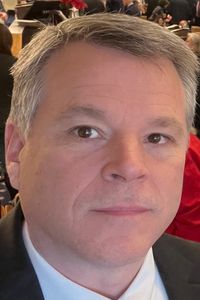
Daniel Veilleux was born in Biddeford, Maine. He graduated from Lawrence High School in 1987.[1] Veilleux earned a B.A. in political science and M.P.A. from the University of Maine at Orono in 1991 and 1997, respectively. His career experience includes working as a controller and operations manager with Pine Tree Waste, a fund accountant with the Forum Financial Group, and a development specialist with Eastern Maine Development Corporation. He has been affiliated with the Free Masons.[1][2][3] Veilleux has served on the Souhegan Cooperative School Board, the Souhegan Regional Landfill District Board of Directors, and the Souhegan Advisory Finance Committee.[1][3][4]
- Graduate:
- University of Maine, Orono, 1997
- Bachelor's:
- University of Maine, Orono, 1991
- High school:
- Lawrence High School, 1987
In their own words
Who are you? Tell us about yourself.
• I approach public service by listening, asking questions, checking the numbers, and considering how a proposal will work in practice.
• State budgeting should be responsible and honest. When the state reduces support for schools, retirement costs, infrastructure, or services, the costs often shift to local property taxpayers.
• I support strong public schools and a fair state contribution to education. I am concerned about the growth of Education Freedom Accounts and open enrollment. Public funds require public accountability. New Hampshire should restore support for teacher retirement, school building aid, and public higher education.
• New Hampshire needs more housing for working families, seniors, and young people. Communities should have flexible tools to support appropriate development while retaining local control.
• Economic development should create lasting public value. Taxpayers, utility customers, and host communities should not be left paying the costs of private projects.
• Transportation policy should improve safety, maintain roads and bridges, and remove rules that create unnecessary cost or confusion.
• My goal is thoughtful leadership, practical solutions, and steady attention to the issues that matter to Amherst and New Hampshire.
Please list below 3 key messages of your campaign. What are the main points you want voters to remember about your goals for your time in office?
Responsible state budgeting and property tax relief
New Hampshire’s heavy reliance on local property taxes means state decisions directly affect local tax bills. When the state reduces support for education, retirement costs, infrastructure, or services, the costs are often shifted to municipalities, schools, hospitals, families, and property taxpayers. I support careful budgeting, honest accounting, and long-term planning. Property tax relief should include adequate state support for public education, fair funding of state responsibilities, and close review of policies that place added pressure on local budgets.Strong public schools and responsible state education policy.
New Hampshire’s public schools are essential to strong communities and a strong economy. Every student should have access to a good education, regardless of local property wealth. I am concerned about the rapid expansion of Education Freedom Accounts and statewide open enrollment, both of which can shift costs and weaken local planning and accountability. The state should restore meaningful support for the retirement system, school building aid, and public higher education. Education policy should strengthen opportunity, support the workforce, and reduce pressure on local property taxpayers.Housing and economic opportunity
New Hampshire needs more housing that working people, families, seniors, and people with disabilities can afford. Communities should have flexible tools to support appropriate projects, improve infrastructure, and combine public, private, and nonprofit financing. Economic development should create lasting value. Public incentives should be judged by jobs, wages, infrastructure needs, environmental effects, and long-term tax consequences. Communities and taxpayers should not be left paying the costs of private development.
What areas of public policy are you personally passionate about?
I am most passionate about housing and economic opportunity, public education, and accountable government. New Hampshire should be a place where working people, families, seniors, and young adults can afford to live and build a future. Strong public schools and affordable higher education are essential to that goal. I also believe public policy should be practical, transparent, and financially responsible. I consistently ask who pays, who benefits, whether a proposal will work as intended, and whether the state is shifting costs onto local taxpayers, communities, or families.
Who are you? Tell us about yourself.
I have been a resident of Amherst, New Hampshire for over 15 years. I am married with two kids, who have attended public schools. I have a master’s degree in public administration and public policy. I have worked in both the private sector and public sector, primarily in finance and accounting. I have been an at-home parent for many years and have volunteered to help start a middle school hockey program that involved young player from all over Southern New Hampshire. I am a past chairman of the Souhegan Advisory Finance Committee and currently sit as a member of the Souhegan Cooperative School Board. I am a two-term State Representative and currently serve as the Deputy Ranking Member of the House Transportation Committee.
Please list below 3 key messages of your campaign. What are the main points you want voters to remember about your goals for your time in office?
During the time I spent working in economic development, I learned that a strong economy depends on many factors, especially public education, infrastructure, and quality of life. My first key message is that support these factors to ensure the recruitment and retention of quality jobs in New Hampshire. This means ensuring that public schools are adequately funded and our educators are fully supported. Working to improve the safety and efficacy of our transportation system. Updating and diversifying our energy supply for the demands of a digital economy. And ensuring that all hard working Granite Staters have a safe, healthy environment with affordable housing and a livable wage.New Hampshire relies heavily on tourism for its economic vitality. Maintaining clean air, water, and natural landscapes is crucial for attracting visitors and supporting the tourism industry. Sustainable practices and environmental conservation are essential to preserving the state’s natural beauty and ensuring the ongoing health of its economy. Efforts to protect New Hampshire’s environment not only benefit tourism but also enhance the quality of life for residents. That is why we need to support diversification of our energy supply to promote sustainability, oppose the push to develop unnecessary landfills in sensitive environmental areas, like Forest Lake State Park, and develop a safe and sustainable transportation infrastructure.I am committed to breaking down the barriers of polarizing partisan politics in the House. The divisiveness we see today hinders progress and stifles innovative solutions. My approach focuses on finding common ground, listening to diverse perspectives, and fostering respectful dialogue. By prioritizing the needs of our constituents over party allegiance, we can collaborate on effective legislation that addresses pressing issues. I will continue to work to build bipartisan coalitions, ensuring that every voice is heard and that we create policies benefiting all Granite Staters.
What areas of public policy are you personally passionate about?
I am personally passionate about public education and environmental protection. New Hampshire is among the nation’s leaders in both areas. It is critical that we take prudent steps to ensure that our educational system, from preschool through grad school, remains among the best. This means better funding for our community-based public schools as well as helping to make our post-secondary programs more affordable.
Protecting the environment means ensuring that the Department of Environmental Services and Fish & Game are funded according to their needs. We risk further issues with the loss recreation land and toxic pollutants like PFAS if we fail to provide these agencies with the resources necessary to enforce existing protections.
Who do you look up to? Whose example would you like to follow, and why?
I have always admired Teddy Roosevelt. He had a way of balancing toughness and strength with empathy and kindness. He recognized the value in protecting our environment and the health and wellbeing of the country but was a firm believer in the projection of strength and power. He was willing to use the power of the government to take on the “robber Barrons” to ensure fair, competitive markets and safe, healthy work places.
Is there a book, essay, film, or something else you would recommend to someone who wants to understand your political philosophy?
*The Wisdom of Crowds*. By James Surowiecki. Anchor, 2004.
“Thinking, Fast and Slow”. By Daniel Kahneman. Farrar, Straus and Giroux, 2011.
“The Fourth Turning: An American Prophecy”. By William Straus and Neil Howe. Broadway Books, 1997.
What characteristics or principles are most important for an elected official?
In New Hampshire, key principles for an elected official include:
1. A willingness to Find Common Ground. Seeking collaborative solutions and bridging divides for the greater good.
2. Ability to Listen and Evolve: Being open to new ideas and adjusting viewpoints based on constituent needs and evidence.
3. Supporting Good Ideas Regardless of Party Lines. Championing effective policies without concern for their origin, focusing on results over partisanship.
What qualities do you possess that you believe would make you a successful officeholder?
I have the ability to work across political lines to promote common sense legislation to help all Granite Staters. I recognize that New Hampshire has a unique political position as the “Live Free or Die” state. In recent years, New Hampshire’s values have been threatened by actors who talk about freedom but espouse restrictive laws on personal liberty. I understand how to get back to the way New Hampshire works best: together.
What do you believe are the core responsibilities for someone elected to this office?
The core responsibilities for someone elected to the New Hampshire House of Representatives include:
1. Staying Informed: Keeping up-to-date and understanding current issues affecting the state and constituents.
2. Being Available: Actively listening to and addressing the concerns of constituents.
3. Communicating Effectively: Working with other legislators and public officials to find practical solutions, which may not always require legislative action.
What legacy would you like to leave?
I would like to be remembered as an independent thinker who did what he truly believed was best for the state.
What is the first historical event that happened in your lifetime that you remember? How old were you at the time?
I remember the day Richard Nixon resigned. I was five years old.
What was your very first job? How long did you have it?
I was an usher in a movie theater. I worked there for about three years and became a projectionist. I am still a big movie buff as a result.
What is your favorite book? Why?
“Lord of the Rings” by JRR Tolkien. I read it as young adolescent and it helped wake me up and empower me to work harder and do more with myself.
If you could be any fictional character, who would you want to be?
Gandalf
What was the last song that got stuck in your head?
“Year of the Cat” by Al Stewart.
What is something that has been a struggle in your life?
I grew up in a rural community in a family with modest means. My life has been one of self-reliance and perseverance. It is important to me to help people understand that poverty is a cycle that is tough to break out of. For many people trying to break out of the cycle, only one small crisis can push them back down. One of the greatest things we can offer is an education and a prudent leg up. Providing access to quality education opens doors to opportunities that might otherwise be out of reach and equips individuals with the skills needed to improve their circumstances. Furthermore, offering support systems and safety nets can help mitigate the impact of those small crises, ensuring that setbacks don't permanently derail progress. By fostering a community of support and resources, we can empower individuals to achieve lasting change and break the cycle of poverty for themselves and future generations.
What do you believe is the ideal relationship between the governor and state legislature?
The relationship between the governor and the state legislature should be one of constructive conflict. The governor is responsible for managing and directing the executive departments and agencies based on his/her perspective and ideals. This is typically done through priorities set forth in the budget. It is the legislature’s job to ensure that the budget adequately addresses the needs of the state in a prudent and fiscally responsible manner.
It is not uncommon for legislative leaders to have slightly different priorities than the governor, leading them to make adjustments in areas of the budget that may generate disagreement.
Effective dialogue and collaboration between the legislature and the governor are crucial for developing a balanced budget that addresses diverse needs while advancing the overall public interest.
What do you perceive to be your state's greatest challenges over the next decade?
The future of public education and the reproductive rights of women are the two challenges that will be at the forefront of political discourse over the next decade.
School choice and the future of the voucher program will be debated for some time to come. There is no question that the educational system nationwide is undergoing a disruption as public charter schools, private schools, and school voucher programs challenge the traditional educational model. For many decades, the central focus of most communities has been the local schools. What school choice will mean to educational outcomes, local athletics, and community cohesion will need to be seen. It is my contention that public money should be first and foremost focused on public schools.
With the Supreme Court’s overturning of Roe v Wade, the future of reproductive rights in the United States is in question. New Hampshire needs to join with the other New England states and codify a woman’s right to an abortion.
Additionally, consistent with the culture wars, the right to vote and the fundamental human rights of the LGBTQ+ community are at risk. It is essential that the legislature affirms these rights and enacts policies that protect and promote equality and justice for all individuals, ensuring that every person can exercise their rights without fear of discrimination or repression.
Do you believe that it’s beneficial for state legislators to have previous experience in government or politics?
Yes, I believe it is helpful for state legislators to have previous experience in government or politics, but not essential. Just like any other job there is a learning curve. For someone entering the legislature, it will take time to learn the legislative process, develop working relationships, become familiar with policy areas, and to navigate the maze of stakeholders. Someone with previous experience will obviously have a head start in the process.
Do you believe it’s beneficial to build relationships with other legislators? Please explain your answer.
It is essential to build relationships with other legislators. There is a wealth of knowledge in the 424 individuals in the General Court. They can help guide legislation, steer you the right people for answers to complex questions, provide advice, and help with developing relationships and networks.
Is there a particular legislator, past or present, whom you want to model yourself after?
I have always admired Sentors Paul Tsongas and Warren Rudman. They were from different parties but had a great relationship and worked together to find common ground. One of the first things I did out of college was volunteer in Washington, DC for the Concord Coalition. It is a political action group put together by Tsongas and Rudman to advocate for a balanced budget. I still advocate for greater fiscal responsibility.
Are you interested in running for a different political office (for example, the U.S. Congress or governor) in the future?
Maybe.
Both sitting legislators and candidates for office hear many personal stories from the residents of their district. Is there a story that you’ve heard that you found particularly touching, memorable, or impactful?
I have heard many compelling stories from residents who have had problems with their medical providers, trouble getting responses from state agencies, and issues with their neighbors. The most troubling stories right now come from teachers and school administrators. They describe the abuse they receive regularly from students and parents. They describe atrocious behavior by students, sometimes bordering on physical and emotional trauma. The attacks on public schools in the media are putting our educators at risk. It is unfair, unwarranted, and it needs to stop.
Tell us your favorite joke.
Should the legislature oversee or grant the use of emergency powers?
There should always be a check on executive power to avoid abuse in emergency situations. Nevertheless, the executive must have the ability to act quickly and decisively when public health and safety are threatened.
What is the first bill you would introduce if elected?
I would immediately support a bill to guarantee the right to access to reproductive healthcare, including the right to an abortion. It is essential to remove the criminal jeopardy for doctors who have to make life or death decisions when the health of the mother is threatened.
What committees interest you?
The House committees that interest me the most are: Transportation; Education; Environment and Agriculture; Public Works and Highways; and Resources, Recreation, and Development.
These committees encompass most of my major priorities in terms of education, environmental protection, and infrastructure. Nevertheless, it’s vital for a legislator to pay attention to critical legislation regardless of committee assignment.
What are your views on financial transparency and government accountability?
It’s typically easy to determine the cost of governmental programs in terms of dollars spent. However, many programs aim to prevent negative outcomes, making it challenging to measure their value. For instance, how do you justify the worth of preventing malnutrition in children or quantify the value of a disease that never broke out? How can we assess the return on investment for crimes that were deterred or the value of a life saved from a drug overdose?
Since taxes are a limited resource, it is crucial for governmental programs to justify their expenditures clearly. If the value of tax dollars spent is not evident to voters, essential programs may be jeopardized. Government entities at all levels—federal, state, and local—have distinct responsibilities in this regard. They must not only address community needs but also ensure transparency and accountability in their spending.
The legislature, holding the power of the purse, must exercise utmost diligence in overseeing governmental programs. . It is essential for legislative leaders to review each program and to solicit input from experts who can provide insight into the value of each initiative, whether by way of a cost-benefit analysis or other method.
When legislators carry out their due diligence and ensure transparency, they enable voters to make informed decisions at the polls. This accountability helps ensure that tax dollars are used effectively and that programs meet the community’s needs.
Would a state ballot initiative process be good or bad for your state?
I would support a citizen’s ballot initiative. It is a viable alternative for citizens to help break partisan gridlock in the legislature.
Daniel Veilleux did not complete [the profile publisher]'s 2022 Candidate Connection survey.
Daniel Veilleux did not complete [the profile publisher]'s 2020 Candidate Connection survey.
.survey-result {padding:10px;}
p.survey-question {font-weight:bold;}
p.survey-response {margin-left:10px;}
p.survey-response {white-space: pre-line;}
div.survey-scrollbox { height:400px; overflow:scroll; margin:20px; padding:10px; border:1px solid gray; }
What would be your top three priorities, if elected?
Public Education
A safe, healthy environment
Mental Health/Drug Addiction
What areas of public policy are you personally passionate about?
I am passionate about bringing collegiality back to government. We have real challenges to address that cannot be resolved in a hyper-partisan political atmosphere.
Who do you look up to? Whose example would you like to follow, and why?
I look up to former Maine Senators George Mitchell and Bill Cohen. Despite being from different political parties, they were close collaborators and worked together on many issues.
Is there a book, essay, film, or something else you would recommend to someone who wants to understand your political philosophy?
Sapiens by Yuval Noah Harari
Factfulness by Hans Rosling
What characteristics or principles are most important for an elected official?
Dedication to do the best with the information and resources available and the wisdom to know that not all problems can be resolved by legislation.
What qualities do you possess that you believe would make you a successful officeholder?
I have a broad base of experience and knowledge and the demeaner to work with others to find the best solutions to today's challenges.
What do you believe are the core responsibilities for someone elected to this office?
To be good stewards of government.
What legacy would you like to leave?
I would like to known for bringing people together to help bridge partisanship and find common ground on the issues important to the state.
What is the first historical event that happened in your lifetime that you remember? How old were you at the time?
I remember the resignation of Richard Nixon when I was 5 and the Fall of Saigon when I was 6.
Do you believe that it’s beneficial for state legislators to have previous experience in government or politics?
State legislators should come from all walks of life to bring as many perspectives and possible to government. No government experience should be required..
What do you perceive to be your state’s greatest challenges over the next decade?
New Hampshire is an aging state. We are the second oldest state in the country We need to find ways to attract and retain young workers and families.
What do you believe is the ideal relationship between the governor and the state legislature?
The governor and state legislature should work together to establish priorities and develop appropriate legislation.
Do you believe it’s beneficial to build relationships with other legislators? Please explain your answer.
It is essential that we establish relationships with other legislators. It is the best way to breakdown excessive partisanship and address the real issues facing the state.
What process do you favor for redistricting?
I support an independent, non-partisan commission for redistricting.
If you are not a current legislator, are there certain committees that you would want to be a part of?
I would be most interested in The Education or Thw Environment and Agriculture committees.
On the 2026 ballot
Links
Compiled from the candidate’s published profile as of October 6, 2026.
Source(opens in new tab)