
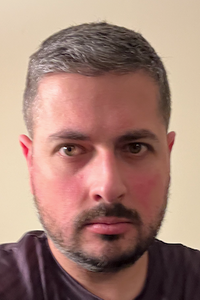
Background
Daniel Francisco (Republican Party) ran for election to the U.S. House to represent New Jersey's 4th Congressional District. He did not appear on the ballot for the Republican primary on June 7, 2022.
- Bachelor's:
- Rutgers College, 2008
In their own words
Who are you? Tell us about yourself.
I am an activist seeking liberty in our lifetime. While many attempt to get ahead by identity - I am propelled by my history of accomplished activism.
At age 25, my work caused a Congressional field hearing into fraud and corruption within the ObamaCare navigator program. I received an award from Congressman Darrell Issa for our ground-breaking investigation.
For over a decade I have been a Second Amendment activist in New Jersey - storyboarding leading investigations and undercover videos into corrupt institutions and political icons. My work with NJ2AS has been cited and acted upon by Governor Christie back in 2015. In 2021, I became a plaintiff in federal court, backed by the Firearms Policy Coalition, to overturn the constitutionality of the
"justifiable need" in NJ state statutes (Francisco v. Cooke). Defeating this would give every lawful New Jerseyan the right to carry a handgun without government prejudice.
Above all, I am an evangelist of natural rights and individual sovereignty - subjects sorely lacking in the New Jersey liberty movement.
Please list below 3 key messages of your campaign. What are the main points you want voters to remember about your goals for your time in office?
There is no more principled voice on firearms rights, and my activism and risk-taking speaks volumes above empty rhetoric. Every New Jerseyan and American deserves the unrestricted right to bear arms.The education system must be divorced from government bureaucracy and swiftly decentralized. Federal agencies should have no say in the education policies of the states. This begins with federal abolition of the Department of Education, and then working downwards. Give power to the people, not government monopolies.The most sovereign entity is the individual. There is nothing more sacred. Any violation of individual natural rights is a civil tragedy, and those who seek to restrict or harm individuals must be invoked as the face of tyranny.
What areas of public policy are you personally passionate about?
Firearms rights and the education space are my top priorities in the political realm.
One protects the individual sovereignty of people and families, not only from bad actors, but from elicit government tyranny. To deny any individual this natural right, is to say they do not have sovereignty over their body and property. To say they do not have sovereignty over their body, is to call them a slave. It is not a coincidence that many of the gun control policies that emerged from the south were born during the post-Reconstruction era. I am personally engaged in the battle for carry rights as a plaintiff in Federal court (Francisco v. Cooke).
Secondly, the education space is in dire need of radical decentralization. I believe people are overwhelmingly good, and tend to know the optimal choices to serve their needs. There is a prohibitive element of centralized control in education policy from federal regulations, funding, and other coercive measures. Moreover, state governments and public unions poison the space with their own selfish interests. The terms "education" and "school" are in dire need of a 21st renaissance, and this is not at all inconceivable. Today's model of public schooling did not exist but 150 years ago - the parents of New Jersey need to have absolute control of the resources they voluntarily choose to dedicate to their children's education. We must divorce the State entirely from their exclusively negative and predatory influence on innocent children.
Is there a book, essay, film, or something else you would recommend to someone who wants to understand your political philosophy?
Anatomy Of The State by Murray Rothbard
What characteristics or principles are most important for an elected official?
Humility and love -- understanding that a respect for individual sovereignty should permeate every political decision. That when someone enacts a regulation, tax, or other government burden upon individuals, they do so at the threat of violence from the state.
Every decision should be predicated on a foundation of human deference.
What qualities do you possess that you believe would make you a successful officeholder?
I have run a 360 degree gamut around the world of politics. I have investigated it from the outside within the undercover journalism space. I have fought against it in the Second Amendment activism space. I have served for 2 and a half years as councilman in my local town. I understand the organizational pitfalls and the fallacy of human behavior, moreover the perverse incentives the political realm provides.
T
What do you believe are the core responsibilities for someone elected to this office?
To hold sacred the natural rights of individuals above all else, and to keep the government at bay from infringing on those rights.
What legacy would you like to leave?
One in which the Overton window has been given a violent shove in the direction of Liberty.
What was your very first job? How long did you have it?
My first formal job was as a soccer referee at age 12. I grew up as the son of immigrants who had a passion for the game, and became engaged as a player at age 5. From there, I took an interest in refereeing, and it single-handedly taught me enormous political lessons to last a lifetime.
By the time I reached my early 20s, I began officiating high-level, semi-professional adult matches throughout New Jersey. I rose through the ranks making relationships with assignors, mentors, coaches, and players for 20 years. In 2016, I had the honor of being inducted into the New Jersey Soccer Association Hall of Fame, a distinction whose list of inductees are many of my heroes i looked up to while growing up within the sport.
You may ask - "what does this have to do with politics?". Soccer officiating is the living embodiment of relationship building and salesmanship. In politics, we get caught up in "process" (the "laws" in soccer). The best officials know when to bend or ignore the rules when they don't serve the greater good of match temperature or the players. They must build relationships and equity with the players, managers, and other officials. Unknown characters are quickly dismissed. They can smell your weakness, but also your lack of compassion. "I'm sorry" goes a long, long way. They value your humanity above all else, even if it means occasionally working outside the scope of regulatory prescription.
I have taken the lessons of the field everywhere in my life. I try at all times to remain human; to remember that people are more important than policy. That nuance is a necessity and not a suggestion. That deference to people is always desirable over institutions or identities.
The lifetime lessons of a silly game has had a profound impact on my upbringing and outlook on culture, and has introduced me to a diverse group of wonderful, fascinating people.
What qualities does the U.S. House of Representatives possess that makes it unique as an institution?
The house has the power of the purse and is the legislative braintrust. That makes it both uniquely powerful and dangerous. I believe anyone entering the House needs to approach with an entirely regressive mindset of abolishing federal power and centralization.
Do you believe that it's beneficial for representatives to have previous experience in government or politics?
Not necessarily.
What do you perceive to be the United States' greatest challenges as a nation over the next decade?
The national addiction to printing federal reserve notes to buy ourselves out of any situation, or to placate a myriad of special interests. We were warned by founders about central banks, and neither party has headed these warnings with any seriousness.
What are your thoughts on term limits?
I would welcome a set prescription on term limits.
Is there a particular representative, past or present, whom you want to model yourself after?
I would likely share similarities with Congressmen Ron Paul and Thomas Massie
Do you believe that compromise is necessary or desirable for policymaking?
Compromise is the largest fallacy when it comes to natural rights. When it comes to this subject, the concept that an individual's rights are up for a debate, vote, discussion, or compromise, is absolutely ludicrous. It is this line of thinking that causes a slow descent to hell, rather than a sudden plummet, in the civil rights arena.
The Constitution says that all bills for raising revenue must originate in the House. What role would this power play in your priorities if elected?
To deny that from occurring whenever humanly possible. I would never support a measure to increase financial burden on Americans, or to print a single non-existent dollar. My platform would be completely regressive and dedicated to lessening the spending and regulatory scope of the federal government.
googletag.cmd.push(function() { googletag.display("div-gpt-ad-1548351761485-0"); });
On the 2026 ballot
Links
Compiled from the candidate’s published profile as of September 30, 2026.
Source(opens in new tab)