
Background
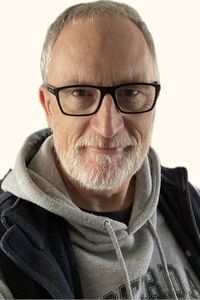
Dan Schaefer was born in Milwaukee, Wisconsin. Schaefer's career experience includes working as an engineer, marketing operations manager, field sales engineer, trainer, entrepreneur, and writer. He earned a bachelor's degree from the University of Missouri, Columbia in 1982. Schaefer has been affiliated with the ACLU and Democratic Party.[1]
- Bachelor's:
- University of Missouri, Columbia, 1982
- High school:
- McCluer High School
In their own words
Who are you? Tell us about yourself.
I’m Dan Schaefer, an engineer, software developer, political podcaster, husband, father, and candidate for Missouri House District 97.
I grew up in Florissant, Missouri, and graduated from the University of Missouri, Columbia, with a degree in electrical engineering. My career has taken me from engineering and technical training to software development and management. Along the way, I learned to approach problems by asking questions, analyzing the evidence, and finding practical solutions.
I’m socially progressive and fiscally conservative. To me, that means everyone deserves a fair shot, while government has a responsibility to use the people’s money carefully, efficiently, and transparently.
I’m running because I believe government should work for ordinary people. Hard work should be fairly compensated. Families should be able to afford healthcare. Our public schools should be strong. And when citizens speak through their votes, their government should listen.
Most of all, I believe public service is about solving problems and representing people; not serving wealthy donors, special interests, or a political party.
Please list below 3 key messages of your campaign. What are the main points you want voters to remember about your goals for your time in office?
For decades, politicians have promised prosperity while giving handouts to their wealthy donors. Working families shoulder the burden while healthcare costs rise, schools struggle, and voters lose faith in their government. I’m running to challenge this failed system and make Jefferson City work for us again.Government should answer to the people. Too much power in Jefferson City belongs to political parties, wealthy donors, lobbyists, and special interests. I do not accept corporate or PAC money because I represent the people of my district and Missourians as a whole. I support greater transparency in campaign financing and government decision-making. Most importantly, when Missourians make decisions through elections, referendums, and initiative petitions, elected officials must respect those decisions, even when they personally disagree with the outcome.People often ask me what it takes to attract businesses to Missouri. The simple answer is to make Missouri a place where people want to live. That means strong public schools, affordable healthcare, safe communities, and reliable infrastructure. The shallow approach is to rely on tax breaks and subsidies to lure businesses here. Those incentives are no substitute for investing in the fundamentals that make a state attractive. Businesses need workers, and workers need communities where they can build a good life and raise their families.
What areas of public policy are you personally passionate about?
I strongly believe that people must have a voice in their government. When Missourians make decisions at the ballot box, their elected representatives must respect those decisions rather than look for ways to overturn or undermine them.
I'm also passionate about economic fairness. Our tax laws and public policies should reward real work, not just wealth.
Finally, I strongly support public education. Strong public schools are essential not only to our children but to our communities, our economy, and Missouri's future overall.
Who do you look up to? Whose example would you like to follow, and why?
I look up to many people, too many to enumerate. But when it comes to my approach to politics, I often think about a friend and mentor named Randy who became president of my HOA roughly 30 years ago.
It was a contentious time. The organization had been pulled apart by disagreements and mistrust. Randy was intelligent, patient, kind, and always focused on what was best for the community, regardless of people's previous actions or beliefs. He was elected to the board and, during a period of conflict, promoted to president. Under his leadership, the HOA quickly became a functional organization again.
I admit that I was one of the people whose actions and attitudes had contributed to the contention. But then I watched and learned as Randy addressed difficult issues with patience, kindness, and purpose. It was a privilege to be elected to serve on the HOA board under him. I learned a lot during that time.
Randy has since passed away, but his example remains with me. He taught me that leadership isn't about defeating the people who disagree with you. It's about listening to them, treating them with respect, and finding a way to move forward together.
What characteristics or principles are most important for an elected official?
Honesty, integrity, transparency. He or she must also be dedicated to working with everyone in the legislature, regardless of party or ideology.
What do you believe are the core responsibilities for someone elected to this office?
Represent the people, make informed decisions, and be a responsible steward of public resources.
What legacy would you like to leave?
I hope to leave a legacy of healing during a time of great division. I hope to show that we can disagree without treating one another as enemies, and that government can still bring people together to solve problems.
What was your very first job? How long did you have it?
I was a busboy and dishwasher at IHOP.
What is something that has been a struggle in your life?
My son lives with several life-threatening diseases. He is doing well as long as he has access to the life-saving medicines he depends on, but as a father, you never completely escape the knowledge of what could happen if those medicines were no longer available.
Living with that uncertainty has been one of the great struggles of my life. It has also given me a profound appreciation for the doctors, researchers, scientists, manufacturers, and countless others whose work allows people like my son to live normal lives.
What do you believe is the ideal relationship between the governor and state legislature?
The governor and legislature should be independent partners in governing. The governor should be allowed to present priorities, provide leadership, and faithfully execute the laws. The legislature should represent its voters, evaluate priorities, and write good laws.
Neither branch should take orders from the other, even when they belong to the same political party. They should be willing to work together and negotiate when they don't agree. They should also check each other to make sure they're performing their constitutional duties correctly.
What do you perceive to be your state's greatest challenges over the next decade?
Missouri will face many challenges over the next decade, but I'm confident that we can meet them with a strong educational system.
I don't know what our economy will look like ten years from now. What new technologies, industries, and problems will come up? The only answer that makes sense to me is to prepare the next generation to think critically, adapt, and solve problems.
Do you believe that compromise is necessary or desirable for policymaking?
Yes. Compromise is always necessary. My goal is to make sure that we get something when we have to give something.
What was the first historical event that happened in your lifetime that you remember?
My first historical even that I can remember is the assassination of John F Kennedy.
Who are you? Tell us about yourself.
Raised in North St. Louis County and a McCluer Senior High School graduate, I've always been intrigued by technology and communication. I was a ham radio operator and yearbook photographer. After earning a bachelor's degree in electrical engineering from Mizzou—where I also spun records as a DJ—I moved to Los Angeles, where I stayed for nearly 30 years. My roles ranged from designing circuit boards to managing marketing operations, dealing with people globally and finding solutions that resonate on a personal level.
I returned to Missouri with a global perspective and deep local roots. As an HOA board member, I saved our community millions on our local infrastructure. My over 200 podcast episodes with politicians, activists, authors and thinkers have deepened my understanding of the issues we face and reinforced my commitment to advocacy and dialog.
Missouri is at a crossroads, facing challenges to women's rights, democracy, and our social fabric. The current political climate, driven by policies that undermine our freedoms and economic strength, requires bold action and leadership that listens first and then acts with conviction.
My campaign is more than a political pursuit; it's a movement towards a fairer, more equitable Missouri. I am ready to listen, represent, and advocate for our rights, health, prosperity, and future in the state house.
Please list below 3 key messages of your campaign. What are the main points you want voters to remember about your goals for your time in office?
Women's rights are under attack, not only in Missouri but across the entire nation. Certain factions within the Missouri Legislature, who justify their actions with the "Sanctity of Life," are in fact pushing a broader agenda to consolidate patriarchal control. This strategy is not limited to suppressing women's autonomy but is part of a wider attempt to marginalize the LGBTQ community, racial minorities, and followers of non-Christian faiths. We've seen how recent legislation targeting abortion rights is paralleled by bills that undermine protections for several groups, indicating a unified and dangerous strategy to sabotage all our civil liberties.
The attack on women's rights is an attack on all our rights.I believe in government by consent. We live in a country where the government is supposed to work for "We the people." The idea that the government needs our approval to make decisions has been around for nearly a thousand years and is a key part of what the Declaration of Independence is all about.
Lately, however, many of our elected officials have become more interested in gaining power for themselves than in serving us. They act as if they're entitled to their positions and ignore what we, the people, want, especially when we disagree with them. This is not how it’s supposed to work. They should be protecting our rights, not taking them away.
Our government works for us, not the other way around.Education is the key to our nation's greatness. For nearly 200 years, public education was vital to turning our children into disciplined and sensible adults. Public education evolved over the years, teaching the value of critical thinking and, as a result, yielding a nation that became the most innovative and creative in the world.
However, a movement is gaining momentum, advocating for the privatization of education and the suppression of critical thinking. Some folks seek to redirect public funds to private schools, prioritizing political and religious indoctrination over developing critical thinking skills. This is unacceptable.
I support public education to ensure we remain one of the most innovative and prosperous nations on earth.
What areas of public policy are you personally passionate about?
We must protect women's rights. The attack on women's rights is an attack on all our rights.
Our government must get back to serving the people, not the politicians. Through Gerrymandering and voter suppression, we're entering a dangerous area where the demise of democracy is within sight. We must do more to serve the principles of democracy, including open primaries and Ranked Choice Voting.
Healthcare belongs to everyone, and it is within our grasp to make it universal.
Progress is inevitable; unemployment is not. As things like robots and computers start doing more of the work people used to do, we need to think about what work means to us by retraining for a new future. The government should encourage this process, not hinder it.
Who do you look up to? Whose example would you like to follow, and why?
Hard to say. I have a lot of people I look up to for various different reasons.
Is there a book, essay, film, or something else you would recommend to someone who wants to understand your political philosophy?
There are a lot of books, but my favorites are:
- "The Politics Industry," by Gehl and Porter
- "Grand Illusion," by Theresa Amato
- "How Fascism Works," by Jason Stanley
- "Confessions of an Economic Hit Man," by John Perkins
- "Breaking the Two-Party Doom Loop," by Lee Drutman
- "Woke Racism," by John McWhorter
- "Laboratories of Autocracy," by David Pepper
- "Shadow Network," by Anne Nelson
- "Fighting Bob La Follette - The Righteous Reformer," by Nancy Unger (I'm currently still reading this biography)
Documentary: "The Con," produced by Patrick Lovell, which can be seen for free at thecon.tv.
What characteristics or principles are most important for an elected official?
Transparency, Honesty, Integrity, Curiosity and a sense of duty.
What qualities do you possess that you believe would make you a successful officeholder?
I have passion. I've watched our political system slowly unravel since the 1980s. I was disgusted by both wars in Iraq; I was astounded by the lies being told to the American people to get them to support both of these wars. I did protest marches against them, and I was told by a close relative that I should move to Canada.
This is my country too! I love the United States. If I didn't care about our nation, I wouldn't feel the need to fight for it.
What do you believe are the core responsibilities for someone elected to this office?
In my view, the core responsibilities for someone elected to the Missouri House of Representatives revolve primarily around safeguarding our democratic principles and making sure that every citizen's voice is heard and valued. Legislators must collaborate effectively to create solutions that address the challenges of today while upholding the rights guaranteed by our foundational documents. The Declaration of Independence plainly states that everyone has a right to life, liberty, and the pursuit of happiness; these are principles I pledge to protect.
Currently, these freedoms are under threat due to a worrying trend in the Missouri Legislature towards centralizing power at the state level, which often disregards the will of local communities. An example of this is the 2019 legislation (SB-391) concerning Concentrated Animal Feeding Operations (CAFOs). This law stripped counties of the power to regulate CAFOs, despite their significant impact on local ecosystems and people's quality of life, including pollution of streams and groundwater, not to mention the foul stench it puts into the air. It's not only a health hazard, but it severely degrades property values.
Furthermore, this overreach can be seen in issues beyond environmental regulation. The ongoing violations of women's reproductive rights and attempts to usurp local control over police forces are indicative of a broader pattern of state-level power consolidation that threatens our autonomy.
As a representative, I will work to reverse these trends by advocating for laws that empower local communities, protect our natural resources, and respect the rights of all citizens. Ensuring that power remains distributed and checks are in place is essential to maintaining the freedoms that our state and its people enjoy.
What legacy would you like to leave?
I'm not concerned with my legacy. My personal commitment to God is to do my best. I haven't always lived up to that commitment - I failed quite badly at times - but I keep trying. If any historian bothers to look me up, I'll let them decide my earthly legacy. The rest is between God and me.
What is the first historical event that happened in your lifetime that you remember? How old were you at the time?
I was very young, but I do remember the JFK assassination.
What was your very first job? How long did you have it?
I was a busboy at IHOP back in 1975 - 1976. I was there for about 6 months.
What is your favorite book? Why?
I don't have any favorites, unless you include a list of about 100. I love most of Stephen King's books. I also like biographies. I'm also writing my own book, a novel called "The Accidental Warriors." It's a science fiction book that deals with my favorite story structure: ordinary people rising to extraordinary circumstances. I hope to finish the book before the election, but I don't know if I'll have the time. You can see the latest chapters at www.theaccidentalwarriors.com.
If you could be any fictional character, who would you want to be?
John 117, the ultimate bad-ass!
What was the last song that got stuck in your head?
"Demolition Man" by the Police. I have all the words memorized, and I sing it to myself. I can't sing at all, but in those solitary moments, I can shout through that song with a smile on my face.
What is something that has been a struggle in your life?
I needed to overcome patterns learned in my family of origin. My father was a very controlling individual. It wasn't good enough to control the situation, but he wanted me to agree with him on everything. It defeated my sense of self and my self esteem. But finally, with a bit of life coaching, I saw how to get through it.
What do you believe is the ideal relationship between the governor and state legislature?
The state legislature should work with the Governor to help craft laws that the Governor can support. There may be times that the Governor opposes certain laws; in those cases, the legislature will need to decide if they have a high enough interest level to override a veto. From that perspective, the Governor essentially becomes a part of the legislation process, but in a limited way.
The relationship should be respectful but not necessarily personal.
What do you perceive to be your state's greatest challenges over the next decade?
We need to get away from the tendency toward authoritarianism. I understand the motivations behind this movement; many folks are frustrated by the cultural shifts taking place in our state. But it is extremely dangerous to put all our power into the hands of a shrinking minority.
I believe much of this frustration comes from a growing wealth inequality in our state as well as our entire nation. Through the use of lobbyists, rich people and corporations enjoy undue influence over our government as well as our media. As people slide downward on the economic scale, they look for "others" to blame. The media obliges this search by providing a stream of bogymen in the form of illegal immigrants, LGBTQ, women, minorities, etc.
The wealth gap is made worse by attacks on our educational infrastructure. The trend toward privatizing our schools is an underhanded attempt to increase the distance between the haves and the have-nots. Children of the "haves" will get subsidized to go to the better schools, therefore ensuring a wealth gap through the generations.
Do you believe that it’s beneficial for state legislators to have previous experience in government or politics?
Not necessarily. The best ideas often come from the outside. Experience, however, can make a legislator more proficient, but it can also blind that person to new ideas introduced by new blood.
Do you believe it’s beneficial to build relationships with other legislators? Please explain your answer.
Legislators are compelled to work together to ensure everyone gets something they want. This involves a lot of "horse trading." Though it can be painful and frustratingly slow, it is a system that ensures that our government ultimately serves the will of the people. That being the case, it is essential to work with all legislators, whether or not I find them likable.
Is there a particular legislator, past or present, whom you want to model yourself after?
Robert "Fighting Bob" La Follette is my political hero.
Are you interested in running for a different political office (for example, the U.S. Congress or governor) in the future?
We'll see. I'm just focused on the state legislature at this point. Depending on the level of success I have, I may want to go for a higher office if I feel I have the support of the people.
Both sitting legislators and candidates for office hear many personal stories from the residents of their district. Is there a story that you’ve heard that you found particularly touching, memorable, or impactful?
I have too many stories to count. I've produced over 200 podcasts over the past 5 years, and I've spoken to politicians, activists, organizers, public defenders, book authors and convicted felons. Every one of them has a story.
Among my most memorable is the story of Bobby Bostic. Mr. Bostic was convicted of a felony in which a gun was involved. He was 17 at the time, and he was sentenced to over 240 years in prison, where he wasn't eligible for parole until he would be well over 100 years old. Through the tireless work of advocates, he finally got an early parole while still in his 40s. While in prison in Jefferson City, he studied and got his GED diploma, and then went on to get a college degree. When he finally gained his freedom, he committed his life to breaking the "school-to-prison pipeline" by helping folks like himself who grew up without any hope. Mr. Bostic is a living example of what Abraham Lincoln called "the better angels of our nature."
Tell us your favorite joke.
I have so many jokes. I used to be a joke encyclopedia when I was younger. Most of the jokes I cannot repeat, however.
Should the legislature oversee or grant the use of emergency powers?
The legislature should oversee the use of emergency powers. It must never grant such powers in an unchecked fashion. The entire objective of the three branches of government are to ensure they all have a check on each other's power. Blindly granting such powers will undermine this critical balance, rendering the government dysfunctional and vulnerable to unchecked abuse.
Laws are written to guide our actions when times are difficult, not when things are easy.
What is the first bill you would introduce if elected?
There are several bills I'd like to work on. I'm not sure if I'll need to introduce any of them, as there are other legislators who have similar beliefs as me. But if necessary, I'll stick my neck out and propose to modify our voting system to support Ranked Choice Voting. It isn't necessary to implement it for general elections in the immediate time frame; rather, I would propose implementing them for primary elections. This ensures more voices and more choices - a cornerstone of a healthy democracy.
What committees interest you?
I would be interested in serving on the following committees:
- Administrative Oversight
- Conservation and Natural Resources
- Corrections and Public Institutions
- Crime Prevention
- Elementary and Secondary Education
- Emerging Issues
- Ethics
- Health and Mental Health Policy
- Healthcare Reform
- Higher Education
- House Economic Development
- Legislative Oversight
- Local Government
- Public Safety
- Utilities
- Workforce Development
What are your views on financial transparency and government accountability?
We have too little financial transparency in our state government. For example, I personally filled out several "Sunshine Requests" as part of my investigation into the campaign finances of Eric Schmitt, our current US Senator. I'm concerned that he co-mingled campaign and state funds; however, I'm unable to prove anything because I've been getting stonewalled on my request for information for nearly two years now. If I am to become a state legislator, I'll redouble my efforts in this area.
The principle of transparency can help uncover nefarious government activities. The Iran-Contra fiasco in the 1980s is a classic example, where a rogue group of Pentagon officials attempted to circumvent congressional oversight by illegally selling arms to Iran to fund Contra activity in Nicaragua. Not until 1993 did the full extent of the fiasco become known, after Public Citizen successfully sued under the Freedom of Information Act. In this case, transparency exposed the corruption, but unfortunately, it was about a decade too late.
If you read the book "Confessions of an Economic Hit Man" by John Perkins, you'll see how the lack of financial transparency has led to massive destabilization activities around the globe. These destabilization activities, when taken to the extreme, often ensnare our nation into wars.
Whether it's state-wide or nation-wide, transparency and government accountability is an essential ingredient to a stable democracy.
On the 2026 ballot
Links
Compiled from the candidate’s published profile as of September 30, 2026.
Source(opens in new tab)