
Background
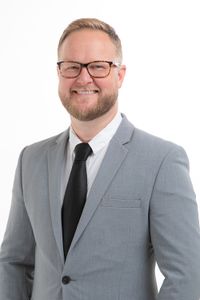
Curtis Stinnett (independent) is running for election to the U.S. Senate to represent Oklahoma. He is on the ballot in the general election on November 3, 2026.[source]
- Graduate:
- Southwestern Oklahoma State University, 2010
- High school:
- Lindsay High School
In their own words
Who are you? Tell us about yourself.
I am running to raise the radical idea that money should not dictate the direction of our country. I was raised in the small town of Lindsay by middle class parents. Through hard work, and the benefits of education they were able to see my sister and I become college graduates.
I have worked as a community pharmacist for 15 years in nearly every corner of the state. In this time I have become convinced that taking care of our neighbors is the very highest calling we have as citizens. I have also come to see that not everyone defines neighbor the same.
Some of us think our neighbor is someone that looks and sounds like us. Some of us think our neighbor is someone who has proven themselves successful. Some of think our only real neighbors are fellow Republicans, Democrats, or Sooner fans. I am hoping to remind my neighbors that a neighborhood is like an Olive Garden: when you’re here, you’re family.
Companies don’t treat you like family or neighbors. It’s what you can do for them. I don’t think companies should decide who represents us or how. Companies don’t see you struggling and wonder how to help, they wonder how to profit.
I believe we should approach government as neighbors and not CEOs. I believe we should not worry about whether we have had a profitable quarter, but think about how we can plan for the long term. This is why we go from crisis to crisis rather than weathering the storm. It’s time for leadership with vision, and I’m tired of waiting.
Please list below 3 key messages of your campaign. What are the main points you want voters to remember about your goals for your time in office?
Nothing of value can be accomplished without reversing the decision known as Citizens United. Allowing unlimited political spending from corporations turned the festering wound of corporate corruption into full blown sepsis.
I believe in an amendment removing the power of political speech via donations from corporations. I believe in public funding of elections. I believe that we should remove raising money entirely from our candidates’ and representatives’ duties.
Most of all it is time to make corruption illegal and hold those responsible accountable.For as long as I can remember politics has been entirely reactionary. Even when we try long term plans to make some investment in our future we hobble those efforts due to worries about the next election or primary. We never get around to governing.
I want to see us invest in our infrastructure, particularly in energy. Our grid cannot support the energy needs of tomorrow. Fossil fuels will not be able to fuel them and are only accelerating climate change. The investment we need to make will take enormous investment and create millions of jobs. And like a leaky roof or cracked foundation, it isn’t a repair we can afford to put off.
I want to start by powering every government building with solar. The installations will drive our economy.We must acknowledge that our country is not what we have told ourselves it is. We are not the good guys. We could be, but a redemption arc must come with acknowledging how our actions have hurt others and dedicating ourselves to making amends and changing.
Systemic racism must not only be expunged from our society and government, but we must also make reparations for the harms that we have caused.
I have a plan to address the enslavement of black men and women and their subsequent mistreatment under Jim Crow as well as the genocide of Native Americans and theft of their land.
All citizens from these groups would be entitled to benefits including housing, healthcare, food assistance, and education for the span of a generation.
What areas of public policy are you personally passionate about?
1. Campaign Finance Reform
2. Civil/Human Rights
3. Energy
4. Healthcare
5. Immigration
6. Education
Who do you look up to? Whose example would you like to follow, and why?
Bernie Sanders career in the Senate and before as a mayor and organizer for CORE. I not only share many of the views and ideals he champions but appreciate his steadfastness in standing for what he believes in regardless of how many choose to stand alongside him. I would rather lose fighting for what’s right than win having forfeited my soul.
What characteristics or principles are most important for an elected official?
Integrity, honesty, compassion, empathy.
What do you believe are the core responsibilities for someone elected to this office?
Ensuring equal rights and protections under the law for every person in our state and country.
What legacy would you like to leave?
The end of Citizens United.
What was your very first job? How long did you have it?
I mowed yards for neighbors and businesses throughout middle school and high school.
What is something that has been a struggle in your life?
My mental health. As my first marriage was coming to an end I experienced an abrupt and intense episode of depression and anxiety. Ensuring that I do what needs to be done to maintain my mental health and that of my family has been paramount since that time and has colored the lens of how I view the struggles of everyone around me.
What do you perceive to be the United States' greatest challenges as a nation over the next decade?
Navigating the end of the economy of yesterday as we transition into a future of AI while facing the worsening realities of climate change.
Rediscovering truth.
What qualities does the U.S. Senate possess that makes it unique as an institution?
Being the gatekeeper for appointees and standing as jury in impeachment proceedings.
Do you believe that compromise is necessary or desirable for policymaking?
Compromise should never touch one’s values or the human rights of citizens. In all other considerations it should be applied liberally.
What was the first historical event that happened in your lifetime that you remember?
The bombing of the Murrah building. Everything was different after that. Columbine, 9/11, wars, market crashes, climate change, the Trump administrations: all of those calamities were links in a chain of catastrophes. For me the first link was April 19, 1995.
On the 2026 ballot
Links
Compiled from the candidate’s published profile as of September 30, 2026.
Source(opens in new tab)