
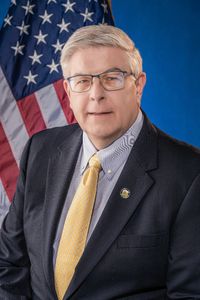
Background
Craig Shubert earned a bachelor's degree from Iowa State University in 1980. His career experience includes working in business development.[1]
- Bachelor's:
- Iowa State University, 1980
In their own words
Who are you? Tell us about yourself.
I am a journalist by education and prior professional practice in both print and broadcast media, later becoming a global business development leader, then being elected the 56th Mayor of the City of Hudson. Today, I am a candidate for state representative in Ohio’s 34th House District. My life has been shaped by faith, integrity, service, leadership, and a commitment to standing up for what is right.
Please list below 3 key messages of your campaign. What are the main points you want voters to remember about your goals for your time in office?
We must strive to make Ohio the best place in America to start, grow, and operate a business. This will lead to better job opportunities and bigger paychecks. That means reducing unnecessary regulatory burdens, lowering operating costs, investing in infrastructure, and creating an environment where businesses can invest, expand, and create good-paying jobs.We must make Ohio more affordable. The government cannot control every price, but it should never make life more expensive for families to make ends meet. I have a plan to provide meaningful income and property-tax relief, particularly for seniors who are being priced out of homes they have worked their entire lives to own. I further favor reducing mandated costs and fees, encouraging more affordable housing, and lower-cost energy for all.Bring transparency, accountability, and common sense back to government. As a taxpayer, you deserve to know how your money is being spent and you should have confidence that your legislative leaders are working for you. That means fighting waste, fraud, and abuse; investing responsibly in infrastructure; demanding transparency surrounding major developments such as data centers; strengthening our schools; and ensuring parents have a meaningful voice in their children's education.
What areas of public policy are you personally passionate about?
Economic development and job creation, infrastructure, property tax relief, education, public safety, energy policy, regulatory reform, government accountability, and combating waste, fraud, and abuse. I am particularly focused on policies that strengthen Ohio's economic competitiveness while protecting taxpayers and local communities. That includes responsible development of emerging industries. I also believe strongly in educational excellence, parental involvement, and ensuring our schools remain focused on core academic achievement in reading, writing, and mathematics.
Who do you look up to? Whose example would you like to follow, and why?
My father was a good role model for me.
What characteristics or principles are most important for an elected official?
Integrity, courage, transparency, accountability, humility, and a willingness to listen in light of differing opinions. I believe leadership requires the courage to stand for your principles when doing so is difficult or unpopular. An elected official must be willing to make difficult decisions, then honestly explain those decisions, and remember that the government exists to serve the people—not the other way around. My approach to public service is to be of service to those who need help.
What do you believe are the core responsibilities for someone elected to this office?
A State Representative's first responsibility is to faithfully represent the people of the district and ensure their voices are heard in Columbus. That means being accessible, listening to constituents, carefully evaluating legislation, protecting taxpayer dollars, working to solve practical problems facing our communities, and being accountable for the outcome. For the 34th District, it also means advocating for economic opportunity and good-paying jobs, meaningful tax relief, great schools, safe communities, and solid infrastructure investment.
What legacy would you like to leave?
That I left our state and communities a better place than I found them. I hope people will someday say I served them with integrity, that I listened and worked for my constituents, that I stood by my principles, and made government more accountable and effective. Ultimately, I hope my legacy is one of service: creating opportunities for families and businesses to succeed, bettering our schools, strengthening our communities, and ensuring future generations inherit an Ohio where they can build a life, raise a family, and pursue the American Dream.
What was your very first job? How long did you have it?
Newspaper carrier for 2 years
What is something that has been a struggle in your life?
The greatest challenge of my life was losing my wife of nearly 22 years to cancer while I was serving as Mayor of Hudson. Experiencing that kind of personal loss while continuing to fulfill the responsibilities of public office was extraordinarily difficult. It reinforced for me the importance of faith, family, resilience, and service to others, and gave me an even deeper appreciation for the challenges families quietly face every day.
What do you believe is the ideal relationship between the governor and state legislature?
The governor and General Assembly should have a productive working relationship built on mutual respect, transparency, and a shared commitment to serving the people of Ohio. They are separate branches of government with distinct constitutional responsibilities, and maintaining that independence is important. The legislature should never simply serve as a rubber stamp for the executive branch. State representatives have an obligation to scrutinize proposals, ask difficult questions, protect taxpayer dollars, and represent the interests of their constituents. At the same time, there are many areas where the governor and legislature can and should work together to advance policies that strengthen Ohio. The best relationship is one in which both branches communicate openly, respect their respective roles, and are willing to work together when they agree while engaging in constructive disagreement when they do not. The ultimate measure should always be whether the policy serves the people of Ohio.
What do you perceive to be your state's greatest challenges over the next decade?
Ohio's greatest challenge over the next decade will be ensuring that our state remains economically competitive and affordable for the families and businesses that call it home. We need to create an environment that attracts investment, creates good-paying jobs, and allows Ohio businesses to compete nationally and globally. That requires addressing high taxes and rising costs, strengthening our schools and workforce, modernizing roads, bridges, utilities, energy systems, and technology infrastructure, and ensuring that government regulations do not unnecessarily stand in the way of growth. We must also manage major economic developments responsibly. Emerging industries such as data centers can bring substantial investment and economic opportunity, but growth must be accompanied by transparency and careful consideration of the impact on energy, water, infrastructure, taxpayers, and utility customers. Ultimately, our challenge is making Ohio a place where young people want to stay, families can afford to build a future, seniors can afford to remain in their homes, and businesses want to invest and create jobs.
Do you believe that compromise is necessary or desirable for policymaking?
Yes. Effective government requires people with different perspectives to work together to solve problems. I believe in finding common ground where possible, listening to good ideas regardless of where they come, and working toward solutions that deliver results for the people. At the same time, compromise should not mean abandoning your principles. Voters deserve representatives who are clear about what they believe, willing to have difficult conversations, and prepared to work across differences when doing so advances sound public policy. My approach is to remain grounded in my principles while being pragmatic about finding solutions that move Ohio forward.
What organizations or individuals have endorsed your campaign?
Organizations: Ohio Right to Life and Ohio Value Voters
Individuals: Senator Kristina Roegner (R-27)
What was the first historical event that happened in your lifetime that you remember?
The assassination of President John F. Kennedy
What would be your top three priorities, if elected?
1) Bolstering Ohio's Economy
2) Job Creation with Pathway out of Poverty
3) Mitigating the Opioid Crisis[3][4]
What areas of public policy are you personally passionate about? Why?
Agriculture, Commerce, Energy, and TransportationCite error: Invalid <ref> tag; invalid names, e.g. too many[4]
[the profile publisher] also asked the candidate a series of optional questions. Craig A. Shubert answered the following:
Who do you look up to? Whose example would you like to follow, and why?
My father. Character and integrity (before all else). Tough minded, but fair. Strong work ethic. Passionate and caring. All of which he instilled in me.[4]
Is there a book, essay, film, or something else you would recommend to someone who wants to understand your political philosophy?
I enjoyed reading Donald Rumsfeld's book "Known and Unknown' as well as George Tenet's 'At the Center of the Storm'[4]
What characteristics or principles are most important for an elected official?
Character, integrity, knowledge, worldliness, and the ability to get things done.[4]
What qualities do you possess that you believe would make you a successful officeholder?
Character, integrity, knowledge, worldliness, and the ability to get things done. As Chairman Emeritus of the Eagle Scout Association of Greater Cleveland my character is based on Christian teachings and points of the Scout Law. Educated at Iowa State University and widely traveled to 31 countries, I have proven my ability to effectively negotiate strategic alliances to foster growth and prosperity domestically and internationally for several Northeast Ohio companies.[4]
What do you believe are the core responsibilities for someone elected to this office?
Representation of the people who elected you.[4]
What legacy would you like to leave?
That a made a positive difference in the lives of others.[4]
What is the first historical event that happened in your lifetime that you remember? How old were you at the time?
The assassination of John F. Kennedy in November 1963. I was 7 years old and still have vivid memories of that day.[4]
What was your very first job? How long did you have it?
I was a paperboy at 14, delivering papers 6 days a week to about 70 homes. I earned $15.00 every two weeks for 2 years and bought my first car -- a '67 Mustang -- with the money I had saved. The car had been wrecked, totaled by the insurance company, but my dad and a friend helped me to rebuild it.[4]
Do you believe that it's beneficial for state legislators to have previous experience in government or politics?
No. A fresh perspective offers options that may not have been considered nor tried before. School Board / City - County experience is uniquely different and non-applicable. Large legislative bodies with numerous members from competing parties and vast geographical or demographic differences can be challenging for someone who is accustomed to having their way on a smaller, insulated panel of office holders.[4]
What do you perceive to be your state's greatest challenges over the next decade?
Strengthening Ohio's economy while mitigating the effects of an Opioid Crisis.[4]
What do you believe is the ideal relationship between the governor and the state legislature?
The Governor, as the state's chief executive officer, should be the visionary and principal architect of the state's future. The Legislature, as the holder of the purse strings, should be the body that determines whether the Governor's vision is feasible and worthy of the[4]
Do you believe it's beneficial to build relationships with other legislators? Please explain your answer.
Absolutely. The better each legislator knows one another, the more likely they are to get something none.[4]
Is there a particular legislator, past or present, whom you want to model yourself after?
U.S. Senator Charles E. Grassley, R-Iowa, for whom I once worked as a communication assistant. He was and still is a farmer, but rose to the chairmanship of the Senate Judiciary Committee -- the first non-attorney to hold such a position in the history of our great nation. He instilled in me the importance of listening to others, caring about their situation, and working through the bureaucracy to initiate a course of action that will bring about positive change.[4]
Are you interested in running for a different political office (for example, the U.S. Congress or governor) in the future?
Only if God should so decide.[4]
Both sitting legislators and candidates for office hear many personal stories from the residents of their district. Is there a story that you've heard that you found particularly touching, memorable, or impactful?
All of them. I have found most voters have one particular concern for which they are seeking guidance or help. I'm always willing to listen and will do what I can to help.[4]
On the 2026 ballot
Links
Compiled from the candidate’s published profile as of September 30, 2026.
Source(opens in new tab)