
Background
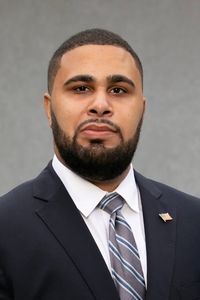
Corey Foreman was born in Frederick, Maryland. Foreman served in the U.S. Army from 2014 to 2017. He earned a high school diploma from Tuscarora High School. His career experience includes working in business, commercial maintenance, construction project management, and property rehabilitation. Foreman has been affiliated with the following organizations:
Bryan County Democratic Committee
NAACP
Young Democrats of Georgia
200 Club of the Coastal Empire
Coastal Georgia for Democracy
Meals on Wheels[1]
- High school:
- Tuscarora High School
In their own words
Who are you? Tell us about yourself.
My name is Corey Foreman. I am a business owner, U.S. Army veteran, and community advocate running to represent Georgia’s State Senate District 1. I grew up in a working family, learned the value of hard work early, and built my life by showing up, learning my trade, and taking care of the people around me. After serving as an Infantryman, I continued developing the discipline and leadership skills that still guide me today.
In Coastal Georgia, I have spent years helping homeowners, businesses, and community members through my work, while also volunteering with local organizations and supporting service efforts across Bryan, Liberty, and Chatham counties. I am currently finishing my degree in economics at Georgia Southern University, because I believe in understanding the systems that shape people’s lives and using that knowledge to help others.
I am running for office because I believe the people of Coastal Georgia deserve accountability, transparency, and a representative who will listen and fight for them. My goal is simple: to make life a little easier for working families, veterans, and the communities that make this region home.
Please list below 3 key messages of your campaign. What are the main points you want voters to remember about your goals for your time in office?
Accountability and Transparency
I believe government should work for the people, not the other way around. My campaign is built on accountability, transparency, and restoring trust in how decisions are made. People deserve honest leadership that listens and delivers results.Strong Communities Through Better Infrastructure and Services
Coastal Georgia needs practical solutions for infrastructure, growth, healthcare access, and everyday quality of life. I am focused on strengthening the systems families rely on so people can live, work, and retire with dignity and stability. Georgia should not be at the bottom on benchmarks.Service-Driven Leadership
My background as a veteran, business owner, and community volunteer shapes how I lead. I show up, listen, and work hard. I am running because I believe in public service, and I want to make life a little easier for the people who call this region home.
What areas of public policy are you personally passionate about?
I am passionate about public policy that strengthens everyday quality of life. My top focus is improving infrastructure, because Coastal Georgia’s roads, drainage, housing systems, and public services have not kept up with our rapid growth. I also care deeply about expanding access to affordable healthcare, especially for older adults and working families who struggle with cost and coverage. In addition, I believe in accountability and transparency in government. People deserve leadership that communicates honestly, uses tax dollars responsibly, and puts the community first.
Who do you look up to? Whose example would you like to follow, and why?
I look up to leaders who put people first. The ones who don’t chase titles, but focus on helping their communities. In the Army, the best leaders I served under were the NCOs who led from the front, treated everyone with respect, and kept their focus on taking care of people. That mindset still guides me today: real leadership is about service, not status.
What characteristics or principles are most important for an elected official?
The most important characteristics for an elected official are integrity, honesty, and accountability. People deserve leaders who tell the truth, take responsibility for their decisions, and remain transparent in how they serve the community. It’s also essential to listen first, communicate clearly, and treat every person with respect. An elected official should stay grounded, work hard, and stay focused on solving problems rather than creating division. Above all, public service should always come before personal ambition.
What do you believe are the core responsibilities for someone elected to this office?
The core responsibilities of a State Senator begin with representing the people of the district and making sure their needs, concerns, and priorities are reflected in state policy. That means listening first, staying accessible, and being a reliable source of information and support for residents. A State Senator must thoroughly evaluate legislation, understand its impact on everyday life, and vote based on what is best for the district, not what is convenient politically.
Another key responsibility is ensuring that taxpayer dollars are used responsibly. The state budget affects everything from schools and infrastructure to healthcare and public safety, and it is the job of a State Senator to provide oversight, ask tough questions, and make sure funds are allocated efficiently and transparently. Effective oversight also extends to state agencies, where accountability and responsiveness are essential for serving the public well.
A State Senator must also help plan for long-term growth and stability. In fast-growing areas like Coastal Georgia, that includes strengthening infrastructure, supporting local governments, and helping ensure that roads, drainage, housing, and public services can keep up with demand. It also includes improving access to healthcare, supporting strong public schools and workforce development, and making sure communities have the resources they need to thrive.
Finally, a State Senator should conduct themselves with integrity and professionalism. The job requires clear communication, respect for others, and a commitment to solving problems rather than creating division. Public service should always come before personal ambition, and the focus should remain on improving quality of life for the people who call the district home.
What legacy would you like to leave?
I want to leave a legacy of service, someone who showed up for people, listened, and made life a little easier for working families across Coastal Georgia. My goal is to help build strong, resilient communities where people can afford to live, raise their kids, and retire with dignity. If I can leave office knowing that more families felt heard and more people had real opportunities, that is the legacy I want.
What is the first historical event that happened in your lifetime that you remember? How old were you at the time?
The first historical event I vaguely remember was September 11th. I was six, so I didn’t fully understand it at the time, but I remember the adults around me being shaken. The first events I clearly remember were Hurricane Katrina and the Great Recession. I was old enough then to see how much leadership and preparation matter when families and communities are struggling. And a few years later, I remember watching President Obama get elected. That was the first time I saw how hopeful people could feel about the future. Those moments shaped how I think about service, responsibility, and what good leadership should look like.
What was your very first job? How long did you have it?
My very first job was helping my parents with their small cleaning business when I was a kid. I learned early what real work looks like, showing up, taking pride in what you do, and treating people with respect. I helped them on and off for years, and that experience shaped how I approach service, responsibility, and leadership today.
What is your favorite book? Why?
I have a lot of favorite books, but Rich Dad, Poor Dad is one that shaped how I think about personal responsibility and building long-term stability. I also learned a lot from Thinking, Fast and Slow and Extreme Ownership. One helped me understand how people make decisions, and the other reinforced the leadership principles I learned in the Army about discipline, clarity, and taking responsibility. I also appreciated Poor Economics, which breaks down how policy and real life intersect for working families. Together, these books influence how I approach public service: stay grounded, think critically, lead by example, and focus on solutions that actually help people.
If you could be any fictional character, who would you want to be?
If I had to choose a fictional character, I would pick someone like Juror 12 from 12 Angry Men or Coach Carter. Grounded characters who lead with integrity, fairness, and accountability. I respect people who think independently, challenge assumptions, and help others rise. Those values reflect how I approach leadership and public service.
What is something that has been a struggle in your life?
One of the biggest struggles in my life has been learning how to build stability while starting from almost nothing. Growing up, my family worked hard but we did not have much, and those early years taught me to figure things out the long way. Even as an adult, in the Army, in business, and now running for office, I have had to work twice as hard to open doors that were never handed to me. That struggle shaped my determination and made me focused on helping others who feel like they are fighting uphill battles too.
What do you believe is the ideal relationship between the governor and state legislature?
The governor and legislature share a responsibility to lead Georgia forward. The ideal relationship is one built on communication, respect, and balance. Both should challenge one another where appropriate, but always keep the focus on results for the people. Healthy debate makes better policy, and compromise shouldn’t be viewed as weakness, it’s how real progress happens. Whether addressing budgets, education, or infrastructure, collaboration between the executive and legislative branches ensures Georgia remains a state that grows responsibly and governs with stability.
What do you perceive to be your state's greatest challenges over the next decade?
Georgia’s greatest challenges will stem from managing growth responsibly. Our population is increasing rapidly, especially in coastal and suburban areas, yet investment in roads, housing, and public services hasn’t kept pace. Infrastructure, healthcare access, and workforce development must be top priorities. We also need to plan for resiliency, protecting our coastlines, water systems, and energy grid. If we fail to modernize our infrastructure or address healthcare gaps, working families will continue to feel the strain. Over the next decade, the choices we make will determine whether Georgia’s growth benefits everyone or only a few.
Do you believe that it’s beneficial for state legislators to have previous experience in government or politics?
Previous political experience can be helpful, but it is far from the only path to effective leadership. Many of the most impactful leaders in our nation’s history, from business owners to veterans to community advocates, began their public service without having held office before. What they shared was a willingness to listen, learn, and lead with integrity. I come from that same mindset. My background in business, construction, and community service has taught me how to solve problems, work within a budget, and manage people with accountability, the same skills that make for an effective legislator. A fresh perspective from outside elected office brings energy, creativity, and the ability to see challenges without the bias of “how things have always been done.” It prevents the stagnant mindset that can take hold in long-standing political circles and keeps new ideas at the forefront. When you have worked hard, built something from the ground up, and seen firsthand how state decisions affect everyday families, you carry that perspective with you into every policy conversation. Fresh leadership grounded in practical experience is how we build a more responsive and results-driven government for Georgia.
Do you believe it’s beneficial to build relationships with other legislators? Please explain your answer.
Absolutely. Building strong relationships with other legislators is one of the most important parts of getting real results for the people you represent. Progress doesn’t happen in isolation; it happens through communication, collaboration, and trust. Whether someone sits on the same side of the aisle or not, finding shared ground is how good policy gets passed. I believe respect goes further than rhetoric, and when leaders treat one another with professionalism and empathy, it opens the door to meaningful compromise that benefits all Georgians.
Is there a particular legislator, past or present, whom you want to model yourself after?
I have always respected leaders who lead with conviction and accessibility, like Senator Jon Ossoff, former President Jimmy Carter, and Congressman John Lewis. Each of them showed that empathy and accountability can coexist with strength and discipline. John Lewis, in particular, exemplified what it means to serve with courage and moral clarity, standing firm for what is right even when it is not easy. They all made decisions rooted in service, not self-interest, and that is what I admire most. I want to model my approach after those who never forget that leadership is about people first, listening, learning, and always staying grounded in the communities they serve.
Are you interested in running for a different political office (for example, the U.S. Congress or governor) in the future?
Right now, my full focus is on serving the people of Georgia’s 1st Senate District. I believe in doing one job well before thinking about the next one. My goal is to make a measurable impact locally by improving infrastructure, expanding healthcare access, and ensuring growth that benefits everyone. If, in the future, the people I serve believe my voice could help at a higher level, I would consider it. But for now, my heart and attention are fully committed to this race and this district.
Both sitting legislators and candidates for office hear many personal stories from the residents of their district. Is there a story that you’ve heard that you found particularly touching, memorable, or impactful?
I have heard from several longtime residents who tell me their communities have changed drastically over the years. Many say new development has led to their yards and homes flooding in ways that never happened before. One homeowner told me how, after every heavy rain, water now pours across her property because of poor drainage planning tied to nearby construction. She said, “We built our lives here, and now it feels like the land is turning against us.” That conversation has stuck with me because it is not just about flooding; it is about what happens when growth outpaces planning and when local voices are ignored. These stories remind me that progress should not come at the expense of the people who built these communities. We need smarter, more accountable development that protects both families and the land they call home.
Should the legislature oversee or grant the use of emergency powers?
The legislature should play a key oversight role whenever emergency powers are used. There are times when swift executive action is necessary, but those powers should always be temporary, transparent, and subject to legislative review. Accountability ensures that emergencies do not become excuses for overreach. Balancing authority and oversight protects both the safety and the freedoms of Georgians while keeping our system of checks and balances intact.
What is the first bill you would introduce if elected?
The first bill I would introduce would focus on strengthening infrastructure planning and accountability in fast-growing areas of Coastal Georgia. Our region is experiencing rapid development, but the systems that support everyday life such as roads, drainage, schools, emergency services, and healthcare access have not kept pace. I believe the state needs a clearer and more transparent process for evaluating the long-term impact of major projects and ensuring that communities have the resources they need before problems reach a crisis point.
My bill would require a more consistent statewide standard for growth impact assessments, stronger coordination between state and local governments, and regular public reporting on infrastructure readiness. It would also ensure that agencies responsible for transportation, water management, public safety, and healthcare communicate with one another and with the communities they serve. The goal is not to slow growth, but to manage it responsibly so families, workers, and businesses are not left dealing with preventable issues like flooding, congestion, overburdened schools, and strained public services.
For me, infrastructure is the foundation of quality of life. Improving how we plan for and respond to growth would help protect taxpayers, support local governments, reduce long-term costs, and ensure that Coastal Georgia remains a stable and safe place to live for years to come.
Would a state ballot initiative process be good or bad for your state?
A state ballot initiative process can offer benefits, but it also comes with challenges, so I believe Georgia should approach the idea carefully. On one hand, ballot initiatives give citizens a direct way to propose and vote on policy, which can increase civic engagement and ensure that important issues are not ignored. It allows people to have a more active role in shaping their government.
However, there are also concerns that need to be addressed. In some states, ballot initiatives have been heavily influenced by outside money or large organizations that can fund signature drives and advertising campaigns. That can make it harder for ordinary citizens to compete and can shift the process away from the people it is meant to empower. There is also the risk of complicated policy decisions being reduced to a simple yes or no vote without the benefit of legislative debate or expert review.
Overall, I believe a ballot initiative process could be helpful if it is designed with strong safeguards, transparency, and clear standards to prevent misuse. The goal should be to increase public participation while still ensuring that laws are well written, well understood, and in the long-term interest of the state.
Candidates hear many personal stories from voters. Is there a story that you’ve heard that you found particularly touching or memorable?
I was talking recently with a man I’ve known for years who has spent his whole life working in his trade. He’s about 65, and he told me he would love to retire, but he can’t because of health insurance. His wife is also in her 60s and had a stroke not long ago. She isn’t able to work anymore, and they are both stuck waiting until she can qualify for coverage. He has earned his retirement, but the way our system works is forcing him to keep working just so they can afford the care she needs. Stories like his are exactly why running for office matters to me. No one who has spent a lifetime working should be trapped between retiring and losing the ability to take care of their family. That is something we can and should fix.
What is an accomplishment that you are proud of?
An accomplishment I am proud of is serving in the United States Army. The discipline, structure, and leadership skills I learned there shaped who I am and how I approach every challenge in my life. That foundation also guided me as I learned the trade I work in today, mastering the craft through years of hands-on experience and continuing to expand my skills every day. Both experiences taught me resilience, responsibility, and how to stay focused under pressure, and they continue to guide how I serve my community now.
What legislation would you enact related to election administration in your state?
If elected, I would support legislation that strengthens clarity, consistency, and transparency in Georgia’s election administration. My focus would be on making the system easier to understand and more efficient for both voters and election workers. One straightforward improvement would be creating uniform standards for how counties communicate changes to polling locations, early voting schedules, and precinct information. Clear and consistent communication helps reduce confusion for voters and eases the workload on local election staff.
I also believe in improving training and support for poll workers. They play a critical role in ensuring that elections run smoothly, and providing updated training materials, standardized procedures, and strong administrative support can help reduce errors and improve the voting experience for everyone.
Another area worth strengthening is the process for maintaining and updating election-related technology. Ensuring that counties have modern, reliable systems and clear guidance for their use can help reduce delays, improve accessibility, and protect the integrity of the process.
Overall, my goal is to support legislation that makes election administration more transparent, consistent across counties, and easier for the public to navigate. A well-run election system builds trust, reduces confusion, and ensures that every eligible voter can participate with confidence.
On the 2026 ballot
Links
Compiled from the candidate’s published profile as of September 30, 2026.
Source(opens in new tab)