
Background
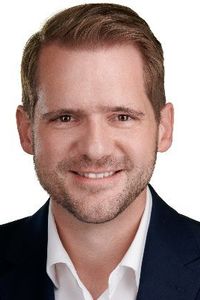
Clint Morgan was born in Missouri and lives in Sugar Land, Texas. His career experience includes working as an assistant district attorney with Harris County.[1]
Campaign themes
Clint Morgan did not complete [the profile publisher]'s 2024 Candidate Connection survey.
Clint Morgan did not complete [the profile publisher]'s 2022 Candidate Connection survey.
Campaign website
Morgan's campaign website stated the following:
CLINT THE ORIGINALIST.
Clint is committed to originalism and will be a judge in the mold of Thomas and Alito.
A CANDIDATE WHO RESPECTS ORIGINAL MEANING.
When interpreting a constitution or a law, a judge must respect its original meaning. A judge who “interprets” a law to mean something else is legislating from the bench.
Clint will be a judge in the mold of Thomas and Alito. He follows what’s called “original meaning originalism,” meaning he interprets the law by giving the words the meaning they had at the time they were adopted.
As Justice Alito has explained: “Originalism is the idea that the Constitution has a fixed meaning; it doesn’t change. It means what people would have understood it to mean at the time it was written.”
Every Republican judicial candidate will claim to be an originalist. But being an originalist is hard work. It takes an in-depth knowledge of legal history. It takes a tremendous amount of research into original sources. And it takes a willingness to come to conclusions you may not personally agree with. Clint has done and will continue to do the hard work of originalism.
A TRACK RECORD OF ORIGINALISM.
When his cases involved questions about the Texas constitution, Clint dug deep to determine what the Texans who adopted the constitution believed it meant.
For instance, in Allen v. State, Clint asked the Court of Criminal Appeals to overturn a large body of case law because it conflicted with the original meaning of the Texas constitution. For most of a decade the Court of Criminal Appeals was striking down court-cost statutes as unconstitutional, on the basis that courts collecting money violated the separation of powers provision. In his brief – available here – Clint looked at laws passed by the very same Texans who adopted the constitution in 1876 and showed that they believed assessing court costs against convicted criminals did not violate the separation of powers. Four judges on the Court of Criminal Appeals have since adopted this view, and none have disagreed.
In In the Matter of A.F., Clint addressed a juvenile defendant’s argument that the Texas constitution’s “due course of law” provision – which is similar to the federal “due process” provision – required special procedures before a juvenile could waive his right to a jury trial. In his brief to the Supreme Court of Texas – available here – Clint looked at the treatment of juvenile defendants in 19th Century Texas to show that those Texans who adopted the constitution believed it gave juvenile and adult defendants an identical right to a jury trial.
In Lemus v. State, Clint confronted the novel argument that the Texas constitution required a jury for every criminal trial, including guilty pleas or cases where the defendant wanted to have a bench trial. Article I, Section 10 of the Texas constitution says that, “In all criminal prosecutions the accused shall have a speedy public trial by an impartial jury.” On its face, that sounds like a requirement. But in his brief to the Fourteenth Court of Appeals – available here – Clint used historical research going back to English common law to show that the Texans who adopted the constitution believed this constitutional provision allowed defendants to waive their right to a jury.
These cases demonstrate Clint’s ability to do the hard work of originalism. As judge, Clint will bring the knowledge, work ethic, and studious mindset Texans deserve to their highest criminal court.[2]
—Clint Morgan's campaign website (2022)[3]
Who are you? Tell us about yourself.
Morgan graduated from Claremont McKenna College, where he earned a B.A. in government, specializing in political philosophy. He earned a law degree from the University of Texas at Austin. He clerked for Judge Paul Womack at the Court of Criminal Appeals. Since 2012 he has been an Assistant District Attorney of Harris County specializing in appeals.
Please list below 3 key messages of your campaign. What are the main points you want voters to remember about your goals for your time in office?
Put families first.Secure the border.Grow the economy.
What areas of public policy are you personally passionate about?
Border security to keep out drugs and criminal gangs.
Tax policy to benefit family businesses and help parents who choose to stay home with their children.
Reduced regulation and minimal taxation.
What was your very first job? How long did you have it?
I worked in a radio station in high school. My main task was to do the voice over for station IDs, and to air commercials during live events. I made minimum wage, and it was a great job.
On the 2026 ballot
Links
Compiled from the candidate’s published profile as of September 30, 2026.
Source(opens in new tab)