
Background
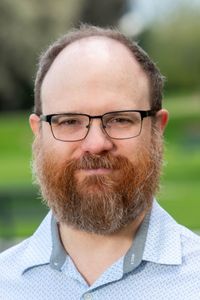
Cliff Hohman was born in Indianapolis, Indiana. He earned a high school diploma from Decatur Central High School and a bachelor's degree from Northland College in 1999. His career experience includes working as an IT specialist, fisheries research technician, public aquarist, warehouse picker/packer, forklift operator, and motel maid.[1]
- Bachelor's:
- Northland College, 1999
- High school:
- Decatur Central High School
Campaign themes
Clifford Hohman has not yet completed [the profile publisher]'s 2026 Candidate Connection survey.
Send a message to Clifford Hohman asking him to fill out the survey.
If you are Clifford Hohman, click here to fill out [the profile publisher]'s 2026 Candidate Connection survey.
Who fills out the candidate survey?
Any candidate running for elected office, at any level, can complete [the profile publisher]'s Candidate Survey. Completing the survey will update the candidate's [the profile publisher] profile, letting voters know who they are and what they stand for. More than 32,000 candidates have taken [the profile publisher]'s candidate survey since we launched it in 2015. Learn more about the survey here.
You can ask Clifford Hohman to fill out this survey by using the buttons below or emailing cliff@cliff-for-idaho.org.
Who are you? Tell us about yourself.
I'm a Nampa resident who got tired of not having a choice on the ballot more often than not. If there's only one candidate running, is that really democracy? What are we supposed to do if the elected official no longer represents the will of the people? Nampa deserves a choice, and I don't think the current legislature understands what Idahoans really care about.
I've worked in various capacities for federal, state, and local government agencies. I've worked for non-profits and private businesses. I've seen how they can work well. I've seen how they can work together. And I've seen how they can let people down.
Some people obviously like the toxic politics that are everywhere today, including in the Idaho Capitol. But I don't think most folks in Idaho really do. How does a bill attacking librarians help you pay the rent? Why do our legislators worry about who is using what bathroom, when we have schools that can't afford to fix a leaky roof?
I don't care about these culture wars. I want to listen to the people of District 13. I want to learn what their pain is. I want them to tell me what will help them the most in their lives. And I want to take that to the House, make their voices heard, and work to find practical solutions that we can all live with.
That's what democracy is supposed to be all about.
Please list below 3 key messages of your campaign. What are the main points you want voters to remember about your goals for your time in office?
I want to help stop the spread of extremism in our politics. We don't need to go looking for enemies to hate. We need to find ways to work together. It's hard, and it's messy, but it's worth it. "Owning the libs" might feel good for a moment, but making Idaho a better place for you and your families will make you feel good for a long time to come.I'm not here to beat my chest about whatever my pet project is. I'm not here to tell you that I'm right and you're wrong. We will sometimes disagree on things. That's fine. Sometimes my job will be to find a way to do what the people of Nampa want, even if it's not what I would choose. Sometimes my job will be to help folks understand why one choice might be better than another. Sometimes we're going to have to have a conversation to figure it out. And that's the way it's supposed to be. If we respect each other, we'll find a way forward together.I have an obligation to make Idaho and Nampa a better place, however I can manage to do it. When I was a kid in Boy Scouts, we were taught to always leave a campsite better off than we found it. Not just to clean up our own mess, but to pick up trash that was already there when we arrived. Maybe leave some firewood for the next group. Make sure that their experience is even better than yours was.
Eventually, I realized that was a pretty good way to approach your whole life. We only get so much time on this Earth. I want to make sure I leave this place better off than how I found it.
What areas of public policy are you personally passionate about?
Housing costs first and foremost. This is a very complicated issue to try to tackle, but if we can find a way, it will have a bigger impact on Idahoan's lives than almost anything else.
Education. We need to stop demonizing teachers, librarians, and kids who don't fit a traditional mold. Instead, we need to fund and support our public schools, so we can attract and keep quality staff and do right by our children.
Health care. Why are we attacking Medicaid? Why are we making it harder or impossible for women to get reproductive health care? Everyone needs access to quality health care. Politicians need to stay out of the doctor's office.
There are many other issues, but these are the ones I think I share with most Idahoans.
What characteristics or principles are most important for an elected official?
We have to listen to the voters. We have to have conversations with them and try to understand them. Everyone, not just the people we think will donate to our campaigns. My personal needs and worries might not be the same as theirs. I have to know what theirs are if I'm going to serve them.
At the same time, sometimes elected officials tackle complicated topics. Sometimes we learn things that most people are simply too busy to worry about, and that can affect what we think the best policy might be. In that case, it's our job to try to teach people about what we've learned, so they can understand our positions and why we've arrived where we did. I don't want to tell you to just trust that I'm right. I want to convince you. And maybe you'll persuade me that there's actually a better way after all.
Finally, respect. For the people, and other lawmakers. Especially those we disagree with. We have witnessed some truly appalling behavior in Idaho politics over the years. Usually only by a few people, but too often, the folks around them have done nothing to stop them. Respect means not only treating others decently, but also holding our colleagues to account when they disrespect others. We can't stand by and watch someone be a bully. We have to stand up and tell them to knock it off, that they're out of line. And if that ruffles a few feathers, that's fine.
What qualities do you possess that you believe would make you a successful officeholder?
I'm a quick learner, and when I take on a task, I focus on it until I'm an expert. I also try to listen to people. If I talk to you, you know what I want to do. But if I listen to you, I know what *needs* to be done.
What do you believe are the core responsibilities for someone elected to this office?
Our responsibility is ultimately to serve the people. This is much more complicated than it sounds, however. We rarely all agree on everything. Not everyone has the time to sort through all the issues the legislature is faced with. There may not be a good solution to a problem. Our job as legislators is to try to bridge those gaps. To listen to the people and take their advice when we can. To help people see how an issue affects their lives when it's not always obvious. And to humbly admit when we make a mistake, because we are going to. The only way to avoid that is to do nothing, and that's sometimes the biggest mistake of all.
What is the first historical event that happened in your lifetime that you remember? How old were you at the time?
I remember being about 8 years old when my teacher rolled in a big television set we had on a cart so that we could watch the breaking news about the Space Shuttle Challenger being destroyed with all hands lost. Like a lot of kids, I wanted to be an astronaut when I grew up, so it was shocking to see what was happening. I didn't know a tragedy like that was possible until then.
What was your very first job? How long did you have it?
My first real job was a summer internship with the Indiana state government. We spent the summer driving around Indiana, taking measurements and water samples from streams and rivers all over the central and southern part of the state. I saw so much of the state, from the corn fields to the small towns to some beautiful woodlands, and I learned a lot about how people lived in those areas. It was my first taste of public service, and I loved it.
What do you believe is the ideal relationship between the governor and state legislature?
It's the whole concept of checks and balances. Ideally, both the governor and the legislature try to serve the people, and they both keep the other from getting out of line. They both have some independence, but they both rely on the other as well. They shouldn't be enemies, but they shouldn't get too friendly either, even if they're all from the same party. After all, the governor is not their boss. The people are.
What do you perceive to be your state's greatest challenges over the next decade?
Our rapid growth, which contributes to the more immediate challenge of housing costs. We need to be planning how to grow so we can do it intelligently and sustainably. A lot of people don't like that it's happening, but there's not much that's going to stop it. What we can do is to try to minimize the growing pains. That means long term planning for housing, transportation, even water use. We have the ability to exert control on our growth, and we should use it.
Bringing our politics back in line with ordinary citizens will also be important. We've gotten too far from what really matters to people. Many of our elected officials have allowed national talking points and TV talking heads to tell them what's important, instead of listening to the citizens. As long as there is a disconnect between what the people need and want, and what the government actually does, there will be problems.
Our changing climate will also likely prove challenging. Fire season is getting longer every year, and severe fires are getting more common. Snow pack and reservoir water levels are becoming less reliable. Heat waves may become a serious health issue. We need to plan for conditions we've never seen before, and we need to do it in a way that's fair to everyone.
Do you believe that it’s beneficial for state legislators to have previous experience in government or politics?
I think it certainly can be. That being said, there are many examples, both in Idaho and elsewhere, where newcomers have proven that they're better in touch with their communities and more willing to accept new solutions to old problems. A lot depends on the individual. Why are they interested in serving? Is it for the prestige, for the power, for opportunities to make money? Or is it because they saw a need that wasn't being met and they knew they could try to meet it? Are they willing to adapt to the changing times, or are they still legislating like it's 1985? Sometimes, these things can matter more than experience. Experience is one quality among many, and political experience is only one type of valuable experience that a person might have. The beautiful thing about our democracy is that anybody can run, and if they can show the people they are passionate about serving, they might even succeed.
Do you believe it’s beneficial to build relationships with other legislators? Please explain your answer.
I don't see how you can successfully legislate without it. Some people might be too difficult to be able to reasonably deal with. But hopefully, you can find some common ground with most of them. It might just be one specific bill, and you struggle to ever find agreement again. But that one bill could be important to a lot of people, so it's going to be worth it. We don't need to have sketchy deals in smoky offices, but we can work openly to show that we're all trying to operate in good faith, that we all share the goal of serving the community.
Are you interested in running for a different political office (for example, the U.S. Congress or governor) in the future?
I don't foresee it. If I'm ever asked to, I may consider it, but it's not my goal. There's plenty of real and important work to be done in the State Legislature.
What committees interest you?
I think I'd bring an important voice to the Education Committee, given the way many politicians have decided it's a good idea to attack our teachers, librarians, students, and the very concept of public education.
My education and work history makes me well suited to both the Environment, Energy and Technology Committee and the Resources and Conservation Committee.
Ultimately, I'm flexible and always eager to learn, so I'd be happy to serve wherever I'm most needed.
What are your views on financial transparency and government accountability?
I think they're both critical. Ultimately, the public has the right to see what's happening with our money, whether it's in an agency budget or on the campaign trail. We have an incredible responsibility to make a good faith effort to spend the public's money wisely, and in their own best interest. We will sometimes disagree on exactly what that means, but being transparent about it will help reassure people that we at least have good intentions.
Government accountability is part of what democracy is all about. The people are ultimately in control, and that's how it should be. When we mess up in government, we have an obligation to be open about it and to try to fix it. If we're not willing to do that, then there will be a price to pay on election day.
On the 2026 ballot
Links
Compiled from the candidate’s published profile as of September 30, 2026.
Source(opens in new tab)