
Background
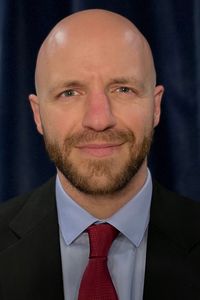
Clayton Cuteri was born in Pittsburgh, Pennsylvania. He graduated from Avonworth High School. He earned a bachelor's degree from the University of Central Florida in 2017. His career experience includes running his own business and working as an AI engineer for Amara Social.[1][2]
- Bachelor's:
- University of Central Florida, 2017
- High school:
- Avonworth High School
Campaign money
- Raised
- —
- From individuals
- $0
- From PACs & party
- $0
- Own money
- —
FEC filings.
View on FEC.gov(opens in new tab)In their own words
Who are you? Tell us about yourself.
Clayton grew up in Pittsburgh, Pennsylvania, attended the University of Central Florida in Orlando, and spent years in San Diego, Brazil, and back in Pittsburgh, where he started his businesses from his parents' basement.
When things took off, he moved to Mount Pleasant.
Five years ago, he launched a podcast that grew into political commentary as he realized inner work without public action was not enough. Today his content reaches 30 to 100 million views per month across Instagram, YouTube, and Facebook, with over 700,000 followers. He has built and operated five businesses, is a published author, and co-founded the American Congress Party, where he serves as Secretary General.
He is running because the 75% of Americans who feel abandoned by both parties deserve a representative who actually lives their problems, not one who fundraises off them.
Please list below 3 key messages of your campaign. What are the main points you want voters to remember about your goals for your time in office?
Charleston families pay over $5,000 a year for insurance on homes they can already barely afford, and carriers are leaving the market. SC-01 is one of the most exposed coastal districts in the country without a real federal plan.
I would bring competition back through an interstate insurance compact, create a federal catastrophic backstop so carriers can afford to write policies here, and fund Lowcountry resilience by redirecting twenty billion dollars a year from foreign wars, American risk, American money, American homes.Wall Street should not get to buy the house your kids were going to grow up in. Hedge funds buy Charleston starter homes in bulk while teachers, first responders, and multi-generation Lowcountry families get pushed out of the communities they built. I would ban corporate bulk-buying of single-family homes, create zero-interest federal loans for first-time buyers, and eliminate federal property taxes on primary residences so retirees on Sullivan's Island, Isle of Palms, and across SC-01 cannot be taxed out of homes they paid off decades ago.Both parties have failed Charleston. The Republican incumbent voted for billions in foreign aid while Lowcountry families lose their homes. The Democratic alternative offers slogans with no plan for next hurricane season. The American Congress Party is for the 60% of Americans neither party speaks for. Real transparency, real accountability, and real solutions to the problems people actually live with: insurance costs, housing, prescription prices, endless wars, and a system that taxes you for being responsible.
What areas of public policy are you personally passionate about?
Healing the foundation: free non-chemical food for all Americans, free medication, free upgraded education, and clean food and clean water. Breaking free of captured systems: returning to the gold standard, eliminating the federal income tax, opening federal books to public visibility, and stopping endless wars. Securing the foundation: affordable housing, ending homelessness, and honoring first responders and veterans. Energy: real energy independence and Lowcountry-specific resilience, including a federal catastrophic insurance backstop, an interstate insurance compact, modernized flood maps, and federal mitigation grants for the Charleston coast.
Who do you look up to? Whose example would you like to follow, and why?
John F. Kennedy. He was willing to say what he believed under immense pressure, including pressure from his own party, his own military advisors, and the most entrenched powers in Washington. He warned the country about secret societies operating against the public interest. He pushed back on the Federal Reserve. He refused to escalate Vietnam the way the establishment wanted. He paid for that independence with his life. The example I want to follow is the willingness to tell the truth out loud, even when the entire system is built to punish you for it. That kind of courage is exactly what is missing from Congress today.
What characteristics or principles are most important for an elected official?
Integrity, transparency, and the courage to defy your own party when it is wrong. An elected official is a public servant, not a brand ambassador for a political machine. The principles that matter most are honesty about what you can and cannot deliver, full transparency about who is funding you and how you are spending public money, accountability when you make mistakes, and the willingness to lose an election before betraying the people who sent you to Washington. Most career politicians fail every single one of those tests.
What do you believe are the core responsibilities for someone elected to this office?
A member of the U.S. House has three core jobs. First, defend the Constitution, which means refusing to vote for unconstitutional laws even when your party demands it. Second, actually represent the district, which means showing up in Charleston, Berkeley, Dorchester, Beaufort, Colleton, and Hampton counties year-round, not just before an election. Third, vote on legislation with a clear understanding of how it affects working families, not how it polls with donors. Read the bills, understand the budget, and make every vote defensible to the people who pay your salary.
What legacy would you like to leave?
My mom raised me with one rule that has stuck with me my entire life. She would say, "Every room you walk into, you should leave it better than you found it." That is the legacy I want to leave on this country. Not a building with my name on it. Not a list of bills I sponsored. Just the simple fact that America was a little bit better when I left than when I walked in. Better insurance markets for Charleston families. Better housing for the kids who grew up here. Better food, better water, fewer wars, more transparency. A political system where regular people can run for office and win without selling themselves to a party machine or a billionaire donor. That is the room I am trying to leave better than I found it.
What was your very first job? How long did you have it?
My first job was at Panera Bread in high school, and it only lasted a summer.
What is something that has been a struggle in your life?
The biggest struggle was discovering, the hard way, that eighteen years of school had taught me almost nothing about how money actually works. I graduated from college with over $25,000 in student debt and could not have explained the difference between principal and interest if you had asked me. I had to teach myself financial literacy, business, personal development, and emotional discipline that nobody bothered to put in a classroom. That experience is shared by an entire generation of Americans who were prepared to perform tasks but not to understand their own lives. It is why "Free Education" on my platform is about real education, not just free tuition for a broken curriculum.
What qualities does the U.S. House of Representatives possess that makes it unique as an institution?
The House is the chamber closest to the people. Two-year terms mean members face their voters constantly, which is supposed to keep them accountable. The House originates all revenue bills, which means it controls the federal purse. And every district elects exactly one representative for roughly 760,000 Americans, which means a single seat genuinely represents a community, not a state. The House was designed to be the loudest, most responsive, and most populist institution in the federal government. It has not lived up to that design for a long time, but the structural potential remains. That is exactly why I am running for this seat and not for the Senate.
What do you perceive to be the United States' greatest challenges as a nation over the next decade?
The biggest challenges are interconnected. A working class that cannot afford to live on full-time wages. A housing market dominated by Wall Street investment funds instead of families. A medical and pharmaceutical system that bankrupts patients while exporting the same drugs to Europe at one-tenth the price. Endless foreign wars are draining the treasury while our own coastlines, bridges, and water systems crumble. A two-party system that has lost the trust of 60% of Americans. And on top of all of it, a complete collapse of institutional credibility, where neither party, nor the media establishment, nor any federal agency commands the public trust required to fix any of the above. The next decade will be defined by whether we rebuild that trust or watch the country fracture further.
Do you believe that compromise is necessary or desirable for policymaking?
Compromise on tactics, yes. Compromise on principles, no. Most of what gets called "compromise" in Washington is actually just two parties agreeing to keep the lobbyists happy while telling voters they fought hard. Real compromise means working across the aisle on shared goals: ending endless wars, funding infrastructure at home, breaking up corporate monopolies, and returning power to working families. There are Republicans and Democrats in Congress today who would agree with most of my platform if their party leadership would let them vote their conscience. My job as an independent representative would be to find those people, build the coalitions, and pass the bills the two-party leadership would rather kill in committee.
What was the first historical event that happened in your lifetime that you remember?
September 11, 2001. I was in second grade. I remember the adults around me being quiet in a way I had never seen before, and the sense that something fundamental had shifted that day. Looking back, that morning shaped the next two decades of American foreign policy and led directly to over $8 trillion in war spending that hollowed out our infrastructure here at home. It is part of why "Stop Endless Wars" is one of the core planks of my platform.
Who are you? Tell us about yourself.
I use to write software for state-of-the-art military drones as a software engineer. After realizing I was contributing to more destruction than construction, I quit my job without a plan to travel the world and start a podcast. That journey has led me to now running to make America and the world a better place for our kids.
Please list below 3 key messages of your campaign. What are the main points you want voters to remember about your goals for your time in office?
Free Food without chemicals! We must return to local regenerative farmingFree Indigo Education. Our education system needs and upgrade. We must teach kids about meditation, breath work, and moreFree Medication. If our body’s are not pain-free, then we cannot pursue our passions
What areas of public policy are you personally passionate about?
All of them, because they are all connected. I am particularly interested in upgrading our system to bring in the change that was promised with the turn of the century. Our minds and souls are ready for the future, it’s time that our policies in government reflect that.
Is there a book, essay, film, or something else you would recommend to someone who wants to understand your political philosophy?
I don’t know that there is one. I’d recommend my podcast, Traveling to Consciousness as I will use that to communicate with The People.
What characteristics or principles are most important for an elected official?
Honesty, transparency, willingness to learn, being okay with saying “I don’t know”, have a vision for a brighter future, want to see the best for every citizen
What qualities do you possess that you believe would make you a successful officeholder?
I know how to listen and I have a vision that brings up everyone of all races and genders in all countries of the world.
What do you believe are the core responsibilities for someone elected to this office?
To represent The People above special interest and themselves. They must always make difficult decisions.
What legacy would you like to leave?
Bringing peace to Earth. The Bible calls this the New Earth.
What was your very first job? How long did you have it?
I worked on Riley’s farm when I was a kid for a fall. Packing marshmallows for people.
What is your favorite book? Why?
The Power of Now because that started the journey that ultimately led to me to finding myself.
If you could be any fictional character, who would you want to be?
Dr. Strange. I’m a big Marvel nerd and I always felt like he was the coolest - origin story and everything.
What was the last song that got stuck in your head?
If I Can Dream by Elvis Presley - I know, sounds cheesy, but it was my #2 song on Spotify Wrapped in 2023
What is something that has been a struggle in your life?
Learning how to let go when it is time to move on.
What qualities does the U.S. House of Representatives possess that makes it unique as an institution?
For one, it’s ability to make a pass laws. But more importantly, it’s ability to balance out the senate - which, we must have a conversation about increasing the size of the US House of Representatives. It’s far smaller than what was intended
Do you believe that it's beneficial for representatives to have previous experience in government or politics?
All that is needed is a pure vision and to lead with one’s heart.
What do you perceive to be the United States' greatest challenges as a nation over the next decade?
Unity. We are a divided country because we have decisive leaders. We must come together and love each other. Otherwise, our nation and our relationships will crumble.
Do you believe that two years is the right term length for representatives?
Might need to be 4 years. But I’ll have a better idea on this after winning. For this campaign, I pledge to not touch it. Then if I feel it needs upgraded, I’ll make that apart of my 2026 campaign
What are your thoughts on term limits?
We need them. For this to happen, we need to vote OUT all of the republicans and democrats. These are unlikely to happen until that occurs first.
Is there a particular representative, past or present, whom you want to model yourself after?
There are many great leaders of past in present and to name any would do an injustice to the others. There is much that can be learned from them all. However, I plan to only model myself off of what my heart guides me to do.
Both sitting representatives and candidates for office hear many personal stories from the residents of their district. Is there a story that you’ve heard that you found particularly touching, memorable, or impactful?
When the Pittsburgh community comes together to support our fallen brother and sisters. I saw this with the synagogue shooting and when Damar Hamlin collapsed on the field.
Tell us your favorite joke.
> knock knock
> whose there?
> boo
> boo who?
> no need to cry, it’s just a joke
🙃
Do you believe that compromise is necessary or desirable for policymaking?
It is important to get other’s opinions on approaching solutions, but there should rarely be compromise. If politicians have the best interest of The People at heart, then no compromise will be necessary because the best policy will be put forth. Intention matters.
The Constitution says that all bills for raising revenue must originate in the House. What role would this power play in your priorities if elected?
I will be writing many, many bills. With the intention of getting it on the record of where congressmen and women stand on the most important issues.
How should the U.S. House use its investigative powers?
Thoroughly and justly. We must investigate any serious evidence thoroughly and restrain from using our biases to jump to conclusions. We must also reframe from public comment until the investigation is complete.
On the 2026 ballot
Links
- Campaign X(opens in new tab)
- Campaign tiktok(opens in new tab)
- Personal tiktok(opens in new tab)
- Campaign website(opens in new tab)
- Campaign youtube(opens in new tab)
- Personal youtube(opens in new tab)
- Personal facebook(opens in new tab)
- Personal linkedin(opens in new tab)
- Campaign instagram(opens in new tab)
- Personal instagram(opens in new tab)
Compiled from the candidate’s published profile as of September 30, 2026 and FEC filings.
Source(opens in new tab)