Background
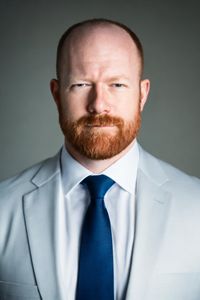
Christopher Dresang was born in Casper, Wyoming. He earned a high school diploma from Natrona County High School, an associate degree from Casper College in 2002, a graduate degree from the University of Montana, Bozeman in 2012, and a Ph.D. degree from the University of Wyoming in 2026. Dresang's career experience includes working as a director in public school administration.[1][2]
- Ph.D:
- University of Wyoming, 2026
- Graduate:
- University of Montana, Bozeman, 2012
- Associates:
- Casper College, 2002
- High school:
- Natrona County High School
In their own words
Who are you? Tell us about yourself.
I’m a lifelong Natrona County resident, a University of Wyoming graduate, and a career educator and school administrator. I’ve spent my professional life working with Wyoming kids and families, and I’ve put that same commitment into community service — serving on the Natrona County Juvenile Justice Board, the Child Protection Team, the Self Help Center, and nearly a decade as secretary of the Wyoming Soccer Association.
I’m running for Wyoming House District 35 because Natrona County deserves a representative who answers to the people who live here — not to outside money and out-of-state political networks trying to dictate how Wyoming governs itself. My priorities are local control, public safety, and property tax reform that actually helps working families instead of shifting the burden onto renters and young people.
This is my second time running for this seat. I’ve spent the years since building deeper relationships across this district, and I’m running the same way I’d govern: showing up, listening, and being straight with people about where I stand.
Please list below 3 key messages of your campaign. What are the main points you want voters to remember about your goals for your time in office?
Wyoming Choices, Natrona Voices. I answer to the people of this district — not out-of-state PACs and political networks trying to dictate how Wyoming governs itself.Purposeful property tax reform. I support real relief for homeowners, not shell games that shift the burden onto renters and young families through higher sales taxes.Local control and public safety. Decisions about our schools, our communities, and our safety belong with Wyoming families — not distant political factions with their own agenda.
What areas of public policy are you personally passionate about?
Education is where I’ve spent my career, and it’s where my passion for policy started. As a school administrator, I’ve seen firsthand how decisions made in Cheyenne affect real classrooms and real kids in Natrona County — which is why local control matters so much to me.
I’m also deeply invested in public safety and juvenile justice, informed by my work with the Juvenile Justice Board and Child Protection Team here at home.
And I care about tax policy that’s honest — property tax relief that doesn’t just shift costs onto renters and young families through the back door.
Who do you look up to? Whose example would you like to follow, and why?
A few people come to mind. Al Simpson has always stood out to me — a Wyoming leader who spoke plainly, worked across the aisle when it mattered, and never lost his sense of humor or his backbone doing it.
My dad is right up there too. As director of a youth crisis center, he spent his career showing up for kids nobody else would, quietly and without looking for credit. That work ethic shaped how I think about public service.
And I’ve always admired Martin Luther King Jr. for facing opposition head-on instead of backing down from it. That kind of courage — standing firm on what’s right even when it’s costly — is something I try to carry into this campaign.
What characteristics or principles are most important for an elected official?
Honesty is the top one. Voters deserve a representative who tells them the truth, even when it’s not the easy answer — not someone who says one thing at home and votes another way in Cheyenne.
Accountability matters just as much. Elected officials should answer directly to the people who elected them, not to out-of-state PACs or political networks with their own agenda.
I also believe in showing up — being present in the community, listening to constituents, and doing the work of the job rather than just the politics of it. That’s the standard I hold myself to, and it’s the standard I think every elected official in Wyoming should meet.
What do you believe are the core responsibilities for someone elected to this office?
The core job of a state representative is to show up in Cheyenne and vote the way Natrona County actually thinks — not the way outside money or political factions want. That means listening to constituents year-round, not just during election season.
Specifically, that includes protecting local control so decisions about our schools and communities stay close to home, supporting public safety and the people who provide it, and pursuing tax policy that’s honest — real property tax relief instead of shifting costs onto renters and young families.
It also means being accessible. Constituents should be able to reach their representative, get a straight answer, and know their voice was actually heard before a vote is cast.
What legacy would you like to leave?
I’d want to be remembered as someone who put Natrona County first — who showed up, listened, and made decisions based on what was actually right for this community, not what was politically convenient or dictated by outside interests.
Given my career in education, I’d also want my legacy to include real, lasting investment in Wyoming kids — schools with the local flexibility to serve their communities well, and a state that keeps its promises to the next generation instead of shifting costs onto them.
Mostly, I want people to say I did the job honestly: that I told the truth, stayed accountable to voters, and left this district a little better and a little more heard than I found it.
What was your very first job? How long did you have it?
My first job was bagging groceries at Albertsons. I worked there for about a year, and it taught me some lessons that have stuck with me since — showing up on time, treating every customer with respect regardless of how your day is going, and taking pride in doing even a simple job well. It’s the kind of job that keeps you grounded, and I think more people in public life could use a little more time behind a register or a register bag.
What is something that has been a struggle in your life?
Saying no. I care a lot about the people and causes in my life, and my instinct is always to say yes — to another board, another commitment, another way to help. It’s part of why I’ve stayed involved in this community for so long, but it’s also meant I haven’t always been great about protecting time for myself.
It’s something I’m still working on: learning that saying no to one thing is often what lets you say yes fully to the things that matter most, whether that’s family, this campaign, or just recharging enough to keep showing up for people well.
What do you believe is the ideal relationship between the governor and state legislature?
Ideally, it’s a relationship built on mutual respect and separation of powers — not rubber-stamping, but not gridlock for its own sake either. The legislature is the branch closest to the people, and it should hold that role seriously: writing the laws, controlling the purse, and providing real oversight of the executive branch.
The governor should be able to lead and set priorities, but the legislature shouldn’t defer to the executive branch, and it shouldn’t be captured by outside political factions either. Both branches answer to Wyoming voters, not to each other — and healthy tension between them, used honestly, usually produces better policy than either branch acting alone.
What do you perceive to be your state's greatest challenges over the next decade?
Property tax relief that’s actually honest is at the top of my list — Wyoming needs reform that helps homeowners without quietly shifting the burden onto renters and young families through higher sales taxes. We can’t keep passing costs down the road.
Economic diversification is another big one. Wyoming’s revenue has long depended on energy, and the state needs sustainable ways to fund schools and services without ignoring the ups and downs of that industry.
I’d also point to keeping young people and young families here — through good schools with local flexibility, public safety, and a state government that answers to Wyoming voters instead of outside political money. If we get those things right, Wyoming stays a place people choose to build a life, not just leave.
Do you believe that compromise is necessary or desirable for policymaking?
Yes, but not compromise for its own sake. Good policy usually comes from people who are willing to listen, work across the aisle, and find real solutions — that’s part of why I look up to Al Simpson, who did exactly that without losing his principles.
Where I draw the line is compromising on honesty or on who you actually answer to. I’ll work with anyone in good faith to get things done for Natrona County. What I won’t do is trade away this district’s voice to appease outside political factions or donors who don’t live here. Compromise should build better policy — not paper over who’s really calling the shots.
What organizations or individuals have endorsed your campaign?
I’m proud to have earned the support of a broad coalition of Wyoming organizations that represent working families, educators, first responders, and job creators:
• Wyoming REALTORS/RPAC
• Wyoming Education Association (WEA)
• Wyoming Hospital Association
• Wyoming School Boards Association (WSBA)
• Wyoming Coalition for a Healthy Retirement (WCHR)
• Associated General Contractors (AGC) of Wyoming
What was the first historical event that happened in your lifetime that you remember?
One of the first news events I remember clearly is the Elián González story in 1999 and 2000 — the young boy from Cuba who was found off the coast of Florida after his mother died trying to bring him to America. Watching that custody battle play out, and eventually seeing him sent back, made an impression on me even as a kid. It was my first real sense that politics and government decisions have direct, sometimes painful consequences for real families.
Who are you? Tell us about yourself.
I was born and raised in Casper, WY. I went to St. Anthony’s, then Natrona County High School, and then Casper College. I furthered my academic achievements by earning an M.A. in English: Rhetoric and Composition from the University of Wyoming and an M.Ed. in Curriculum and Instruction from Montana State Bozeman. My career has earned me a wealth of experience in leadership across the k-12 continuum and in higher education. I am dedicated to improving our community, embracing traditional values, and creating a safe state/county. Currently, I am working on my Ph.D. in Learning, Design, and Technology from the University of Wyoming. I am married with two children aged 10 and 13, and I am the proud owner of a new puppy.
Please list below 3 key messages of your campaign. What are the main points you want voters to remember about your goals for your time in office?
I believe in a thriving free market and support tax reform to simplify the tax code, broaden the tax base, and lower marginal rates. I think public lands should be used to create job opportunities and boost the economy, and Wyoming's natural resources should be developed responsibly. Wyoming should remain a right-to-work state, and economic growth shouldn't favor certain businesses at the expense of others through taxpayer funds or government laws.I advocate for state and local government protection of citizens' rights and property, including the right to bear arms. I support strict punishments for crimes, with a focus on victim restitution, and reject civil asset forfeiture before conviction. Ensuring judicial accountability, especially in sentencing sexual predators, is important, as is upholding laws from the U.S. Constitution. I think citizens should be responsible for security, with police forces supporting them. I believe in equal rights and opportunities for all, regardless of background.Regarding land and environmental policies, I oppose designations that restrict use and think that the state should control wildlife and natural resources, including water rights. I support private property rights, especially when it comes to eminent domain. Agriculture and livestock health are important, but not at the cost of access for Wyoming citizens
What areas of public policy are you personally passionate about?
I am passionate about several areas of public policy, particularly those that strike a balance between individual freedoms and collective well-being. For instance, I am interested in education policy, where I believe in empowering parents and local communities to make decisions while ensuring quality education for all students. Economic policy is another area I care about; I advocate for policies that promote free markets and entrepreneurship while providing a safety net for those in need. Additionally, I am concerned about healthcare policy, where I support reforms that increase access and affordability without excessive government intervention. Lastly, I am passionate about protecting civil liberties.
Who do you look up to? Whose example would you like to follow, and why?
I really look up to leaders who, despite the adversity, do what is right. Martin Luther King Jr. is a great example of someone I admire as a leader who stood up to death threats, violence, and all other forms of intimidation to do what was right.
Is there a book, essay, film, or something else you would recommend to someone who wants to understand your political philosophy?
The Conservative Heart: How to Build a Fairer, Happier, and More Prosperous America by Brooks.
What characteristics or principles are most important for an elected official?
Fiscal Responsibility, Limited Government, Rule of Law, Personal Responsibility, Strong National Defense, Traditional Values, Transparency and Accountability, and Pragmatism and Collaboration.
What qualities do you possess that you believe would make you a successful officeholder?
I'm open-minded, curious, a lifelong learner, a good communicator, empathetic, resilient, compassionate, and I have high integrity.
What do you believe are the core responsibilities for someone elected to this office?
The first core responsibility is to advocate for smaller government and limited intervention in the economy and individual lives. Elected officials should uphold this principle by promoting policies that prioritize individual liberty and free markets.
The second core responsibility is transparency in actions and accountability to the people. This includes being open about decision-making processes and responsive to constituent concerns.
The third core responsibility is emphasizing personal responsibility and self-reliance. Elected officials should encourage policies that empower individuals to control their lives and opportunities.
What legacy would you like to leave?
I'd like to make the world a better place for my kids and the next generation. I'm a firm believer in the adage that good leaders "plant trees who will never know their shade."
What is the first historical event that happened in your lifetime that you remember? How old were you at the time?
I remember 9.11. I was walking to class at Casper College and stopped to look at a small TV in the corner. It showed the first tower smoking, and as they were doing a live newscast, a satellite plane entered the scene and flew into the second tower.
What was your very first job? How long did you have it?
I worked as a bagger-carryout clerk at Albertsons. I believe I worked there for a year until I was able to secure a new job working as an Optician in Walmart.
What is your favorite book? Why?
My favorite three books are the Crystal Cave by Mary Stewart, White Noise by Don DeLillo, and American Gods by Neil Gaiman.
If you could be any fictional character, who would you want to be?
I think it would be fun to be a DC superhero like Superman. Or a Marvel villain like Thanos.
What was the last song that got stuck in your head?
There is this song asking someone to spell "Chauffeur," which has been looping in my head. When I looked it up to answer this question, it turned out it is AI-generated... that's great.
What is something that has been a struggle in your life?
I struggle to work with all the people who have trauma and crisis without making it my trauma and crisis. I am empathetic, and I feel for those who are in a bad place or make poor decisions. in my job, I work with many young adults who come from broken homes or have made poor decisions, and it can be hard to let those things not bring down my focus of helping them.
What do you believe is the ideal relationship between the governor and state legislature?
Open Communication, Respect for Separation of Powers, Negotiation and Collaboration, Accountability and Oversight, Fiscal Responsibility, and a Shared Vision for the Future.
What do you perceive to be your state's greatest challenges over the next decade?
Energy Dependency and Diminished Coal Demand/Use
Do you believe that it’s beneficial for state legislators to have previous experience in government or politics?
I don't think that it matters as long as you have the qualities of a good leader who is willing to learn a new role.
Do you believe it’s beneficial to build relationships with other legislators? Please explain your answer.
Building relationships with other legislators is essential for effective governance, legislative effectiveness, and achieving meaningful outcomes for the constituents they serve. It promotes collaboration, information sharing, coalition building, conflict resolution, bipartisanship, and unity—all of which are critical for a healthy and functioning democracy.
Is there a particular legislator, past or present, whom you want to model yourself after?
Representative Steve Harshman and Bill Landen; Senator Al Simpson
Are you interested in running for a different political office (for example, the U.S. Congress or governor) in the future?
I am interested in serving the state of Wyoming and our country in whatever manner that may avail itself...
Both sitting legislators and candidates for office hear many personal stories from the residents of their district. Is there a story that you’ve heard that you found particularly touching, memorable, or impactful?
I have many stories...
Tell us your favorite joke.
An Irishman and a Scotsman walk into a bar. The Scotsman yells out, "Free drinks for everyone." The next day, the newspaper headline reads: "Irish Ventriliquest found Beaten to Death Behind Bar."
Should the legislature oversee or grant the use of emergency powers?
Oversight of emergency powers is crucial to maintaining the balance of power within a democratic system only in the rarest of circumstances. While emergency powers can be necessary to address urgent threats to public safety and security, they also have the potential to infringe upon civil liberties and democratic norms if not properly regulated and overseen.
What is the first bill you would introduce if elected?
To ensure the safety and well-being of students and school communities, educational institutions must include threats of violence to an individual or school in a student's educational record and establish reporting procedures for such threats.
What organizations or individuals have endorsed your campaign?
N/A
What committees interest you?
Judiciary and Education
What are your views on financial transparency and government accountability?
Financial transparency and government accountability are essential pillars of good governance.
Financial transparency lets citizens understand how public funds are collected, allocated, and spent. Transparency fosters trust in government institutions, promotes accountability, and helps prevent corruption and misuse of public resources. Transparency should be a fundamental principle of government operations at all levels.
Government accountability oversight, such as elections, audits, and independent watchdog agencies, to ensure that officials act in the public interest and are accountable for their use of taxpayer money. Accountability is crucial for maintaining the integrity of democratic institutions and for promoting public trust in government.
Do you support or oppose changes to the current state ballot initiative process? If so, what kind of changes would you consider?
Yes. I would support enhanced transparency, stricter signature requirements, having a public comment period, conducting an inpednent Independent review and analysis, and working to create more education and outreach.
On the 2026 ballot
Links
Compiled from the candidate’s published profile as of September 30, 2026.
Source(opens in new tab)