
Background
Christine Dargon earned a high school diploma from Low-Heywood Thomas School, a bachelor's degree from the University of Connecticut in 1992, a graduate degree from Fordham University in 1994, and a Ph.D. from Seton Hall University in 1999. Dargon's career experience includes working as an adjunct professor.[1]
- Ph.D:
- Seton Hall University, 1999
- Graduate:
- Fordham University, 1994
- Bachelor's:
- University of Connecticut, 1992
- High school:
- Low-Heywood Thomas School
In their own words
Who are you? Tell us about yourself.
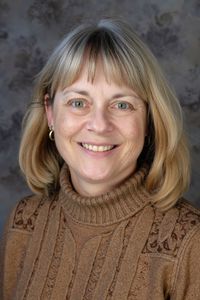
I am Christine Dargon, a college professor, community organizer, and Clean Elections Democrat running for Arizona State Senate in Legislative District 1.
I grew up in Connecticut and have called Rimrock, Arizona home since 2010. I obtained my doctoral degree in 1999 from Seton Hall University in psychology.
In fifteen-plus years in the Verde Valley, I have put down deep roots, co-founding Indivisible Rimrock, serving as a Yavapai County precinct committeewoman, organizing with Red for Ed, and building relationships with the Yavapai-Apache Nation and tribal communities in our region.
I have taught college psychology since 1997. My husband is a teacher and AEA member, and many of my closest friends are educators, so I know firsthand how decisions made in Phoenix affect classrooms and families across rural Arizona.
I am not a career politician. I am a neighbor, an educator, small business owner and an organizer. LD1 deserves a senator focused on real solutions: protecting our water supply, fully funding public education, expanding rural healthcare, and defending our democracy.
Please list below 3 key messages of your campaign. What are the main points you want voters to remember about your goals for your time in office?
1. PRESENT, NOT ABSENT
LD1 deserves a senator who actually shows up. Our current senator has been consumed by extremist causes, national conspiracy politics, and personal ambition, leaving Verde Valley families without meaningful representation on water, schools, healthcare, and housing. I have been here for over fifteen years, organizing, listening, and doing the unglamorous work of community building. As your state senator, I will be present, at committee hearings, constituent meetings, and every corner of this district. Presence is not optional. It is the job.2. EDUCATOR AND ORGANIZER: EXPERIENCE THAT MATTERS
I've taught college since 1997 and know how to take complex problems, break them down, and build workable solutions. I co-founded Indivisible Rimrock, organized with Red for Ed, served as a Yavapai County precinct committeewoman, and recently joined United Campus Workers of Arizona. My husband is a teacher and AEA member. Education, labor, and community organizing are not talking points for me, they are my life. I will bring that same rigor and dedication to the State Senate.3. CLEAN ELECTIONS, CLEAR PRIORITIES
Because I'm publicly funded through Arizona's Clean Elections system, I answer only to voters, not donors, lobbyists, or party bosses. My priorities are the priorities I hear from neighbors across LD1 every day: protect Arizona's water future, fully fund public education, expand rural healthcare access, make housing more affordable, defend reproductive freedom, honor tribal sovereignty, and protect our democratic institutions. These aren't partisan issues, they are the bread-and-butter concerns of real people living real lives in this district.
What areas of public policy are you personally passionate about?
Helping people! Education has been my life's work for nearly thirty years, as a professor, an organizer with Red for Ed, and the spouse of a public school teacher. Fully funding our schools and supporting educators is personal to me in a unique way compared with other issues.
Water security is existential for Arizona and I treat it that way. Rural healthcare, reproductive freedom, affordable housing, and tribal sovereignty round out my core policy commitments.
And above all: democracy. Clean elections, ethical representation, and an engaged citizenry are the foundation everything else is built on. I became a Clean Elections candidate because I believe in practicing what I preach.
Who do you look up to? Whose example would you like to follow, and why?
My mother. She was born in 1935, the grandchild of Irish and Scottish immigrants, and has lived through extraordinary chapters of American history. She spent over forty years in real estate, building something real through hard work and integrity.
She is humble, whip-smart, politically passionate, and always the first to help someone in need, without waiting to be asked or thanked. She loves history because she understands that the present makes no sense without it.
I grew up watching her lead by quiet example. No grandstanding, no self-promotion, just competence, compassion, and showing up. That is the kind of public servant I intend to be.
What characteristics or principles are most important for an elected official?
Integrity, presence, and accountability.
An elected official must be honest with constituents even when the truth is uncomfortable. They must show up, to hearings, to community meetings, to the hard conversations. And they must be accountable to the people they serve, not to donors, lobbyists, or personal ambition.
I would add humility. The best policymakers know what they don't know, seek out expertise, and are willing to change course when the evidence demands it. Public service is not about ego, it is about results
What do you believe are the core responsibilities for someone elected to this office?
Represent. Listen. Legislate. Communicate.
A state senator must represent every constituent in the district, not just political allies or major donors. They must listen, genuinely, to the communities they serve before casting votes that affect people's lives. They must do the hard work of legislating: reading bills, attending hearings, building coalitions, and finding workable solutions. And they must communicate clearly and honestly with constituents about what they are doing and why.
Above all, a state senator must remember that the office belongs to the people, not to the person who holds it.
What legacy would you like to leave?
Ihope to be remembered as someone who put community above career and service above self.
More concretely, I want to leave LD1 with a stronger foundation, protected water resources, fully funded schools, accessible healthcare, and democratic institutions that future generations can trust. The legacy I care about is not personal. It belongs to the students, families, workers, and tribal communities of this district who deserved better and finally got it.
What was your very first job? How long did you have it?
I started babysitting (like many young people) at 14, my first lesson in showing up reliably and being trusted with something that matters.
I went on to work as a camp counselor for several years, spending summers guiding, mentoring, and problem-solving with kids. Those experiences planted the seeds of what became a nearly thirty-year career in education. I have always been drawn to work that involves people, purpose, and genuine human connection, and that started long before I ever set foot in a college classroom.
What is something that has been a struggle in your life?
For much of my life I felt like an outsider. I was bullied as a kid and never quite seemed to fit in, not at school, not even within my extended family. That feeling of not belonging followed me for a long time.
Moving to Rimrock changed everything. For the first time I found a community where I truly belonged, neighbors who became dear friends, a place where I could put down real roots and be fully myself.
That experience shapes how I see my role as a candidate. I know what it feels like to be overlooked and left out. I will never stop fighting to make sure every person in LD1 feels seen, heard, and represented.
What do you believe is the ideal relationship between the governor and state legislature?
The ideal relationship is one of constructive tension grounded in mutual respect.
The legislature and governor are separate but equal branches of government for a reason. The legislature should not be a rubber stamp, nor should the governor govern by executive action alone. Each branch has a role to play, and that balance is a feature, not a bug.
At their best, a governor and legislature work collaboratively toward shared goals while holding each other accountable. They disagree openly, negotiate in good faith, and put the needs of constituents above partisan posturing. That is how democratic government is supposed to work, and it is the standard I will hold myself to regardless of who sits in the governor's office.
What do you perceive to be your state's greatest challenges over the next decade?
Arizona faces several interconnected challenges that will define the next decade.
Water is the most urgent. The Colorado River is shrinking, groundwater is being depleted, and we have not yet made the hard decisions necessary to secure our long-term supply. Everything else depends on getting this right.
Education funding remains a persistent crisis. Arizona consistently ranks near the bottom nationally in per-pupil spending. Until we invest seriously in our schools and teachers, we will continue to lose ground economically and socially.
Rural healthcare access is deteriorating. Too many Arizonans, particularly in communities like LD1, drive hours for basic care or go without it entirely.
Affordable housing is increasingly out of reach for working families, teachers, healthcare workers, and retirees on fixed incomes.
And underlying all of it is a crisis of governance. When elected officials prioritize extremist politics over constituent needs, real problems go unsolved. Arizona's greatest challenge may be rebuilding trust in the idea that government can actually work for ordinary people. I believe it can, but only if we elect people who are willing to do the hard, unglamorous work of governing.
Do you believe that compromise is necessary or desirable for policymaking?
Yes, with important distinctions.
Compromise is essential in a democracy. No single party, person, or ideology has a monopoly on good ideas, and the ability to find common ground is what allows government to actually function. I will always be willing to work across the aisle when it serves the people of LD1.
But compromise has limits. I will not compromise on fundamental rights, human dignity, or the integrity of our democratic institutions. There is a difference between pragmatic negotiation and surrendering core values. I know the difference, and I will never confuse the two.
What organizations or individuals have endorsed your campaign?
AFSCME, CWA, Equality AZ, Arizona's List, AZ college democrats, Democratic Women of the Prescott Area, so far
What was the first historical event that happened in your lifetime that you remember?
The Challenger disaster in January 1986. I was 15, sitting in art class, when the news came across the radio. The room went silent. We all knew something had shifted.
What struck me then, and stays with me now, was how a nation could stop together in a single moment of grief. Christa McAuliffe, a teacher also from New England, chosen to go to space, made it personal for students everywhere. Watching adults around me struggle to make sense of it taught me something important: that public life, science, and service carry real weight. That moment planted seeds that grew into a lifetime of teaching, organizing, and civic engagement.
On the 2026 ballot
Links
Compiled from the candidate’s published profile as of September 30, 2026.
Source(opens in new tab)