
Background
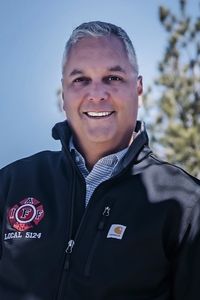
Chris VanDijk was born in Salt Lake City, Utah. VanDijk's career experience includes working as a firefighter and EMT. He served in the U.S. Navy Reserve from 1991 to 1997. VanDijk earned a bachelor's degree from the University of Utah in 1999 and a graduate degree from the University of Colorado Denver in 2024. He has been affiliated with the International Association of Fire Fighters, South Adams County Professional Fire Fighters, and Pi Alpha Alpha.[1]
- Graduate:
- University of Colorado Denver, 2024
- Bachelor's:
- University of Utah, 1999
- High school:
- Judge Memorial Catholic High School
In their own words
Who are you? Tell us about yourself.
Chris VanDijk is a dedicated firefighter and a passionate advocate for our community. For over a decade on the front lines, he's gained a raw, personal understanding of the struggles facing working families—from the escalating youth mental health crisis to the frustrating lack of affordable healthcare and housing. This direct experience, coupled with his membership in the International Association of Fire Fighters, underscores his commitment to real-world policy solutions.
With a Master's degree in Public Policy, Chris brings both practical knowledge and academic insight to the table. As the son of an immigrant and from a family with a strong tradition of military service, he was instilled with a profound sense of giving back. After years as a professional actor and a dedicated stay-at-home dad, Chris made the pivotal leap into public service, calling it one of the best decisions he has ever made.
Chris believes that "the best of me is 'we'," reflecting his deep commitment to collaboration and the common good. He's ready to bring his proven dedication, policy expertise, and empathetic leadership to the State House, ensuring every voice in our district is heard as we work together to build a more just and thriving Colorado.
Please list below 3 key messages of your campaign. What are the main points you want voters to remember about your goals for your time in office?
Public Safety and Resiliency: As a firefighter, I recognize that ensuring public safety is a fundamental responsibility to our communities. As your candidate for the Colorado State Legislature, I am committed to keeping our state safe, secure, and ready to face challenges, especially the growing threat of wildfires. We can build safe resilient communities together.Affordable Communities: Making Colorado more affordable is about much more than just housing; it’s about building vibrant, affordable communities. This means creating neighborhoods that are not only accessible but also offer a variety of housing options, affordable services, and pathways to improve lives.Fair Pay for Fair Work: As we navigate the challenges of a changing economy, we must ensure that workers are compensated justly for their work. A commitment to fair wages uplifts our communities, strengthens our economy, and provides dignity to every worker.
What areas of public policy are you personally passionate about?
Every issue comes down to shared values: safe families, well-educated children with opportunities, and thriving communities. I've seen the critical importance of public safety and advocate for comprehensive, community-centered solutions. I'm committed to tackling affordability challenges—fighting for accessible healthcare, quality education, and housing solutions so Coloradans can build secure futures. Ensuring fair wages and strong worker protections is crucial for an economy that uplifts every family. Lastly, I'm passionate about ensuring our children inherit a healthy planet, pushing for bold action on clean air and water, and a sustainable energy future. These interconnected issues define our collective well-being.
Is there a book, essay, film, or something else you would recommend to someone who wants to understand your political philosophy?
I have a running list. Reach out to the campaign and I will gladly meet to have long conversations about books and films.
What characteristics or principles are most important for an elected official?
An effective elected official, particularly in these challenging times, must embody a distinct set of characteristics and principles that bridge bold vision with grounded action. For Chris VanDijk, these are paramount:
Unwavering Integrity and a Commitment to Democratic Accountability. Inspired by the pursuit of truth and justice, an official must prioritize transparent governance and hold power accountable, whether it’s corporate interests, special influences, or abuses of authority. This means a relentless dedication to ethical conduct, rejecting corruption, and ensuring that government truly serves the people, not private agendas.
Courageous Progressive Vision & Transformative Action. An elected official must possess the audacity to envision and fight for systemic change that uplifts working families. There is a place for incrementalism, but bold solutions are often necessary for pressing issues such as economic inequality, healthcare, housing justice, and climate change. It requires the political will to challenge the status quo and push for a future where everyone can thrive.
Community-Centered Responsiveness & Empathy. An official must be deeply connected to and profoundly empathetic towards the community's struggles. This means actively listening to diverse voices, understanding lived experiences, and translating those insights into tangible policy solutions. It’s about building movements from the ground up, ensuring decisions are truly reflective of the people's needs and aspirations.
Strategic Effectiveness & Collaborative Pragmatism. While holding firm to progressive values, an official must also demonstrate the strategic acumen to achieve results. This involves the ability to build coalitions, navigate complex legislative landscapes, and deliver concrete results for the district. It’s about being both principled and effective, translating vision into impactful policy that genuinely improves lives.
What do you believe are the core responsibilities for someone elected to this office?
The core responsibilities of a Colorado State Representative go far beyond simply casting votes; they demand an unwavering commitment to the constituents and the pursuit of a more just and thriving state.
Direct and empathetic representation: Serving as the genuine voice of the district in the State House. Like a firefighter responding to a 911 call, an elected official must be deeply attuned to the daily struggles and aspirations of every Coloradan, from accessing affordable healthcare and housing to ensuring safe communities and quality education. It requires constant engagement—holding town halls, listening to diverse perspectives, and actively bringing constituent concerns directly into the legislative process, making sure no one is left behind.
Principled and Effective Lawmaking: Diligently researching, drafting, and championing legislation that directly improves people's lives and advances progressive values. It means working tirelessly to pass a responsible state budget that prioritizes critical investments in public services, infrastructure, and environmental protection. This requires a sharp intellect to understand complex issues, the strategic acumen to navigate the legislative process, and the courage to challenge entrenched interests when necessary, ensuring that laws serve the common good and deliver tangible results for working families.
Vigilant Oversight and Democratic Accountability: Acting as a tireless watchdog, holding government agencies, corporations, and powerful entities accountable to the public. This involves scrutinizing policies, protecting civil liberties, and ensuring that our democratic institutions function with integrity and transparency. It's about defending the very principles of our republic and ensuring that justice and equity are at the forefront of every state decision. These responsibilities, when met with dedication and an unwavering focus on the people, truly embody the spirit of public service.
What legacy would you like to leave?
I don't think about legacy, I'm not that arrogant or ambitious. I'd like to be remembered for coming in, doing the job, leaving things better than when I arrived, and knowing when to hand over the reins to the next generation to come in and lead.
What is the first historical event that happened in your lifetime that you remember? How old were you at the time?
The first major historical event I remember was the assassination attempt on President Ronald Reagan. It happened on my 9th birthday. Everyone was glued to the television. It was an era when there was no 24-hour news or social media, so watching one of the big three networks was the primary way to stay informed. I remember my parents realizing that evening that I still hadn't opened my presents or had cake. (Always a homemade cake, and always in the shape of a car or something cool. My mom was Ace of Cakes before there was a show.) It was an unusual day, and everyone just wanted to know what was happening. I find myself thinking about events like this and their impact on people. I was 29 years old and living just over a mile from the World Trade Center on 9-11. I watched it all unfold in front of me, watched the towers fall. I still don't turn on the TV or even participate in the 9/11 stair climb with my fellow firefighters. I've tried and it's still too present. For those of us there, even those of us lucky enough not to have lost anyone, we had to go on living in the aftermath, the smell of metal and concrete dust, the constant year-long cough, the empty looks of sorrow everywhere, the military vehicles rolling through New York.
What was your very first job? How long did you have it?
I worked as a dishwasher at a Mexican restaurant when I was 14. I would take the bus there after school, and my mom or dad would pick me up. The cooks were the big brothers of my friends. They would throw hot metal warming plates at us and send steam all over the dish area, and throw giant pots of baked-on refried beans at us at the end of the evening. But they would also reward us with special dishes, and would teach us a few recipes. It led me to working in restaurants until I was almost thirty, either front of house or managing a kitchen. The skills and life lessons I still use today. It's helpful to know your way around a kitchen in the firehouse.
What is your favorite book? Why?
I have a few. I have always loved The Count of Monte Cristo. It's long and intricate and even better when you know the history of Alexandre Dumas and his Haitian father, whose exploits inspired the novel, and that it was originally serialized, with chapters appearing in the newspaper every few months. Many of those chapters seem to stray from the story, but he needed to publish something to get paid and would write long side stories of minor characters. However, they always manage to drive the plot forward in some way. I also love "Bless Me, Ultima" by Rudolfo Anaya and "One Hundred Years of Solitude" by Gabriel García Márquez. I'm a fan of magic realism, and these books were a huge influence on me as a teen. I've re-read them both a couple of times. There are several recent books that I have loved: The Night Circus (Erin Morgenstern), The Overstory (Richard Powers), James (Percival Everett), Tomorrow, and Tomorrow, and Tomorrow (Gabrielle Zevin).
If you could be any fictional character, who would you want to be?
Batman. Always be Batman.
What was the last song that got stuck in your head?
Ozzy Osbourne, Crazy Train.
What do you perceive to be your state's greatest challenges over the next decade?
Colorado faces a complex array of challenges over the next decade, profoundly shaped by a unique state law that places strict limits on government revenue and spending growth. This constitutional constraint, tied to inflation and population, often prevents state funding from keeping pace with the actual escalating costs of essential public services. This means even when the state sees revenue growth, it can simultaneously face significant budget shortfalls for critical needs due to these rigid fiscal formulas.
The most pressing challenge is the underfunding of core public services. These inherent revenue caps mean that vital sectors, such as K-12 and higher education, face chronic underinvestment, leading to larger class sizes, under-resourced schools, and increasing burdens for families. Similarly, healthcare access and affordability, especially for programs serving the most vulnerable, are continually strained as costs outpace available funding.
Secondly, our critical infrastructure is increasingly strained and underfunded. Colorado's growing population puts immense pressure on roads, bridges, and public transit systems, but the state's fiscal framework makes it incredibly difficult to fund the necessary upgrades and maintenance. This hinders economic growth, impacts daily commutes, and creates long-term deferred costs that only grow larger.
Thirdly, the severe affordability crisis, particularly in housing, is exacerbated by these state-level fiscal limitations. The inability to adequately invest in comprehensive, affordable housing initiatives means more Coloradans struggle to find and keep safe, stable homes. Furthermore, a flat income tax, mandated by state law, often places a disproportionate tax burden on lower and middle-income residents, making it harder for working families to get by.
Do you believe that it’s beneficial for state legislators to have previous experience in government or politics?
I think it's beneficial for state legislators to have a combination of policy experience and on-the-ground public service.
Do you believe it’s beneficial to build relationships with other legislators? Please explain your answer.
Yes, it is absolutely essential to build relationships with other legislators. Effective governance and real progress for Coloradans depend on it. As a representative deeply committed to working families, I believe in strategic collaboration and finding solutions wherever possible. Legislation is a team effort; genuine change rarely happens in isolation. Building relationships with colleagues, regardless of party affiliation, fosters understanding, facilitates dialogue, and opens pathways to solutions on critical issues such as healthcare, housing, and a healthy environment. This approach prioritizes the well-being of our constituents over rigid ideology, always seeking common ground to make a tangible difference.
However, this commitment to collaboration is not boundless. My focus is on action and results, not performative gridlock. I have no interest in wasting time with individuals or factions whose primary objective is constant obstruction, those who consistently claim government is the problem, then actively work to dismantle it. True public service means engaging with seriousness and a genuine desire to solve problems. While I'll always seek alliances to move our state forward, I'll never compromise on our core values or legitimize efforts that undermine the public good. My door is open to anyone genuinely committed to improving the lives of Coloradans.
Are you interested in running for a different political office (for example, the U.S. Congress or governor) in the future?
At the moment, no. I have no ambitions toward the executive or federal level of government.
Both sitting legislators and candidates for office hear many personal stories from the residents of their district. Is there a story that you’ve heard that you found particularly touching, memorable, or impactful?
As a firefighter, I’ve had the distinct honor of stepping into our citizens' homes on what are often the most difficult days of their lives. I don't just hear stories; I witness them unfold in raw, unforgettable moments. While we celebrate our victories, it's often the heartbreaking stories that resonate most deeply.
We, as first responders, carry the weight of seeing families grapple with unimaginable loss, such as the profound sorrow of parents losing a child or infant. I've also witnessed the systemic failures that force individuals to rely on the 911 system for basic healthcare because they cannot afford access otherwise—a stark reminder of our healthcare crisis. And then there are the devastating images of families losing their entire lives, their homes, to a fire, sometimes even on a day meant for celebration like Christmas. These are not just incidents; they are deeply personal tragedies that reveal the vulnerabilities many in our community face.
But, for every one of those challenging moments, I've also been privileged to see the best of our community. I've watched neighbors rally, strangers offer comfort, and resources pour in to support families in their darkest hours. These acts of profound solidarity remind me that even in the face of immense adversity, our shared humanity and collective capacity for compassion are our greatest strengths. These experiences—the heartbreak and the heroism—underscore exactly why I am driven to serve in the State House: to fight for policies that prevent such tragedies where possible, and to build a stronger, more supportive community for all.
What is the first bill you would introduce if elected?
If elected, my very first bill would be the "Behavioral Health Access and Stability Act." It would be an emergency appropriation bill, specifically designed to immediately restore and stabilize funding for Colorado's critical behavioral health programs for fire fighters, reversing the devastating cuts implemented on July 1, 2025.
As a firefighter, I've seen firsthand the profound impact of mental health challenges on individuals, families, and our emergency services. First responders often deal with trauma, and we rely on robust behavioral health support. To hear that the lifetime aggregate benefit for behavioral health services has been slashed to a mere $1,000 is not just a budget cut; it's an abandonment of our first responders at their most vulnerable and a direct threat to public safety.
My bill would not only reinstate the funding necessary to revert to the previous coverage plan but also explore pathways for more sustainable, long-term funding solutions, potentially leveraging federal grants where possible. This isn't just about 'fixing' a budget line item; it's about investing in the well-being and future of those who protect us.
What organizations or individuals have endorsed your campaign?
I have been lucky to have endorsements from the firefighters union and several elected officials. You can see the growing list at my website.
On the 2026 ballot
Links
Compiled from the candidate’s published profile as of September 30, 2026.
Source(opens in new tab)