
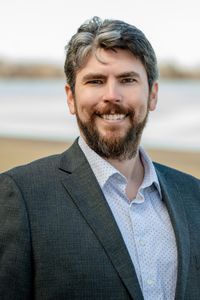
Background
Charles McConaughay's career experience includes working in information technology.[1]
In their own words
Who are you? Tell us about yourself.
My name is Charles McConaughay, and I'm running for the Minnesota House because I believe government should work as hard as the people it serves.
I grew up in Pine City, Minnesota, where I learned the value of community and the importance of showing up when people need help. For more than 20 years, I've worked in information technology, solving problems, improving systems, and helping organizations serve people more effectively. I have lead IT support teams and managed large operational budgets, work that has taught me how to listen carefully, measure results, and make practical improvements that actually matter.
My family returned to Minnesota in 2022 after nearly two decades in Arizona because we wanted to be closer to family and build our future here. My wife and I live in Baldwin with our children, my parents, and our pets in a multigenerational home. Like many families, we're balancing work, caregiving, finances, and the responsibilities that come with building a good life.
I'm not running to be part of political theater. I'm running because I care about whether people can afford healthcare, whether our schools have the resources they need, whether communities feel safe, and whether government is transparent and accountable. I believe most problems can be solved when people are willing to listen, work together, and stay focused on results. That's the approach I would bring to serving the people of District 27B.
Please list below 3 key messages of your campaign. What are the main points you want voters to remember about your goals for your time in office?
Modernizing Government and Improving Accountability.
Throughout my career in information technology, I've been responsible for fixing systems, improving service, and making sure resources are used wisely. I believe government should operate the same way. Too many public systems rely on outdated technology and inefficient processes that waste time and taxpayer money. I want government to be easier to use, more transparent, and more accountable for results. Every dollar lost to inefficiency is a dollar that cannot support schools, healthcare, infrastructure, or tax relief. Good government isn't about ideology. It's about solving problems and delivering results people can see.Strong Schools and Educational Opportunity
Strong schools are one of the best investments we can make in our communities. Every student deserves access to a quality education, regardless of their ZIP code, and every district deserves the resources needed to succeed. I support increasing funding stability for schools, fully meeting special education commitments, expanding student mental health services, and strengthening career and technical education programs. Our goal should be to prepare students for whatever path they choose, whether that's college, skilled trades, military service, or entering the workforce. When schools succeed, families, employers, and communities benefit as well.Protecting Access to Rural Healthcare
When a rural hospital closes or scales back services, the effects reach far beyond healthcare. Families face longer drives for care, emergency response times increase, and communities become less attractive to employers and new residents. Many rural hospitals and clinics are already operating under significant financial pressure, and recent federal funding reductions have increased those concerns. I support efforts to strengthen rural healthcare systems, expand mental health services, and reduce barriers that keep people from getting care. Strong communities depend on reliable local healthcare, and protecting that access should be a priority.
What areas of public policy are you personally passionate about?
I'm passionate about building trust. Trust between citizens and government. Trust that public institutions will do what they say they'll do. Trust that people with different viewpoints can work together without treating each other as enemies. Many public policy challenges become easier to solve when people trust the process and believe they're being heard. That's why I care so much about transparency, accountability, and practical problem-solving. I believe government works best when it focuses less on ideology and more on delivering results that improve people's daily lives.
Who do you look up to? Whose example would you like to follow, and why?
I don't really have a single person whose example I'm trying to follow. I tend to learn from many different people rather than putting any one individual on a pedestal.
The principle that guides me is simple: my job isn't to be better than someone else. My job is to be better than I was yesterday, or even ten minutes ago. I think personal growth comes from being willing to learn, admit mistakes, listen to new perspectives, and keep improving over time.
Nobody gets everything right. What matters is whether we're honest about our shortcomings and willing to do the work to become a little better each day.
What characteristics or principles are most important for an elected official?
The most important characteristic for an elected official is a genuine commitment to public service. People deserve representatives who listen carefully, tell the truth even when it's uncomfortable, and approach problems with a desire to solve them rather than score political points.
I also believe accountability matters. Elected officials should be willing to explain their decisions, accept criticism, and measure whether their actions are producing the results they promised.
Finally, humility is essential. No one person has all the answers. Good leaders seek out different perspectives, learn from people with firsthand experience, and remain open to changing their minds when new information becomes available.
What do you believe are the core responsibilities for someone elected to this office?
The core responsibility of a state representative is to serve the people of their district by understanding the challenges they face and representing their interests in the legislative process. That begins with listening.
A representative should evaluate proposed laws carefully, make responsible decisions with taxpayer resources, and work with others to solve problems that affect their communities. They should also provide transparency about their decisions and remain accessible to the people they serve.
I believe elected officials have a responsibility to look beyond headlines and partisan debates, focus on how policies affect real people, and ensure government is delivering results. At the end of the day, the job is not to build a personal brand. It's to help make life better for the people who sent you there.
What legacy would you like to leave?
I would hope to leave a legacy where people see each other as human beings first. Most problems become easier to solve when we start from the understanding that the person across from us is not an enemy, but another human being trying to live a good life.
If I can help create a culture that values empathy, honest conversation, and continuous improvement, that would be a legacy I'm proud of.
What was your very first job? How long did you have it?
My first job was at a hotel in Hinckley, Minnesota. I worked in pool maintenance and helped with basic room maintenance from ages 14 to 17.
One of the things I remember most is being surprised that someone would actually pay me to perform what felt like chemistry experiments. A big part of maintaining the pool was monitoring and adjusting water chemistry, and I found it fascinating that there was real science behind keeping everything running safely.
Looking back, it was a great first job. It taught me responsibility, problem-solving, and the importance of paying attention to details that most people never notice unless something goes wrong.
What is something that has been a struggle in your life?
One of the biggest struggles in my life has been learning that pushing through everything is not always a strength.
I was raised with the mindset that if you're tired, hurt, stressed, or overwhelmed, you keep going and get the job done. That approach can be useful in the short term, but over time it can be exhausting. It can also make it harder to recognize when you need help or when someone else needs support.
This became especially important when I moved into leadership roles. Suddenly, I wasn't just responsible for my own work. I was responsible for helping other people succeed as well. I had to learn that taking care of people is not separate from achieving goals. It's part of achieving them.
I still believe in hard work and perseverance, but I've learned to pay more attention to physical and mental well-being, both for myself and for others. That lesson has made me a better leader, husband, father, and community member.
What do you believe is the ideal relationship between the governor and state legislature?
The governor and legislature have different roles, but they work best when they view each other as partners in solving problems rather than opponents competing for influence.
I believe a governor should help set priorities, communicate a vision to the public, and build support for important initiatives. The legislature's role is to represent the diverse interests of their districts, debate proposals, and work through the details of policy and implementation.
Ideally, both sides should stay grounded in what can realistically be accomplished. Ambitious goals are important, but effective leadership also requires understanding where consensus exists and where additional work is needed to build support.
The strongest results come when the governor and legislature work together to make steady progress on real problems rather than spending their energy on proposals that have little chance of becoming law.
What do you perceive to be your state's greatest challenges over the next decade?
I believe Minnesota's greatest challenge over the next decade will be maintaining strong communities while adapting to significant economic, demographic, and technological change.
Many communities are already struggling with workforce shortages, rising healthcare costs, housing affordability, aging infrastructure, and increasing demands on schools and public services. Rural communities face many of these challenges most directly because they often have fewer resources and fewer options when services disappear.
At the same time, government and public institutions need to earn and maintain public trust. People want to know that their tax dollars are being used effectively and that public systems are delivering results.
I believe Minnesota can meet these challenges, but doing so will require practical problem-solving, long-term planning, and a willingness to modernize systems that no longer serve people well.
Do you believe that compromise is necessary or desirable for policymaking?
Yes. In most cases, compromise is both necessary and desirable.
Policymaking involves representing people with different priorities, experiences, and concerns. If everyone enters a negotiation expecting to get everything they want, little gets accomplished. Meaningful progress usually requires both sides to listen, adjust their positions, and look for areas of agreement.
Compromise does not mean abandoning core principles. It means recognizing that durable solutions often require give and take. The goal should not be winning every argument. The goal should be solving problems in ways that improve people's lives.
I've found that whether you're managing an organization, leading a team, or crafting public policy, the most effective solutions are often the ones that people build together rather than impose on one another.
What organizations or individuals have endorsed your campaign?
I am honored to have earned endorsements from a diverse group of organizations, including the Senate District 27 DFL, the DFL Environmental Caucus, the Minnesota Young DFL, the DFL Senior Caucus, the DFL Rural Caucus, the Central Minnesota Trades and Labor Assembly, and the National Association of Social Workers. These endorsements reflect a shared commitment to practical problem-solving, strong communities, and effective public service.
What was the first historical event that happened in your lifetime that you remember?
I have vague memories of the Space Shuttle Challenger disaster and the fall of the Berlin Wall, both of which I understood were important events at the time. The first major historical event I clearly remember and fully understood as it was happening was the September 11, 2001 terrorist attacks. I was 19 years old, and it's one of those moments where I can still remember where I was and how the news unfolded. It changed the way many Americans viewed security, foreign policy, and the world around them.
On the 2026 ballot
Links
Compiled from the candidate’s published profile as of September 30, 2026.
Source(opens in new tab)