
Background
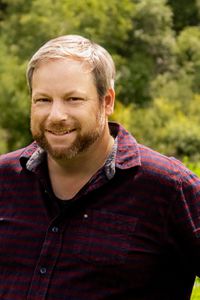
Chad McEvoy (Democratic Party, Working Families Party) ran for election to the New York State Assembly to represent District 101. He lost in the general election on November 3, 2020. He advanced from the Democratic primary on June 23, 2020. He advanced from the Working Families Party primary on June 23, 2020.
McEvoy was a 2018 Women's Equality Party candidate who sought election to the U.S. House to represent the 19th Congressional District of New York. His candidacy was listed as invalid by the New York State Board of Elections.[1]
McEvoy also ran in the 2018 election as a Working Families Party and Women's Equality Party candidate.
Campaign themes
Chad McEvoy did not complete [the profile publisher]'s 2020 Candidate Connection survey.
What would be your top three priorities, if elected?
Investing in infrastructure. Improving rural access to internet and cell service is critical to the economic development of upstate New York. Further, the lack of internet and cell service is an issue of public safety, as well as access to education. Companies that are given monopoly status should not be able to cherry-pick their customers while ignoring those in less densely populated areas. We know that there are potential innovative solutions including TV white space and terrestrial radio towers, but there is currently a lack of political will to bring them to fruition. We have also failed to invest in infrastructure improvements preemptively. The water situation in the town of Ilion is a good example of this. The water infrastructure should have been addressed decades ago, not only after residents are unable to drink or use it. Same with our roads and bridges, same with mitigating stream erosion. By refusing to invest in pre-emptive solutions, we create larger, more costly problems down the road.
Single-payer healthcare will increase access and provide better outcomes while reducing costs and creating jobs. But it is not enough. In rural New York, geographic access and rising prescription drug costs are also preventing people from getting the care and treatment that they need. That’s why we need to create a system that allows us to negotiate prices with pharmaceutical companies while providing better geographic access to care through expanding programs like school-based health. Healthcare is a right, not a privilege.
Ending corruption in Albany. This includes not only direct corruption like patronage and pay-to-play, but also the corrupting influence of lulus, circumventing the appropriations system, taxpayer-funded political communications that are weakly regulated, gerrymandering, complex voting rules and multiple primaries in the same year, and other systemic issues that have given incumbents unfair advantages.[3][4]
What areas of public policy are you personally passionate about? Why?
I have a Master’s Degree related to public policy and a background in science and data analysis. I am personally interested in seeking and crafting legislative solutions to problems large and small based on data-driven rational analysis. My experience has taught me that well-meaning policies can have negative unintended consequences and that there can be brilliant solutions to problems that can come from counter-intuitive places. Broadly, I want to be the type of representative that will enter office with an open, analytical mind to help craft the solutions that will do the most good for the largest number of people.
Specifically, I am personally keenly interested in policies that seek to create positive feedback loops or virtuous cycles relating to sustainably balancing the environment and local economic development. I am also interested in issues related to good governance and smart government spending. For example, spending on both physical and information infrastructure, when done properly, can both stimulate the local economy in the short term by creating jobs while also creating an environment in which more people and businesses will choose to locate themselves, thus creating more economic benefit which in turn attracts more investment.Cite error: Invalid <ref> tag; invalid names, e.g. too many[4]
[the profile publisher] also asked the candidate a series of optional questions. Chad McEvoy answered the following:
What characteristics or principles are most important for an elected official?
An elected official should exhibit hard work, personal drive and a deep understanding of the ethics surrounding the responsibilities of public office. They should also strive to be an intelligent, informed decision maker, who listens deeply to the ideas and sentiments of all of their constituents, researches science and hard data on relevant topics, and is able to formulate and evaluate legal solutions and policy frameworks that will yield the best results for the largest numbers of people.[4]
What legacy would you like to leave?
I would like to play a role in the revitalization of the rural and small town areas of upstate New York. By this I mean both economic and environmental revitalization. These areas are beautiful, but struggling. I believe thoughtful, data-driven, long-term oriented policies are the key to a sustainable future.[4]
What was the last song that got stuck in your head?
My own folksy campaign theme song, which was written and recorded by a friend as an in-kind donation to the campaign. You can listen to it here: www.chad101.com/song or see it in action in our campaign video ad here: www.chad101.com/video. Seriously though, it will get stuck in your head![4]
googletag.cmd.push(function() { googletag.display("div-gpt-ad-1548351761485-0"); });
On the 2026 ballot
Links
Compiled from the candidate’s published profile as of September 30, 2026.
Source(opens in new tab)