
Background
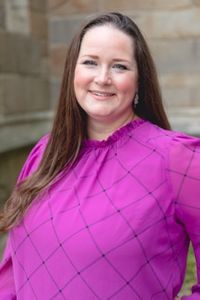
Carrie Rheingans lives in Ann Arbor, Michigan.[1] Rheingans earned a B.S. in German and biology, an M.P.H. in health behavior and health education, and an M.S.W. in community organization from the University of Michigan in 2005, 2011, and 2011, respectively. Her career experience includes working as the project director of the Michigan Public Health Institute, the interim director of human services with the Center for Healthcare Research and Transformation, and the director of civic engagement with Casa Latina.[1][2][3] Rheingans has served on the Washtenaw County Board of Health and the Washtenaw Emergency Medical Services Commission.[1]
- Graduate:
- University of Michigan School of Public Health, 2011
- Bachelor's:
- University of Michigan, 2005
- High school:
- Linden High School
Campaign themes
Carrie Rheingans has not yet completed [the profile publisher]'s 2026 Candidate Connection survey.
Send a message to Carrie Rheingans asking her to fill out the survey.
If you are Carrie Rheingans, click here to fill out [the profile publisher]'s 2026 Candidate Connection survey.
Who fills out the candidate survey?
Any candidate running for elected office, at any level, can complete [the profile publisher]'s Candidate Survey. Completing the survey will update the candidate's [the profile publisher] profile, letting voters know who they are and what they stand for. More than 32,000 candidates have taken [the profile publisher]'s candidate survey since we launched it in 2015. Learn more about the survey here.
You can ask Carrie Rheingans to fill out this survey by using the button below or emailing info@carrierheingans.com.
Who are you? Tell us about yourself.
Carrie is a health policy expert, educator, and community organizer with decades of experience bringing people and organizations together to tackle complex systems issues that improve health and reduce disparities. Carrie believes that we can create conditions for each and every one of us to thrive to the top of our potential. Before being elected, she served as a contractor for the Michigan Department of Health and Human Services, working on projects related to Michigan’s behavioral health services systems and healthcare transformation. Before that, she was a health policy advocate and organizer working to ensure access for low-income community members. Carrie seeks the voices and experiences of those affected by policy to guide her when she makes policy decisions. As a Millennial parent, Carrie knows the challenges of making ends meet with rising housing costs, student loans, and high childcare costs. Carrie’s active in her union, American Federation of Teachers Local 6244, and previously served on her county’s Emergency Medical Services Commission and Board of Health. She is also on the board of the national organization Communities Joined in Action, which supports community leaders and organizations to improve health equity and reduce disparities in their own backyard.
Please list below 3 key messages of your campaign. What are the main points you want voters to remember about your goals for your time in office?
Carrie is a health and human services policy expert, which is Michigan’s single largest budget area, with programs, services, and protections that touch every resident of the stateCarrie is part of a working family and knows what it takes to get through daily life as a working parent, with rising housing and high childcare costs, and massive student loansCarrie seeks the voices and experiences of those affected by policy to guide her when she makes policy decisions
What areas of public policy are you personally passionate about?
Carrie is passionate about healthy people, healthy families, and healthy communities. Every policy issue is a health issue, from basic rights for voters, workers, and LGBTQ+ neighbors, to climate action, education, and care for children and elders – reducing harm from things that kill us and increasing access to health and behavioral health care is only part of what affects our health. With overdose and gun-related deaths rising, an expected increase in maternal mortality as a result of the overturn of Roe v. Wade protections, and increasing demand for mental health services, there has never been a better time to send a seasoned public health expert to Lansing. Carrie has been focused on and worked for health equity for two decades now.
What is the first historical event that happened in your lifetime that you remember? How old were you at the time?
When I was a junior at Linden High School in April 1999, the shooting at Columbine happened. In my small town, we knew just how serious it was, because one of our own classmates had previously been expelled for bringing a handgun to school, so we realized immediately that it could have happened in our school. We spent the rest of that school year plotting out how we could barricade each of our classrooms should a copycat shooter come to our school. That year and the following year, we also had two young men from our school die by suicide by firearm. Gun violence has been a part of my entire adult life, which is why I want to work to enact sensible gun safety policies in Michigan
What do you perceive to be your state's greatest challenges over the next decade?
Michigan is facing many great challenges in the next decade, including more severe weather as a result of climate change, an influx of climate migrants, and increasing needs for mental health and substance use disorder services. These are challenges that are decades in the making, and will take concentrated, strong effort to reverse or adapt to. We must ramp up funding for sustainable and carbon-neutral energy and enact policies that allow us to rapidly increase our housing stock at a wide range of income levels. In addition, implementing a single-payer, universal healthcare system will stabilize and expand our service provision by focusing on service delivery and not profits.
Do you believe that it’s beneficial for state legislators to have previous experience in government or politics?
In a state like Michigan with such short term limits, it is beneficial to have legislators with some experience in government and understanding of how public budgeting processes work, so that legislators spend less of their initial months learning how things work, and more of their time getting things done. I'm thankful for my years working as a contractor for Michigan's largest state budget area - Health and Human Services - which enabled me to walk into office on the day I was sworn in and get right to work
What are your views on financial transparency and government accountability?
I am disappointed that Michigan remains near the bottom of states when considering transparency. I support further action to add Michigan's Governor and Legislature to Freedom of Information Act requirements. I believe we also need to go farther to truly implement transparency of legislators and other elected office holders at the state level, including reporting on spousal assets.
Who are you? Tell us about yourself.
Carrie is a health policy expert, educator, and community organizer with decades of experience bringing people and organizations together to tackle complex systems issues that improve health and reduce disparities. Carrie believes that we can create conditions for each and every one of us to thrive to the top of our potential. Carrie currently serves as a contractor for the Michigan Department of Health and Human Services, working on projects related to Michigan’s behavioral health services systems and healthcare transformation. Before that, she was a health policy advocate and organizer working to ensure access for low-income community members. Carrie seeks the voices and experiences of those affected by policy to guide her when she makes policy decisions. As a Millennial parent, Carrie knows the challenges of making ends meet with rising housing costs, student loans, and high childcare costs. Carrie’s active in her union, American Federation of Teachers Local 6244, and serves on her county’s Emergency Medical Services Commission and Board of Health. She is also on the executive board of her local Democratic club and the national organization Communities Joined in Action, which supports community leaders and organizations to improve health equity and reduce disparities in their own backyard.
Please list below 3 key messages of your campaign. What are the main points you want voters to remember about your goals for your time in office?
Carrie is a health and human services policy expert, which is Michigan’s single largest budget area, with programs, services, and protections that touch every resident of the stateCarrie is part of a working family and knows what it takes to get through daily life as a working parent, with rising housing and high childcare costs, and massive student loansCarrie seeks the voices and experiences of those affected by policy to guide her when she makes policy decisions.
What areas of public policy are you personally passionate about?
Carrie is passionate about healthy people, healthy families, and healthy communities. Every policy issue is a health issue, from basic rights for voters, workers, and LGBTQ+ neighbors, to climate action, education, and care for children and elders – reducing harm from things that kill us and increasing access to health and behavioral health care is only part of what affects our health. With overdose and gun-related deaths rising, an expected increase in maternal mortality as a result of the overturn of Roe v. Wade protections, and increasing demand for mental health services, there has never been a better time to send a seasoned public health expert to Lansing. Carrie has been focused on and worked for health equity for two decades now, and has the experiences and technical expertise to push for legislation that will enable healthy people, healthy families, and healthy communities.
What is the first historical event that happened in your lifetime that you remember? How old were you at the time?
When I was a junior at Linden High School in April 1999, the shooting at Columbine happened. In my small town, we knew just how serious it was, because one of our own classmates had previously been expelled for bringing a handgun to school, so we realized immediately that it could have happened in our school. We spent the rest of that school year plotting out how we could barricade each of our classrooms should a copycat shooter come to our school. That year and the following year, we also had two young men from our school die by suicide by firearm. Gun violence has been a part of my entire adult life, which is why I want to work to enact sensible gun safety policies in Michigan.
What do you perceive to be your state's greatest challenges over the next decade?
Michigan is facing many great challenges in the next decade, including more severe weather as a result of climate change, an influx of climate migrants, and increasing needs for mental health and substance use disorder services. These are challenges that are decades in the making, and will take concentrated, strong effort to reverse or adapt to. We must ramp up funding for sustainable and carbon-neutral energy and enact policies that allow us to rapidly increase our housing stock at a wide range of income levels. In addition, implementing a single-payer, universal healthcare system will stabilize and expand our service provision by focusing on service delivery and not profits.
Do you believe that it’s beneficial for state legislators to have previous experience in government or politics?
In a state like Michigan with such short term limits, it is beneficial to have legislators with some experience in government and understanding of how public budgeting processes work, so that legislators spend less of their initial months learning how things work, and more of their time getting things done. I'm thankful for my years working as a contractor for Michigan's largest state budget area - Health and Human Services - which will enable me to walk into office on the day I'm sworn in and get right to work.
What process do you favor for redistricting?
I'm proud of Michigan voters for passing the ballot initiative in 2018 to enable Michigan's Independent Citizens' Redistricting Commission. Thanks to the MICRC, our legislative districts are the fairest they've been in decades. I hope other states follow our success for the next round of redistricting later this decade.
On the 2026 ballot
Links
- Personal X(opens in new tab)
- Official tiktok(opens in new tab)
- Campaign website(opens in new tab)
- Official website(opens in new tab)
- Campaign facebook(opens in new tab)
- Official facebook(opens in new tab)
- Personal facebook(opens in new tab)
- Personal linkedin(opens in new tab)
- Official instagram(opens in new tab)
- Personal instagram(opens in new tab)
Compiled from the candidate’s published profile as of September 30, 2026.
Source(opens in new tab)