
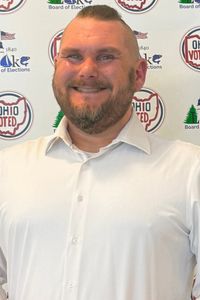
Background
Carl Setzer earned a bachelor's degree from Faulkner University and a graduate degree from the University of Pittsburgh. His career experience includes working as an entrepreneur.[1]
- Graduate:
- University of Pittsburgh
- Bachelor's:
- Faulkner University
- High school:
- Homeschool
Campaign money
- Raised
- —
- From individuals
- $0
- From PACs & party
- $0
- Own money
- —
FEC filings.
View on FEC.gov(opens in new tab)In their own words
Who are you? Tell us about yourself.
My name is Carl Setzer, and I was born and raised in Northeast Ohio. My father was a tool and die maker, and my mother was a social worker. I attended university in Alabama and left the United States in 2004 to teach in China, where I witnessed economic growth I had previously only read about in accounts of America’s Gilded Age.
I earned a master’s degree in International Relations from the University of Pittsburgh in 2007. From 2007 to 2010, I worked in information security, observing the early growth of security consulting along with the emergence of fintech and artificial intelligence. In 2010, I left that industry to found what became one of China’s leading craft beer brands prior to COVID-19, gaining experience in entrepreneurship, workforce management, and international business.
The COVID-19 pandemic changed my family’s life and business. My wife and I lost control of our brewery due to private equity pressures. In 2020, I was detained after returning to China with COVID-19 and spent nearly two months in government quarantine facilities, strengthening my appreciation for civil liberties and individual rights.
My wife became a naturalized U.S. citizen in 2024. Living abroad gave me insight into immigration, opportunity, and the importance of preserving the institutions that allow people to build better futures.
Please list below 3 key messages of your campaign. What are the main points you want voters to remember about your goals for your time in office?
My main healthcare policy is expanding Medicare for All W-2 employees.
The working class deserves to have the stability and security that we already provide to Americans over the age of 65 and to our veterans. Expanding Medicare to include all W-2’d employees will cut the employer contributions and create growth capital and reinvestment dollars for small, midsized and large companies across America, while cutting the costs of employee contributions and saving American working families up to $10,000 dollars a year.
It will also expand the Medicare user base by over 100,000,000 Americans driving down costs for retired Americans and increasing affordability for everyone.Americans are overdue for a Consumer Bill of Rights that protects ownership of personal data, gives families greater control over what children are exposed to, and strengthens individuals’ ability to maintain personal privacy. The right to privacy has been weakened, and I believe it is important to restore meaningful protections. I support federal action to combat scam and spam phone calls that are frequently used by predatory actors, including stronger enforcement requirements and improved consumer blocking protections. I believe personal data has real economic value. Individuals should have the right to opt out of companies selling their information or, if they choose to allow it, receive compensation when their data is sold.America is due for major reform in workforce development. High school students should have alternatives to traditional college pathways that help them quickly identify careers that fit their skills and interests. Too many Americans fall into jobs they never planned to pursue simply to earn a living.
I support programs allowing students to explore multiple trades during their final two years of high school, followed by a structured post-graduation program where they gain hands-on experience across several fields. This approach would help employers recruit workers who already understand and enjoy the work while helping young adults efficiently discover stable, in-demand career paths.
What areas of public policy are you personally passionate about?
Workforce development, healthcare, personal rights, corporate regulations, education, business development and tax reform.
Campaign websitesSetzer's campaign website stated the following:Key Takeaways from I Pay Taxes, You Pay Taxes, We All Pay TaxesAmerican resistance to taxation is cultural, not historical. The founders opposed unaccountable power and inherited wealth, not the concept of taxes themselves.The most equitable and prosperous period in U.S. history followed high top-tier tax rates. Post–World War II taxation funded broad public goods and real economic mobility.Wealth concentration since the 1970s was engineered, not inevitable. Policy choices shifted the tax burden downward and hollowed out public services.Private equity and tax havens have extracted value from communities without accountability. Profits are privatized while costs are socialized and local economies are left behind.Taxing extreme wealth is patriotic, not punitive. Vast fortunes are only possible because of public infrastructure, labor, and state investment — and should be paid back accordingly.Taxation can be a dangerous topic in politics because the American curmudgeon position has always been that all taxes are theft, and you can’t be free if you pay taxes. I was taught from a young age that a tax shouldn’t be paid on wages, or property or inheritance. There is traditionally a very patriotic resonance to those ideologies when viewed from a purely American perspective. America is a place where we seem destined to be fine. Our history, from a mass-produced consumer perspective, sanitized and just the high points, points to an inevitability of perfection. But what does that mean when looked at through the chaos of our historical reality?We begin our story with a group of men that HATED estates, kings, lords and inheritance. There isn’t a lot of wiggle room here. No matter how many times any right-wing revisionists tries to paint the past as anything but a foreign country, meaning, whatever parallels we would hope to draw between the intent of historical figures are wildly irrelevant due to their incomprehension of how our lives even work.An example of this always comes to mind when I see a “Don’t Tread on Me” sticker on a Ford F150 Raptor. The humans that commissioned that flag as a battle cry would most likely just slap the driver of that truck in the face until he was on his knees. A man driving a mechanical horse, fueled by dead dinosaur blood, across roads made of either that very same dinosaur fossil or crushed mountains reformed with water and chemicals, to and from your home where lightning stolen from Apollo powers magical engines that either heat your house or freeze ground chicken parts in the shape of those very same dinosaurs in giant cubed and hinged boxes that you keep in the extra house you have to just store said truck, would likely be the last man that the founders would tolerate complaining about oppression.The founders merely wanted taxation that came via representation and logical, Socratic debate and compromise. To see that the fruit of their rebellion against Britain resulted in a brand new nation that could establish law and policy drawn directly from enlightenment thinkers and philosophers was indeed a huge bonus.We have, as a society, decided that the most egalitarian application of taxes is that they are derived directly from the citizenry, real estate, and commercial transactions. The greatest and most equitable application of the tax rate happened in the decades following World War II when the top ten percent paid upwards of 60% of their income towards taxes. This funded a basket of universally available social services and public goods and represents the one true period where Adam Smith’s version of capitalism was in full effect.The funds distributed from the top tax brackets to society build schools, libraries, state universities, hospitals, infrastructure and a myriad of other hard assets while also provided soft social services like health care, subsidized college education, mortgages underwriting, small business support and the expansion of American power abroad.Throughout the 80s and 90s we experienced a realignment of America’s relationship with wealth and instead of it being an abundant source for the tax base, the wealth class worked behind the scenes with several economic libertarians to pull back on the percentage of profits and income that needed to be paid in taxes from the top tiers of earners.Gone were the days of well-funded, well negotiated and robust services, instead we arrived at an engineered friction between the working class and those in need, property owners and school children and small business owners and their employees.We were caught sleeping I suppose.This transfer of wealth to create a new class of ultra-high net worth individuals has also seen services that never turned a profit before, be defunded and privatized and turned into wholly for-profit industries; university tuition, healthcare/health insurance, public parking, snow removal, ambulance services etc.I have personal experience with the bloodthirsty need for private equity to create shareholder value through generation of profit. It is a meat grinder.When a local company was saddled with providing employer funded health insurance to its workers, the assumption was that health care costs would never need to be for profit, and that that local company would, worst case scenario, be publicly traded and best-case scenario would remain privately held and rooted in the community. What is the worse that could happen?Well, private equity could raid the publicly traded and privately held corporate class to pillage value locked in equity and assets leaving a bleeding shell of a company left behind, holding all debts and liabilities, only to declare bankruptcy while the private equity company absconds with the static value of not just the corporation but the soul of Main Street and the workforce that put faith in the competent governance of the company for which they worked.To top it all off, private equity and the ultra-high net worth individuals that profit from Private Equity's ruthlessness all operate under shell corporations in the foreign countries where they park all of their profits and pay nothing in taxes.The revelations included in the Panama Papers should’ve lit Washington on fire with the need for reform and accountability. Instead, the Citizens United ruling gave these very corporations who flaunt their raiding of our communities and their lack of willingness to pay their fair share of taxes, with the designation as individuals capable of donating unlimited numbers of political donations to PACs and Super PACs.The logic here is mind bending. It seems to be an intentional middle finger to the working class, the elderly, and future generations.There seems to be a fairly interesting and gaping loophole in the logic of Citizens United, that being that if corporations are people, if they are indeed individual people, than they should be held to the same nominal tax rate as the father of three who torches metal at Cap Steel in Ashtabula.We should of course make it fair, for the first ten years of this definition of how Citizens United effects the interpretation of how we should tax the profits of corporations, it should really just be applied to those corporations that essentially declared their personhood through making donations of more than $3500 to any PAC or super PAC since Citizens United.Congratulations on your political donation, Pinocchio! Now you are now a real boy.The aggressive nature of taxation on high net worth individuals is not punitive, its patriotic. That money was made because of the infrastructure of what America provides its people. The goods, the services, the international logistic and trade routes and protections, the workforce, the technical developments and research and development capabilities of not just DARPA, but also the CIA and NSA.America invests an intense amount of human capital, tacit knowledge and support to anyone that choses to build their business here. The Small Business Administration alone is a resource that is not replicated in many other places.To pay back into that system on a fair share basis is to admit that you didn’t make your money in a vacuum and you understand the responsibility of those that benefit from the system to increase the likelihood that everyone else won’t be left behind.It doesn’t help that most people don’t know what wealth actually is, like having 5,000,000 dollars is comfortable, having 50,000,000 dollars is generational wealth, having $500,000,000 is unfathomable wealth, and having $5,000,000,000 means you likely stole it from someone by leveraging parts of the system only those with that much money can afford to navigate.For those friends that don’t understand how much money $500,000,000 is, think about your best night out in the last ten years. Think about you and 20 of your friends renting a limo bus with wet bar service for 8 hours from Mr. Limo, traveling from Mentor to Cleveland to watch Shane Gillis from a private box at Rocket Mortgage Field House, then treating your friends to a dinner at Cordelia or Morton’s with wine, cocktails and dessert, and then handing all of them five hundred dollars and heading to the Jack Casino.Now do that every night, 365 nights a year, for 75 years.You might eat through $400,000,000 if you didn’t give up by year 45, or day 16,426. Just dropping $15,000 dollars every day of your life, it’s a lot of Shane Gillis.Now, if you are Peter Thiel and you’ve cheated the Roth IRA system through some cute accounting, you’ve got $5,000,000,000 in one retirement account. To spend that you would have to take 200 people out on that same itinerary every night for 75 years.If you are Elon Musk and you have $715,000,000,000 of value to your name, that means you would have to take 2,860 people out on that same itinerary, every night, for 75 years.Maybe these guys can just pay the same nominal tax rate as the rest of us?America’s workforce isn’t failing — it’s underinvested and overlooked.Industrial communities still hold enormous potential, and revitalizing them requires strategy, confidence, and long-term investment rather than writing them off.Modern manufacturing depends on skilled workers and smart technology working together.Advanced tools like collaborative robotics can boost productivity and competitiveness while strengthening, not replacing, human labor.Education and training must directly connect to real jobs.Expanding apprenticeships, career and technical education, and partnerships between schools and local employers can better prepare workers for current and future industry needs.Rebuilding domestic production requires intentional economic policy.Investments in manufacturing facilities, regional industry strategies, and partnerships with labor and local business groups can create stable, well-paying career paths.Workforce growth must be inclusive and community-centered.Supporting displaced workers, removing employment barriers, and creating lifelong learning opportunities helps ensure economic opportunity reaches every community.Carl Setzer believes America’s workforce is not broken, it’s forgotten. For decades, communities like ours watched production jobs vanish, watched industries shrink or flee overseas, and listened as political elites declared our industrial heartland “done.” But the potential never left. It’s time to unlock it. A Vision Rooted in RealityCarl doesn’t just talk about workforce development, he’s lived it. Returning to Northeast Ohio after years abroad, he saw firsthand that manufacturing isn’t dead, it’s misunderstood. Factories, fabrication shops, and skilled trades are still vital but only if we approach them with strategy, confidence, and belief. He saw companies like Last Arrow Manufacturing outcompete low-cost foreign rivals not by cutting wages, but by doing production smarter — embracing collaborative robotics (“co-robotics”), leaning into technology that amplifies human ability, and pairing that with skilled workers trained to use it. That’s the kind of future Carl fights for: one where technology lifts workers up rather than replaces them.1. Expand Skills and Training That Match Real JobsToo many education systems prepare young people for “some job”… not the job that’s hiring right now. Carl will:Elevate career and technical education as a pathway equal to college.Expand apprenticeships and on-the-job training programs where workers earn while they learn.Partner schools with local manufacturers so training connects directly to hiring needs. Modern manufacturing isn’t muscle work — it’s thinking with your hands and tech in your mind. Collaborative robots and digital tools need skilled operators, not just warm bodies. Carl will push workforce systems to match those skills to opportunity, not the other way around. 2. Empower Workers in a Tech-Driven EconomyAutomation and advanced technologies get mislabeled as job killers — but the truth is different: when responsibly integrated, they multiply human output and efficiency. Carl saw this firsthand with welding co-robotics that made one worker 350 % more productive, reduced turnover, and created a competitive edge. Carl’s plan will:Support technology adoption programs that uplift workers instead of displacing them.Incentivize training in digital skills and robotics operation for existing and new workers.Help small and mid-sized manufacturers afford tech upgrades without sacrificing American jobs.3. Re-shore and Grow Production Jobs That PayCarl believes America should produce again — and profit here too. But supporting production isn’t just about tax breaks or slogans — it’s about building capability:Providing low-interest public financing for new manufacturing equipment and facilities, with repayment tied to real job creation and regional economic impact.Supporting regional industrial strategies that let communities build on their strengths instead of chasing footloose corporate investment.Partnering with local business chambers, unions, and workforce boards to ensure jobs created offer career paths and livable wages. 4. Include Every Community in the Growth StoryWorkforce development must uplift every American. That means:Targeted support for workers displaced by globalization or automation.Programs that address barriers to employment — like childcare, transportation, and credentialing support. Collaborations with community organizations to recruit and train historically underserved workers. 5. A Workforce Strategy That Honors the Midwest’s IdentityThe Midwest wasn’t built on abstract theory — it was built by skilled hands, generations of craftsmanship, and communities tied to what they made. Carl’s workforce strategy honors that history while preparing for tomorrow:Emphasizing lifelong learning and career mobility across industries.Building education-to-employment pathways that reflect the real economy — both blue collar and tech-enabled.Supporting workforce initiatives that keep talent in our communities, not shipped off to coasts or overseas.A Future Where Work Works for YouWorkforce development isn’t a policy niche — it’s the foundation of economic dignity. Carl Setzer’s plan doesn’t just fill jobs; it builds careers, strengthens families, and restores the promise that if you’re willing to work hard here in America, you can build a life worth living.That’s how we revive production and reclaim opportunity in the 21st century — not by returning to the past, but by making the future with American hands and American hearts.Workforce Development: Rebuilding America’s Industrial HeartAmerica’s industrial workforce is dormant, not gone. Revitalizing manufacturing is about unlocking existing potential and restoring pride, purpose, and opportunity in communities that built the country.Career pathways must extend beyond four-year degrees. Expanding technical education, apprenticeships, and employer-linked training creates real jobs without forcing workers into unnecessary debt.A modern talent pipeline requires lifelong learning. Addressing workforce shortages means investing in upskilling, mentorship, and career ladders that help workers grow from entry-level roles to leadership.Good jobs require good wages, benefits, and respect. Workforce development succeeds only when employers are incentivized to retain workers through strong compensation, inclusive hiring, and supportive workplace cultures.Regional strengths should drive national growth. Targeted investment in America’s industrial regions can modernize infrastructure, strengthen local manufacturers, and create family-supporting jobs tied to community needs.America’s industrial capacity isn’t dead—it’s dormant. When Carl returned home after years abroad, he saw a nation with enormous potential and a workforce waiting to be unleashed. He believes that revitalizing our manufacturing base isn’t just about bringing jobs back—it’s about restoring pride, purpose, and opportunity across communities that built this country. Expand and Strengthen Career PathwaysCarl will champion policies that connect education directly to careers. Too many young people are told they need a four-year degree to succeed, leaving high-growth industries like advanced manufacturing starving for talent. He supports expanding career and technical education, pre-apprenticeships, and registered apprenticeship programs that give students hands-on skills and credentials employers demand—without burdensome debt. Partnerships between community colleges, high schools, and employers will be central to his strategy, ensuring that training leads to real jobs. Build a 21st-Century Talent PipelineWorkforce shortages in metal fabrication and production are real: millions of manufacturing jobs risk going unfilled due to demographic shifts, skills gaps, and an aging workforce. Carl will work with industry and educators to create talent pipelines that start early, retain workers, and promote lifelong learning. That means investing in upskilling programs, mentorship networks, and career ladders so workers can grow from entry-level roles to leadership and advanced technical positions. Attract and Retain Workers in Every CommunityCarl knows that good jobs must come with good wages, benefits, and workplace cultures that value people. Workforce development isn’t just about training—it’s about keeping talent here. He will push for incentives that help employers raise compensation, offer robust benefits, and build environments where workers feel respected and supported. This also includes reducing barriers to employment for historically underrepresented communities so that opportunity is truly inclusive and broad-based. Leverage Local Strengths for Regional GrowthAmerica’s industrial core—from Ohio to the Great Lakes and beyond—has a legacy of productivity and innovation. Carl will support targeted federal and state investments that help regions leverage their manufacturing strengths, modernize infrastructure, and attract companies offering family-supporting jobs. This includes expanding access to workforce development funds, incentivizing employers to train locally, and helping small and medium manufacturers compete in global markets. Connect Policy to People’s LivesFor Carl, workforce development isn’t a buzzword—it’s the foundation of economic dignity. Growing production capacity isn’t just about outputs on a spreadsheet; it’s about ensuring every American can find meaningful work that supports their family and community. Carl will use his experience in industry, manufacturing leadership, and global economic systems to push real solutions—because when we rebuild the workforce, we rebuild our future.Five Key Takeaways1. Carl's Personal Experience Shows the Full Spectrum of Education ModelsThe author’s journey through public school, private religious school, homeschooling, and international education provides a rare, firsthand comparison of multiple educational systems.2. Public Education Often Provides Critical Support Beyond AcademicsServices like speech therapy, community stability, and emotional development demonstrate how public schools frequently serve as support systems for children and families.3. Ideological Fear Can Sometimes Drive Educational Decisions More Than Student NeedsThe narrative illustrates how religious and political beliefs can shape educational choices in ways that may unintentionally isolate or disadvantage children.4. Homeschooling and Private Education Are Not Automatically Superior AlternativesWhile they can work for some families, these systems can also create isolation, uneven academic outcomes, and reduced social development when implemented for ideological or separatist reasons.5. American Public Education Remains Exceptionally Accessible Compared to Many Global SystemsThe author’s experience abroad highlights how uniquely open and available U.S. public education is, particularly when compared to costly private international schooling and bureaucratic or corrupt enrollment systems in other countries.My education was a priority for my parents, but not in the way most of you are thinking. As a kid, I attended Lathrop Elementary until the third grade, except for a three-month stint at Cedarbrook Elementary as part of an above-and-beyond gifted kids’ program. I remember walking into the playground on the first day of school at Lathrop, where each class lined up waiting for the doors to open. I had my backpack, lunch, and my crayons. Waiting to be let into what seemed like the largest building I had ever seen was scary, but everyone was excited, and the teachers’ kindness was infectious. My parents taught me something very different about public education. It was a tool that the state used to brainwash kids. I was never fully trusting of it. The proudest I ever remember my mother being of me as a child was when I refused to dress up for Halloween. When my teacher asked me why, I said, “Because if I’m dressed up and Jesus comes back, he won’t recognize me.” My mother would tell that story to girlfriends I brought home from college fifteen years later. I don’t think it ever dawned on her that if Jesus loved me, he would probably recognize me if I was dressed up like ThunderCat…At Lathrop, I remember the school recommending that I see a speech therapist because I had a slight lisp and couldn’t pronounce my R’s, but in the most adorable way. My mother said that we wouldn’t be able to afford that kind of therapy, and the principal responded that it was provided to all students and wouldn’t cost us anything. I would sit with that speech therapist twice a week, and she would help me not only correct my speech, but also make me feel like there was no reason to be ashamed of being different and to find my own voice. My sister finished the fifth grade at Lathrop and then transferred to Our Shepherd School at Zion Lutheran. My parents’ faith in public services continued to deteriorate as the years went by until they made the decision to take me out of the public system and transfer me to the same private Christian school as my sister.After my sister finished the 7th grade at Our Shepherd, she was transferred to Willo-Hill Christian School in Kirtland. I followed the next year. We were three years apart, and the focus was usually to use my sister as the guinea pig and then drag me along. Not a super awesome plan, but it also meant that I wouldn’t get the experience of graduating from anything with my peers until I was in college. My time at Willo-Hill was sixth grade through the first month of my tenth-grade year. It coincided with my parents’ radicalization and our membership at Shiloh Christian Church. Our church leadership challenged all of us to be combative, argumentative, and overly boisterous about “true Christianity” and “biblical standards.” I would become more and more of a problem for school administrators and would eventually be asked to leave after a series of embarrassing expressions of “fundamentalism.”The only option left in the minds of my parents was to homeschool me. Not the “cool” homeschooling of Instagram or liberal circles where homeschooling is becoming a trend. I was homeschooled for good old separatist reasons. I was never lonelier in my life. I worked at an industrial warehouse three days a week and filled out workbooks and took tests by myself on the other two days of the week. I would eventually be mentored by another “Friend of Shiloh” who was a lawyer and had a practice in Geneva. Truth be told, I don’t remember learning anything for those three years. I just remember being sad and alone while my parents proclaimed they homeschooled their gifted son as a badge of honor.As a child, I experienced every aspect of education. I was just a kid looking for a safe place to be a child. I wasn’t abused. Some people hear that I was homeschooled, and they don’t understand what that means because they weren’t homeschooled. They just heard it must be better because no one tells them that, in most cases, it isn’t. It doesn’t develop worse kids or better kids, but it does produce a lot of kids who would never homeschool their kids. All the kids that I was homeschooled in parallel with are now professional childcare providers, public school teachers, or education theorists who spent their lives being what they didn’t have when they were homeschooled; someone who could laugh, from experience, at how hilarious it is to be homeschooled out of fear
On the 2026 ballot
Links
Compiled from the candidate’s published profile as of September 30, 2026 and FEC filings.
Source(opens in new tab)