
Background
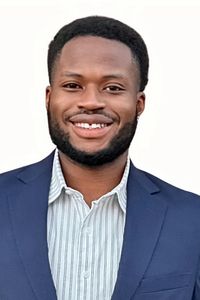
Bryce Berry was born in St. Louis, Missouri. He earned a bachelor's degree from Morehouse College in 2023. His career experience includes working as a teacher. He served as a state youth leader for President Biden and Vice President Harris' 2020 election campaign. He also served as the deputy political director for the 2022 Coordinated Campaign, contributing to the successes of Senator Raphael Warnock and Leader Stacey Abrams. As of his 2024 campaign, Berry served as the president of the Young Democrats of Georgia.[1]
Berry has been affiliated with the following organizations:[1]
Democratic Party of Georgia
American Federation of Teachers
Fulton County Democratic Party
The Peoples Uprising
Morehouse Alumni Association
- Bachelor's:
- Morehouse College, 2023
Campaign themes
Bryce Berry has not yet completed [the profile publisher]'s 2026 Candidate Connection survey.
Send a message to Bryce Berry asking him to fill out the survey.
If you are Bryce Berry, click here to fill out [the profile publisher]'s 2026 Candidate Connection survey.
Who fills out the candidate survey?
Any candidate running for elected office, at any level, can complete [the profile publisher]'s Candidate Survey. Completing the survey will update the candidate's [the profile publisher] profile, letting voters know who they are and what they stand for. More than 32,000 candidates have taken [the profile publisher]'s candidate survey since we launched it in 2015. Learn more about the survey here.
You can ask Bryce Berry to fill out this survey by using the buttons below or emailing bryce@berryforga.com.
Who are you? Tell us about yourself.
I'm a public school teacher, nonprofit leader, and community organizer, deeply committed to making a difference in Georgia's 56th District. Born into a union family, my early experiences in St. Louis, especially the tragic events in Ferguson, were formative. Witnessing the shooting of Michael Brown in my hometown propelled me into activism, particularly with the Black Lives Matter movement. These experiences have been pivotal in shaping my understanding of community needs and social justice.
My journey led me to Atlanta, where I continued to engage in transformative work. I had the honor of serving as a state youth leader for President Biden and Vice President Harris' 2020 election campaign, further honing my skills in political organizing and leadership. Subsequently, I played a crucial role as the Deputy Political Director for the 2022 Coordinated Campaign, contributing significantly to the successes of key political figures in Georgia.
As a middle school math teacher, I experience daily the challenges and opportunities in our education system. My campaign is a reflection of my dedication to issues like education reform, economic development, accessible healthcare, and affordable housing. I am driven by a vision to create a more inclusive, equitable future for all residents of our district, believing strongly in the power of community-driven change.
Please list below 3 key messages of your campaign. What are the main points you want voters to remember about your goals for your time in office?
Dedication to Education Reform: I am deeply committed to transforming our education system. My experience as a public school teacher drives my advocacy for raising teacher pay, improving school infrastructure, fully funding public schools, expanding access to pre-K, and reducing the emphasis on standardized testing. Ensuring every child has access to a quality education is at the heart of my campaign.Championing Economic and Housing Equity: Economic development and housing are crucial to bridging the opportunity gap in our district. I am advocating for raising the minimum wage, supporting small businesses, implementing strong tenant protections, tackling slumlord practices, and promoting affordable housing. My vision is to create a district where economic prosperity and housing security are accessible to all.Advancing Accessible and Comprehensive Healthcare: Healthcare reform is a top priority. I am focused on fully expanding Medicaid, protecting reproductive rights, investing in community health care centers, and addressing health disparities. Additionally, I am dedicated to improving mental health and addiction services and advocating for sensible gun control as part of a comprehensive approach to public health.
What areas of public policy are you personally passionate about?
Eliminating Poverty: Coming from a background where understanding the struggles of poverty was a part of my life, I am personally committed to policies that address and reduce poverty in our community. This includes advocating for economic reforms such as raising the minimum wage, providing support for small businesses, and creating more equitable economic opportunities. I understand that poverty is not just an economic issue but also a social one, and my approach is to address it through comprehensive policy changes that uplift the entire community.
Education as a Pathway Out of Poverty: I believe education is a key tool in breaking the cycle of poverty. My experience as a public school teacher has shown me the transformative power of edu
What is the first historical event that happened in your lifetime that you remember? How old were you at the time?
I remember I looked out my window and saw the National Guard deployed in my hometown. Just blocks away, the beginnings of the protest in response to the tragic shooting of Michael Brown were unfolding. I was only 13 years old at the time, but that moment left an indelible mark on me. It was a pivotal moment that ignited my desire for change and led me to join the frontlines of the Black Lives Matter movement during the Ferguson uprising. Together with others, we achieved significant milestones, including the election of Ferguson's first Black mayor and substantial improvements in local education and healthcare.
What do you believe is the ideal relationship between the governor and state legislature?
I firmly believe in the principle that the legislature is the body primarily responsible for making laws, and it should be the leading force in legislative discussions, not the governor. While the governor plays a crucial role in guiding the state's policies and can propose legislation, it is ultimately the legislature's responsibility to debate, amend, and pass laws.
The legislature represents the diverse voices of our citizens and is directly accountable to them. Therefore, it's vital that the legislature exercises its power independently and not simply follow the governor's lead, regardless of party affiliation. Each bill and policy should be carefully considered on its own merits, with the best interests of the constituents in mind.
The relationship between the governor and the legislature should be collaborative but not dominated by the executive branch. It's essential for the legislature to assert its independence and lead the conversation on legislative matters. This approach ensures a more balanced and representative government, where different viewpoints are considered and the best solutions for the public are sought.
Is there a particular legislator, past or present, whom you want to model yourself after?
Maynard Jackson's transformative leadership in Atlanta, particularly his innovative approaches in engaging with the Black business community and in public-private partnerships, deeply inspires me. He showed the world how to do business with Black people. His pioneering work in promoting economic equality and inclusion in city contracts has set a valuable example of how to create equitable opportunities in urban development. I am inspired to emulate Jackson's model of balancing progressive social policies with effective economic strategies, striving to create a community where public and private sectors work together for the greater good of all its members.
Both sitting legislators and candidates for office hear many personal stories from the residents of their district. Is there a story that you’ve heard that you found particularly touching, memorable, or impactful?
One story that I've heard from the residents of my district that deeply affected me is about Shenice, a single mother from the West End neighborhood. Shenice tragically lost her husband to gun violence, leaving her to raise their son, Marcus, on her own. Marcus attends a school in the Atlanta Public Schools system, and Shenice works two jobs to provide for them. Yet, she struggles to find safe and affordable childcare for Marcus, and constantly worries about the impact of the surrounding gun violence on his well-being. One evening, as she picked up Marcus from a neighbor's house, he innocently asked why he couldn't attend the same after school programs as his friends. This moment highlighted the stark reality of disparities in our community, particularly in access to quality childcare and educational opportunities. Her story is a reminder of the challenges faced by many in our community and highlights the critical need for policies addressing gun violence, supporting single-parent families, and ensuring safe environments for our children.
What are your views on financial transparency and government accountability?
My stance on corporate donors, super PACs, and their influence in politics is straightforward and guided by my principles of transparency and accountability. I believe that the influence of big money, especially from corporations and super PACs, can be problematic in our political system. It often leads to the interests of a few being placed over the needs of the many.
I think it's important that politics isn't just about who has the most money or the biggest donors. Instead, it should be about representing the real needs and concerns of everyday people. That's why I support efforts to make the whole process more transparent. We should know where the money in politics is coming from and what interests are behind it.
Also, I believe in the need for stronger rules and regulations around political donations and spending. This would help ensure that elected officials stay focused on representing their constituents, not just the interests of those who fund their campaigns.
On the 2026 ballot
Links
Compiled from the candidate’s published profile as of September 30, 2026.
Source(opens in new tab)