
Background
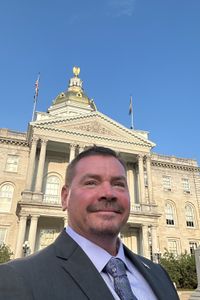
Brian Labrie was born in Nashua, New Hampshire. He earned a bachelor's degree from Southern New Hampshire University in 2023.
His career experience includes working in small business. He has been affiliated with the Bedford Conservation Commission, New Hampshire Snowmobile Association, New Hampshire Landscape Association, and Americans for Prosperity.[1]
- Bachelor's:
- Southern New Hampshire University, 2023
- High school:
- Bishop Guertin High School
Campaign themes
Brian Labrie has not yet completed [the profile publisher]'s 2026 Candidate Connection survey.
Send a message to Brian Labrie asking him to fill out the survey.
If you are Brian Labrie, click here to fill out [the profile publisher]'s 2026 Candidate Connection survey.
Who fills out the candidate survey?
Any candidate running for elected office, at any level, can complete [the profile publisher]'s Candidate Survey. Completing the survey will update the candidate's [the profile publisher] profile, letting voters know who they are and what they stand for. More than 33,000 candidates have taken [the profile publisher]'s candidate survey since we launched it in 2015. Learn more about the survey here.
You can ask Brian Labrie to fill out this survey by using the button below or emailing brian@bhlabrie.com.
Who are you? Tell us about yourself.
As a lifelong New Hampshire resident and small business owner, I am committed to upholding our constitutional rights and advocating for limited government. At 51 years old, I firmly believe in the importance of strong borders, low taxes, school choice, and law and order. I graduated from Bishop Guertin High School in 1992 and earned my Bachelor's degree in Business Administration from Southern New Hampshire University. My goal is to serve and protect our community by bringing common sense to Concord. That's why I'm running for a House seat in Bedford (Hillsborough District 2).
Please list below 3 key messages of your campaign. What are the main points you want voters to remember about your goals for your time in office?
New Hampshire needs strong, experienced leadership in Concord. I am committed to protecting our freedoms and advocating for limited government. As a firm believer in constitutional rights, I will work tirelessly to keep government small and safeguard individual liberties by standing against unnecessary government overreach. Recognizing the importance of our senior population, I will also be a steadfast advocate for their rights at the state level. My record reflects proven leadership, dedication, and staying power—qualities that ensure I’m not just passing through, but fully committed to serving our community for the long term.Promoting Fiscal Responsibility and Economic Growth: I am dedicated to creating a business-friendly environment with low taxes, which will drive economic growth and expand opportunities for our community. Fiscal responsibility is essential to securing a prosperous future for everyone. We must safeguard the New Hampshire advantage. As a known fiscal hawk, I am committed to protecting our wallets by reducing unnecessary spending and tackling inflation whenever possible.Ensuring Safe and Strong Communities: I am committed to strong borders, upholding law and order, and empowering families with school choice. These priorities are essential to keeping our community safe, secure, and an ideal place to live and raise a family. With a background in law enforcement, I am a firm believer in supporting our police, veterans, and active-duty military personnel. Strength through peace is a principle we must embrace as we move forward, and I will always stand by those who protect us.
What areas of public policy are you personally passionate about?
Our Country's Security: I’m committed to strong borders, a well-funded military, and supporting law enforcement to protect our nation and maintain internal stability.
Expanding and stabilizing the Economy: I advocate for low taxes, fewer regulations, and promoting entrepreneurship to create jobs, boost wages, and grow our economy.
Protecting our Freedoms: I will defend individual liberties, including free speech and the right to bear arms, ensuring that government overreach is kept in check.
Maintaining our low tax profile: I’m dedicated to maintaining New Hampshire’s low taxes, local control, and strong community values, while enhancing our state’s competitive edge and quality of life.
Who do you look up to? Whose example would you like to follow, and why?
I looked up to my Dad and Grandfathers, they were remarkable people and great teachers.
Is there a book, essay, film, or something else you would recommend to someone who wants to understand your political philosophy?
Book: "The Conscience of a Conservative" by Barry Goldwater - This classic book lays out the principles of modern American conservatism, emphasizing limited government, individual liberty, and a strong national defense. It's a foundational text that has influenced generations of conservatives.
Essay: "Common Sense" by Thomas Paine - Although written during the American Revolution, Paine's essay is a powerful argument for individual rights and self-governance. It embodies the spirit of independence and skepticism of centralized authority that underpins much of conservative thought.
Film: "Mr. Smith Goes to Washington" - This film portrays the ideals of honesty, integrity, and standing up for what is right, even against powerful interests. It reflects the belief in the importance of moral character and the responsibility of elected officials to serve the people, not special interests.
What characteristics or principles are most important for an elected official?
Commitment to Limited Government: An elected official should believe in the importance of limiting government intervention in people's lives and promoting individual responsibility and freedom.
Fiscal Responsibility: Managing taxpayer money wisely, balancing budgets, and reducing unnecessary spending are crucial to ensure economic stability and prevent burdensome debt.
Strong National Defense: Protecting our nation's security and ensuring a strong, capable military to defend against threats is paramount.
Respect for the Constitution: Upholding the Constitution and ensuring that all actions taken by the government are consistent with its principles, including protecting the rights enshrined in it, is a fundamental duty.
Support for Free Markets: Belief in the power of free enterprise and competition as the best means to create jobs, foster innovation, and drive economic growth.
Family Values: Upholding and promoting the importance of traditional family values as the cornerstone of a strong society.
Accountability and Integrity: Elected officials should be transparent, honest, and accountable to the people they serve, making decisions that are in the best interest of their constituents rather than for personal or political gain.
What qualities do you possess that you believe would make you a successful officeholder?
Strong Commitment to Principles: I am deeply committed to the core values of limited government, individual liberty, fiscal responsibility, and personal accountability. These principles guide every decision I make and ensure that my actions are always aligned with the best interests of the people I serve.
Integrity and Transparency: I believe in being honest and transparent in all my dealings. Integrity is the foundation of trust, and I am committed to being a trustworthy representative for my constituents. I will always be open about my positions and decisions, ensuring that the people know where I stand.
Work Ethic and Dedication: I bring a strong work ethic to everything I do. I am dedicated to serving my constituents with the same level of commitment and determination that I have shown in my professional life. I understand the importance of hard work, and I am prepared to put in the time and effort required to address the issues facing our state.
Effective Communication Skills: I recognize the importance of clear and effective communication. Whether it’s listening to constituents, collaborating with fellow legislators, or advocating for policies, I am committed to communicating in a way that is respectful, persuasive, and grounded in fact.
Problem-Solving Ability: I have a practical, solution-oriented approach to problem-solving. I believe in tackling issues head-on, analyzing all the relevant information, and working collaboratively to find solutions that are both effective and aligned with our values.
Focus on Fiscal Responsibility: As a fiscal hawk, I am dedicated to ensuring that taxpayer dollars are spent wisely. I will bring a critical eye to the budget and work to eliminate wasteful spending, ensuring that our state remains financially healthy and sustainable.
What do you believe are the core responsibilities for someone elected to this office?
Representing the People of Bedford: My primary responsibility is to listen to the concerns and needs of the people of Bedford and to advocate on their behalf in the State House. This means staying connected with the community, being accessible, and ensuring that their voices are heard in Concord.
Promoting Fiscal Responsibility: It's essential to manage the state’s budget with care, ensuring that taxpayer dollars are spent wisely. I will work to keep taxes low, reduce wasteful spending, and ensure that the state operates within its means.
Protecting Individual Freedoms: I am committed to safeguarding the rights and freedoms guaranteed by the Constitution. This includes protecting property rights, the right to bear arms, and ensuring that government overreach does not infringe upon our personal liberties.
Strengthening Education: Education is the foundation of our future, and I will advocate for policies that ensure that parents have a say in their children’s education, and that we prepare our students for success in a competitive world while respecting local control of schools.
Supporting Law and Order: Ensuring that our community remains safe is a top priority. I will support our law enforcement and work to pass laws that enhance public safety while also ensuring that justice is administered fairly.
Fostering Economic Growth: I will work to create an environment that supports small businesses, attracts new industries, and ensures that New Hampshire remains a state where businesses can thrive. This includes advocating for sensible regulations that do not stifle innovation or entrepreneurship.
Maintaining Local Control: I believe in the importance of local governance and will fight against unnecessary state mandates that undermine the authority of our town and local officials.
What legacy would you like to leave?
The legacy I would like to leave as a Republican committed to conservative principles is one of unwavering dedication to the values that strengthen our community and state.
Champion of Individual Liberty: I want to be remembered for consistently defending individual freedoms and personal responsibility, ensuring that government overreach is kept in check and that constitutional rights are upheld.
Guardian of Fiscal Responsibility: My legacy should reflect a commitment to prudent fiscal management, characterized by balanced budgets, reduced wasteful spending, and policies that promote economic growth and long-term financial stability for New Hampshire.
Defender of Local Control: I hope to be known as an advocate for New Hampshire’s tradition of local control, empowering communities to make their own decisions without unnecessary state interference, respecting the autonomy of local governance.
Promoter of Common-Sense Governance: I aspire to leave a legacy of practical, solution-oriented leadership, focused on implementing policies that have a real, positive impact on the lives of citizens, grounded in common sense and what works best for our state.
Upholder of Integrity and Transparency: I want to be remembered for my honesty, transparency, and integrity, ensuring that my actions are always guided by what is right and just, and earning the trust and confidence of the people I serve.
Advocate for Future Generations: Lastly, I hope my legacy includes efforts to create a prosperous and sustainable future for New Hampshire, promoting education, protecting our natural environment, and ensuring that the state remains a great place for future generations to live and thrive.
What is the first historical event that happened in your lifetime that you remember? How old were you at the time?
GAS rationing in the US. I was 5 or 6 years old. I vaguely remember this...
What was your very first job? How long did you have it?
At 14 I worked after school for a local landscape construction company and held that job through high school.
What is your favorite book? Why?
My favorite book is "The 48 Laws of Power" by Robert Greene. I appreciate this book because it offers deep insights into human behavior, power dynamics, and the strategies people use to navigate complex social and political environments. While some of the laws may seem controversial or ruthless, the book provides a valuable framework for understanding how power operates in various contexts.
"The 48 Laws of Power" is not just about gaining power for its own sake, but about recognizing and understanding the power dynamics at play in any situation. It’s a book that encourages strategic thinking, careful observation, and the ability to adapt to different circumstances—all important skills in both personal and professional life.
I value the book for its practical wisdom and its ability to illuminate the often-unspoken rules that govern interactions in any field, whether it’s politics, business, or personal relationships. It’s a resource that helps one navigate the complexities of power with awareness and intelligence.
If you could be any fictional character, who would you want to be?
If I could be any fictional character, I would choose to be Atticus Finch from To Kill a Mockingbird. Atticus embodies integrity, wisdom, and moral courage. He stands up for justice and equality, even when it’s unpopular or comes with personal risks. His commitment to doing what’s right, regardless of the consequences, is deeply inspiring.
Atticus is also a compassionate and thoughtful father, teaching his children important life lessons about empathy, respect, and standing up for others. His character represents the ideal of using one’s position and influence to fight for justice and make the world a better place.
What was the last song that got stuck in your head?
Shaboozy : A Bar Song Tipsy
What is something that has been a struggle in your life?
One struggle in my life has been balancing the demands of public service (sitting on committees and nonprofits) with personal and family responsibilities. Serving in any capacity, especially in a public role, requires a significant amount of time, energy, and focus. It often involves long hours, attending meetings, responding to constituents, and working on legislation or community issues. This commitment can sometimes make it challenging to find enough time for family, personal pursuits, and self-care.
The struggle lies in the constant effort to be fully present and effective in both areas—ensuring that I’m meeting the needs of the people I serve while also being there for my family and taking care of my own well-being. It’s a delicate balance that requires setting priorities, being disciplined with time management, and sometimes making difficult choices about where to focus my attention.
This experience has taught me the importance of setting boundaries, being mindful of how I allocate my time, and seeking support when needed. It’s also deepened my appreciation for the sacrifices that many public servants and their families make. While it’s a struggle, it’s one that has helped me grow as a person and as a leader, teaching me resilience and the value of balancing professional commitments with personal life.
What do you believe is the ideal relationship between the governor and state legislature?
Respect for Separation of Powers: The governor and the legislature each have distinct roles and responsibilities as outlined in the state constitution. The governor should respect the legislative process and the authority of the legislature to craft laws, while the legislature should respect the governor's role in executing those laws and managing the state's executive branch.
Open Communication: Regular, open communication between the governor and legislative leaders is essential for effective governance. By maintaining a constant dialogue, both sides can anticipate challenges, find common ground, and avoid unnecessary conflicts.
Collaboration on Policy: While there may be differences in priorities or perspectives, the governor and the legislature should work together to find solutions that benefit the state. This means negotiating in good faith, compromising when necessary, and focusing on the common good rather than partisan interests.
Checks and Balances: The relationship should be one of constructive tension, where both the governor and the legislature hold each other accountable. The legislature should exercise its oversight function to ensure that the executive branch is operating within the bounds of the law, while the governor should have the ability to veto legislation that is not in the best interest of the state.
Shared Commitment to Fiscal Responsibility: Both the governor and the legislature should be united in their commitment to fiscal responsibility. This means working together to create a balanced budget, prioritize spending, and ensure that taxpayer dollars are used efficiently and effectively.
Responsiveness to the Public: Both the governor and the legislature should always remember that they are accountable to the people of the state. Decisions should be made with the best interests of citizens in mind, and both branches should be responsive to t
What do you perceive to be your state's greatest challenges over the next decade?
Economic Growth and Workforce Development: New Hampshire's economy has been strong, but we face challenges in attracting and retaining a skilled workforce. As our population ages, we need to ensure that our younger generations have the opportunities and incentives to stay in the state. This includes investing in education, vocational training, and creating a business-friendly environment that attracts new industries while supporting existing small businesses.
Affordable Housing: The lack of affordable housing is becoming a significant issue in New Hampshire. As housing prices rise, it becomes increasingly difficult for young families and workers to live in the communities where they work. Addressing this will require thoughtful planning, balancing the need for development with preserving the character of our towns.
Healthcare Access and Costs: Access to affordable healthcare remains a concern, especially in rural areas. Ensuring that all Granite Staters have access to quality healthcare, while also addressing rising healthcare costs, will be a critical challenge. This includes maintaining a robust healthcare workforce and supporting mental health services.
Opioid Crisis and Substance Abuse: The opioid crisis continues to affect many families in New Hampshire. Combating this issue will require a comprehensive approach that includes prevention, treatment, and law enforcement efforts. We must continue to support recovery programs and provide resources to those affected by substance abuse.
Infrastructure and Transportation: New Hampshire’s infrastructure, including roads, bridges, and public transportation, needs continued investment. Aging infrastructure can impede economic growth and public safety. We need to find sustainable ways to fund these improvements without overburdening taxpayers.
Energy and Environment: Balancing energy needs with environmental stewardship is another significant challenge.
Do you believe that it’s beneficial for state legislators to have previous experience in government or politics?
Understanding of the Legislative Process: Having prior experience in government, town committees or politics can provide valuable insight into how the legislative process works. It allows legislators to navigate the complexities of lawmaking, understand parliamentary procedures, and build relationships with other lawmakers, which can be advantageous in advancing legislation.
Knowledge of Policy Issues: Experienced legislators often have a deeper understanding of the key policy issues facing the state. They are familiar with past debates, existing laws, and the nuances of various policy areas, which can help them craft more informed and effective legislation.
Networking and Relationships: Those with prior experience often have established networks and relationships within government and the community. This can make it easier to collaborate, gather support for initiatives, and work across party lines to get things done.
Fresh Perspectives: On the other hand, I also believe that new voices and perspectives are crucial for a healthy democracy. Individuals without prior government experience often bring fresh ideas, different life experiences, and a strong connection to the everyday concerns of their constituents. This can lead to innovative solutions and a more diverse representation of viewpoints.
Balancing Experience and New Ideas: Ideally, a state legislature should have a balance of both experienced legislators and newcomers. The blend of institutional knowledge with fresh perspectives can create a dynamic and effective legislative body that is both knowledgeable and responsive to the evolving needs of the people.
Do you believe it’s beneficial to build relationships with other legislators? Please explain your answer.
Advancing Liberty-Oriented Policies: Building relationships with other legislators, including those across the aisle, can be crucial in advancing policies that promote individual liberty, limited government, and personal responsibility. Collaboration allows us to find common ground on issues like reducing government overreach, protecting civil liberties, and promoting free markets.
Effective Negotiation: Politics often involves negotiation and compromise. Having strong relationships with other legislators can facilitate these discussions, helping to achieve outcomes that align with libertarian principles. While it’s important to stand firm on core values, working with others can lead to incremental progress in the right direction.
Building Coalitions: On many issues, particularly those involving government transparency, fiscal responsibility, or criminal justice reform, there can be opportunities to build coalitions with legislators from different political backgrounds. These alliances can amplify our impact and increase the chances of passing meaningful legislation.
Maintaining Independence: While building relationships is important, it’s equally vital to maintain independence and avoid becoming too entrenched in the political establishment. The goal is to collaborate without compromising core libertarian values or becoming part of the status quo that perpetuates big government.
Promoting Civil Discourse: Healthy relationships among legislators contribute to a more civil and productive legislative environment. Respectful dialogue, even with those who hold opposing views, can lead to better outcomes for the people we serve. It’s possible to disagree on policy while maintaining a respectful and constructive relationship.
Is there a particular legislator, past or present, whom you want to model yourself after?
Ron Paul for these reasons:
Commitment to Liberty: Ron Paul was unwavering in his commitment to protecting individual freedoms. He consistently advocated for reducing government intrusion into people’s lives, whether it was in the form of taxes, regulations, or unwarranted surveillance. His dedication to civil liberties and personal responsibility is a guiding example for anyone who values freedom.
Fiscal Conservatism: Known as "Dr. No" for his frequent votes against spending bills, Ron Paul was a staunch advocate for fiscal conservatism. He believed in reducing the size and scope of government, balancing the budget, and eliminating wasteful spending. His principled stand on fiscal issues is something I deeply admire and strive to emulate.
Independence and Integrity: Ron Paul was known for his independence and willingness to stand alone when necessary. He didn’t compromise his principles for political expediency, and he earned respect for his integrity, even from those who disagreed with him. This independence is crucial for anyone who seeks to uphold libertarian values in a political environment that often pushes for compromise on core issues.
Advocacy for Sound Money: Ron Paul was a strong critic of the Federal Reserve and an advocate for sound money policies. He understood the importance of monetary policy in preserving economic freedom and preventing government overreach. His work in this area continues to influence discussions about fiscal policy and government accountability.
Educational Impact: Beyond his legislative work, Ron Paul also focused on educating the public about the principles of liberty. His emphasis on the importance of understanding economic and political philosophy is something I aspire to continue, helping to spread the ideas of freedom and limited government.
Are you interested in running for a different political office (for example, the U.S. Congress or governor) in the future?
My focus currently, is to represent the citizens of Bedford in Concord!
Both sitting legislators and candidates for office hear many personal stories from the residents of their district. Is there a story that you’ve heard that you found particularly touching, memorable, or impactful?
As a Republican candidate, I’ve had the privilege of hearing many personal stories from residents of our town, and one that stands out is from a local small business owner who has been a lifelong resident of our community.
This individual started a small manufacturing business decades ago with just a handful of employees. Through hard work and dedication, he grew his business, creating jobs and contributing to the local economy. However, as regulations and taxes increased, he found it increasingly difficult to keep his business afloat. Despite being a model employer who cared deeply about his employees, he was struggling under the weight of government mandates and financial pressures.
What touched me most was his resilience and commitment to his employees, even in the face of significant challenges. He viewed his employees as family and felt a deep responsibility to ensure they had jobs, even when his business was barely breaking even.
This story is a powerful reminder of the impact that government policies can have on the lives of everyday citizens. It underscores the importance of fighting for lower taxes, fewer regulations, and a business-friendly environment that allows small businesses to thrive. Small business owners like him are the backbone of our community, and their success is vital to our local economy.
His story reinforced my belief in the importance of personal responsibility, hard work, and the entrepreneurial spirit. When we reduce government interference, we empower individuals to succeed on their own terms, creating opportunities not just for themselves but for others in our community.
This story continues to inspire me in my work as I advocate for policies that support small businesses and uphold the principles of economic freedom. It’s a testament to the resilience of our community and the importance of standing up for the values that make our state a great place to live and work.
Tell us your favorite joke.
Why don't skeletons fight each other?
Because they don't have the guts!
Should the legislature oversee or grant the use of emergency powers?
I believe that the legislature should both oversee and grant the use of emergency powers. Here's why:
Checks and Balances: The legislature’s role in granting and overseeing emergency powers is essential to maintaining the balance of power. Allowing the executive branch to act without legislative approval or oversight could lead to executive overreach and a concentration of power, which goes against the principles of limited government.
Protection of Civil Liberties: Emergency powers often involve actions that can limit individual freedoms. It’s crucial that these powers are not exercised without careful consideration and strict limits. The legislature, representing the people, should have the authority to approve such powers and set clear boundaries to protect civil liberties.
Accountability: The legislature’s involvement ensures that the executive branch remains accountable to the people. By requiring legislative approval, any use of emergency powers must be justified and subject to public scrutiny, which helps prevent potential abuse.
Temporary and Targeted: Emergency powers should be temporary and narrowly targeted to address specific crises. The legislature’s role is to ensure that these powers are not extended or expanded beyond what is necessary, and to review their continued necessity as the situation evolves.
What is the first bill you would introduce if elected?
I'm not hellbent on introducing bills. I would consider advocating for Stronger border control and more PFAS responsibility.
What organizations or individuals have endorsed your campaign?
Americans For Prosperity has endorsed me.
What committees interest you?
Finance Committee: This committee is at the heart of budgetary decisions. Serving here would allow me to closely scrutinize state spending, advocate for fiscal responsibility, and work to ensure that tax
On the 2026 ballot
Links
Compiled from the candidate’s published profile as of October 6, 2026.
Source(opens in new tab)