
Background
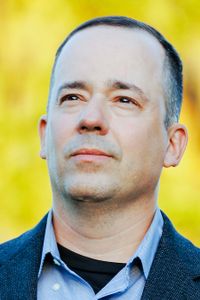
Brian Bertges was born in Pittsburgh, Pennsylvania. Bertges served in the U.S. Army from 1997 to 2001. He earned a bachelor's degree from Pennsylvania State University in 2005. He earned a graduate degree from the University of Maryland in 2017. Bertges' career experience includes working as an executive director and as a teacher with Teach for America. He has been affiliated with the American Legion, the Pat Tillman Foundation, and with the Theta Delta Chi International Fraternity.[1]
- Graduate:
- The University of Maryland, 2017
- Bachelor's:
- The Pennsylvania State University, 2005
In their own words
Who are you? Tell us about yourself.
Brian's service started with an oath, but continues for a lifetime. First as a medic in the United States Army, then as a teacher, and then in policy, advocacy and leadership development, Brian has committed his life to public service. His authentic and genuine nature allows others to express themselves without judgement. This is the ultimate characteristic needed to bring us from a community of division to once again be united.
Please list below 3 key messages of your campaign. What are the main points you want voters to remember about your goals for your time in office?
Making every voice count by putting people first.Placing people at the center of the healthcare experience.Making the tax system simple, so all Americans can understand.
What areas of public policy are you personally passionate about?
Healthcare
Education
Fiscal
Who do you look up to? Whose example would you like to follow, and why?
There are many philosophers and leaders that I admire and look up to, from Jesus, Confucious, Lucius Annaeus Seneca, Marcus Aurelius and Guatama Buddha, to more modern leaders, such as Mahatma Ghandi, Abraham Lincoln, Mother Theresa and Martin Luther King, Jr. I believe, that all of these individuals had great self control and discipline over themselves. They feared not the hate or retribution for who they were. They pushed for love and humanity for all, searching for justice. They exemplified wisdom.
Their virtues and unbending authentic leadership led much of this group to their untimely demise; however lived fully and unapologetically, with a servant mindset. I would love to use my gifts in service to the rest of the world.
Is there a book, essay, film, or something else you would recommend to someone who wants to understand your political philosophy?
Leadership in Turbulent Times by Doris Kearns Goodwin.
What characteristics or principles are most important for an elected official?
Exemplifying the core virtues of: wisdom, justice, courage, and temperance (self-mastery).
Exercising the utmost integrity in all that they do.
Being open to diverse views, rather than being dismissive.
Prioritizing the needs of the United States over their own.
Representing the constituency with fierce resolve.
Amplifying the voice of the people.
Engaging Americans with its Government.
What qualities do you possess that you believe would make you a successful officeholder?
Diplomacy.
Patience.
Courage.
Wisdom.
Zest.
Gratitude.
Love.
Self-Mastery.
Curiosity.
Vigilance.
Fidelity.
Authenticity.
Humble.
What do you believe are the core responsibilities for someone elected to this office?
To put country over self.
To represent those they serve.
To be open to diverse viewpoints.
To ensure the survival of our democracy.
To continue to push for legislation, even when the party is not the majority.
What legacy would you like to leave?
I would love to light the fervor of engaging all citizens with the government, by restoring justice and the voice of the people rather than allowing money to influence the outcomes of the masses.
What is the first historical event that happened in your lifetime that you remember? How old were you at the time?
At 8 years old, I was sitting in a classroom watching the Challenger Shuttle Launch. What was a celebration of science, turned into a lesson in how failure can happen. As an adult, I recognize the impact of group think and the need to listen to dissenting voices, so I can plan around potential risks. It is imperative to listen to every voice to avoid the potential pitfalls that may come in the future.
What was your very first job? How long did you have it?
I remember having a lawn mowing business with my brother when I was a kid. It was called you "You Grow It. We Mow It." It was an amazing life building experience. We would roam the neighborhoods all throughout my childhood and teenage years. My first professional job was the United States Army. I serve honorably for four years. This experience taught me the value of commitment and courage, while giving me incredible interpersonal skills and an understanding of those around me. Servant leadership became a staple and a passion in my life.
What is your favorite book? Why?
"Range: Why Generalists Triumph in a Specialized World" by David Epstein
His book transformed the way I looked at myself. I had many jobs in many fields and over time and felt I was way behind my peers. After reading his book, it let me know that I was still on my path. I started to recognize the knowledge that I gained in one field, although seemingly disparate, was applicable in others. This generating multiplying effects.
Now I recognize that politicians need to be well rounded and well versed in various topics, which will allow for greater understanding of the nuances presented by experts.
If you could be any fictional character, who would you want to be?
Ted Lasso
What was the last song that got stuck in your head?
"If you're out there." by John Legend
The first lines are the core of what I believe right now:
If you hear this message, wherever you stand
I'm calling every woman, calling every man
We're the generation
We can't afford to wait
The future started yesterday and we're already late
What is something that has been a struggle in your life?
Being afraid to take the risk of leaving the life I know and am comfortable with and going for the one thing that I have been meant to do--run for office. I've known I wanted to run for federal office for over a decade, butI couldn't build up the courage to do it--until now.
What qualities does the U.S. House of Representatives possess that makes it unique as an institution?
It has the ability to spend money. No other branch of government has that authority. It has the ability to create laws and bureaucracy. It is the core of our representative democracy. It brings more diversity and thought to the table from all over the country.
Do you believe that it's beneficial for representatives to have previous experience in government or politics?
I believe there is a need to alter the culture of politicians. I would venture that is the core reason why Obama and Trump were both elected President. They represented something different. It is wonderful to be politically interested and experience is helpful, but is not required or necessary.
What do you perceive to be the United States' greatest challenges as a nation over the next decade?
I believe there are many challenges that face our great Nation:
The two-party system, which promotes competition over collaboration- yielding a division between the citizens.
The limited access to seamless and affordable healthcare and preventative healthcare.
The increasing national debt, due to a failing tax system paired with pork barrel legislation.
The educational gap between affluent and non-affluent areas.
The future of our environment.
If you are not a current representative, are there certain committees that you would want to be a part of?
Agricultural
Veterans Affairs'
Education
Ethics
Science, Space, and Technology
If you are a current representative, why did you join your current committees?
N/A
Do you believe that two years is the right term length for representatives?
Yes.
What are your thoughts on term limits?
I believe that term limits should exist. This eliminates the influence of money on politics, where more politicians would not have to be concerned with raising money for their next election. Many politicians know what to do to make the country better, but they won't do it, because that won't get them re-elected.
Is there a particular representative, past or present, whom you want to model yourself after?
John McCain
Both sitting representatives and candidates for office hear many personal stories from the residents of their district. Is there a story that you’ve heard that you found particularly touching, memorable, or impactful?
I was talking with an individual who quit his job in order to pursue his passion as a photographer. Money for his family became very difficult. He mentioned how his family was underinsured on healthcare because he can't afford the benefits that he had in his last job. He never recognized the need for affordable healthcare until he needed it. He is extremely talented at what he does and it makes me wonder how many Americans don't bring their gifts and talents to the world in service to others, because they cannot afford or are afraid to take the risk.
Tell us your favorite joke.
Three fish were swimming along. Two fish swam into a wall. The third said "DAM!"
Do you believe that compromise is necessary or desirable for policymaking?
I think healthy debate and an open-mind is desirable for policymaking. I feel that lobbying groups have too much influence on policymaking. Take for example the NRA. Over 80% of registered gun owners believe universal background checks should exist to own a gun; however the NRA opposes the people they represent. The national tracing center for weapons do not have computers to pull up the data. Everything is recorded on paper only.
The Constitution says that all bills for raising revenue must originate in the House. What role would this power play in your priorities if elected?
I would push for a progressive consumption tax or laws that seek to ensure that everyone is contributing appropriately according to their wealth level.
googletag.cmd.push(function() { googletag.display("div-gpt-ad-1548351761485-0"); });
On the 2026 ballot
Links
Compiled from the candidate’s published profile as of September 30, 2026.
Source(opens in new tab)