
Background
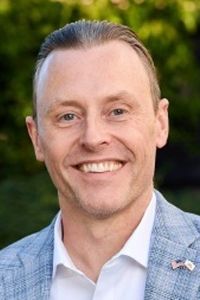
Brandon Jones served in the U.S. Navy from 1998 to 2000. He earned a high school diploma from Indianola High School. His career experience includes working as an entrepreneur and affordable housing advocate.[1]
- High school:
- Indianola High School
In their own words
Who are you? Tell us about yourself.
I’m Brandon Jones, a Christian, businessman, father, and longtime Californian running for governor to restore the California Dream. I’ve built businesses, created jobs, and worked to provide affordable housing for those in need. As the founder of the RESTORE California movement, I’m focused on bringing people together—across party lines—to solve the state’s biggest challenges, including high costs, homelessness, crime, and failing schools. My leadership experience, combined with my commitment to conservative, results-driven solutions, makes me the right candidate to lead California toward a brighter future.
Please list below 3 key messages of your campaign. What are the main points you want voters to remember about your goals for your time in office?
I will reduce crime and make California safe again.
Crime and public safety are top priorities. I will enforce the law, support our police, and end policies that put criminals back on the streets. Californians deserve to feel safe in their homes, neighborhoods, and businesses.I will make housing affordable and tackle homelessness.
California has the highest housing costs in the nation. I will cut red tape, incentivize housing development, and implement proven policies to reduce homelessness—offering real solutions instead of wasteful spending.I will fix our schools and restore accountability in education.
Our public education system is failing too many students. I will empower parents, expand school choice, and ensure schools focus on academics, not politics. Every child in California deserves access to a high-quality education.
What areas of public policy are you personally passionate about?
I am passionate about restoring public safety, making California affordable, and improving education. Crime has skyrocketed due to failed policies—I will work to restore law and order. The cost of living is out of control—I will push for policies that lower taxes, reduce regulations, and bring back economic opportunity. Education should prepare our kids for success, not push political agendas—I will champion parental rights and academic excellence in schools.
Who do you look up to? Whose example would you like to follow, and why?
First and foremost, I look up to my Lord and Savior, Jesus Christ, whose life and teachings guide my values and decision-making. I also admire Pastor John MacArthur for his unwavering commitment to biblical truth and our veterans who risk their lives for our freedom. Their courage, sacrifice, and dedication to service inspire me to lead with integrity and purpose.
Is there a book, essay, film, or something else you would recommend to someone who wants to understand your political philosophy?
I would recommend my book, California’s Comeback, where I outline my vision for restoring the state by addressing crime, housing affordability, education reform, and economic revival. Additionally, the Bible has been foundational in shaping my values and approach to leadership, particularly its teachings on justice, stewardship, and serving others.
What characteristics or principles are most important for an elected official?
Integrity, accountability, and a commitment to serving the people—not special interests—are essential for any elected official. Leaders must be transparent, willing to listen, and courageous enough to make tough decisions. Above all, they must prioritize results over rhetoric and uphold the rule of law.
What qualities do you possess that you believe would make you a successful officeholder?
I have a strong work ethic, a results-driven mindset, and the ability to bring people together to solve problems. My background as a business owner has given me experience in leadership, budgeting, and strategic decision-making. Additionally, my commitment to integrity, transparency, and service to others ensures that I will always put the people of California first.
What do you believe are the core responsibilities for someone elected to this office?
The governor’s core responsibilities include ensuring public safety, fostering economic growth, managing the state budget responsibly, and executing laws effectively. A governor must also provide leadership in times of crisis, appoint qualified individuals to key positions, and work with the legislature to pass policies that improve the lives of all Californians.
What legacy would you like to leave?
I want to leave a legacy of restoration and renewal—a California that is safe, affordable, and full of opportunity. I want to be remembered as someone who fought for families, businesses, and communities, who took action rather than just talked, and who helped bring real, positive change to the state. Ultimately, I hope my legacy reflects my faith, my love for people, and my commitment to leaving things better than I found them.
What is the first historical event that happened in your lifetime that you remember? How old were you at the time?
The first historical event I remember was the election of Ronald Reagan. I was a child at the time, but I remember the excitement and optimism surrounding his presidency, as well as the sense of strength and leadership he brought to the country.
What was your very first job? How long did you have it?
My first job was delivering morning newspapers when I was 12 years old. I had the job for about a year, waking up early each morning to make sure the papers were delivered on time. It taught me responsibility, discipline, and the value of hard work at a young age.
What is your favorite book? Why?
Aside from the Bible, one of my favorite books is The Art of War by Sun Tzu. It provides timeless wisdom on strategy, leadership, and decision-making—principles that apply not only to warfare but also to business, politics, and life.
If you could be any fictional character, who would you want to be?
I’d be The Flash—he’s extremely efficient! Imagine getting things done at super speed while still having time to focus on the big picture. Plus, saving people in a flash wouldn’t be too bad either!
What was the last song that got stuck in your head?
Here’s a lighthearted one: Don’t Stop Believin’ by Journey. It’s a classic and always seems to come back around!
What is something that has been a struggle in your life?
Overcoming my parents’ divorce was a significant challenge that shaped me in many ways. Additionally, I struggled with a speech impediment growing up, which required persistence and effort to overcome. These experiences taught me resilience, the importance of perseverance, and the power of clear and effective communication.
Governors have many responsibilities, which vary from state to state. Which of those do you personally consider the most important in your state?
In California, the most critical responsibilities include restoring public safety, addressing the affordability crisis, fixing our education system, and ensuring a responsible state budget. The governor must also be proactive in disaster preparedness and response, given our state’s vulnerability to wildfires and other natural disasters.
Different states require governors to have different degrees of responsibility for the state budgeting process. If it were your choice, what do you believe is the appropriate degree of gubernatorial involvement with this process in your state?
The governor should take a strong leadership role in the budgeting process. California’s budget is bloated with unnecessary spending, and I believe the governor must champion fiscal responsibility, demand transparency, and ensure taxpayer dollars are spent efficiently. I will work to balance the budget without raising taxes.
In most states, governors have the power to make line-item vetoes. If that is true in your state, what would be your philosophy for how and when to use this power?
I would use the line-item veto to eliminate wasteful spending, prevent special-interest giveaways, and ensure that taxpayer money is directed toward essential services like public safety, education, and infrastructure. This tool should be used responsibly to keep California’s budget lean and effective.
What do you believe is the ideal relationship between the governor and state legislature?
The governor and legislature should work together to serve the people, not political agendas. While disagreements are inevitable, my approach will be results-driven and focused on finding common ground. However, I will stand firm against policies that harm California’s economy, public safety, or individual freedoms.
What do you love most about your state?
California is one of the most beautiful, innovative, and diverse places in the world. From its breathtaking landscapes to its entrepreneurial spirit, there is no place like it. I love the resilience and creativity of Californians, and I believe in our ability to solve problems and restore the state’s greatness.
What do you perceive to be your state's greatest challenges over the next decade?
California’s greatest challenges include rising crime, unaffordable housing, a struggling education system, and out-of-control government spending. If these issues are not addressed, they will continue driving people and businesses out of the state. We must take bold action to reverse these trends and rebuild prosperity.
Tell us your favorite joke.
Here’s a good one:
Why don’t skeletons fight each other?
Because they don’t have the guts!
Under what circumstances should the governor of your state be able to use emergency powers?
Emergency powers should only be used in truly extraordinary circumstances—such as natural disasters, public health crises, or security threats—and should be time-limited, transparent, and subject to legislative oversight. They must never be used to bypass the democratic process or impose excessive government control.
What are your views on financial transparency and government accountability?
Financial transparency is critical to restoring trust in government. Californians deserve to know how their tax dollars are spent, and I will push for strict oversight to prevent waste, fraud, and abuse. I support performance audits for all major state programs and will hold agencies accountable for results.
Do you support or oppose changes to the current state ballot initiative process? If so, what kind of changes would you consider?
I support reforms that improve transparency and prevent special interests from abusing the ballot initiative process. While direct democracy is important, we must ensure that initiatives are clear, fiscally responsible, and reflect the will of the people—not just well-funded lobbying groups.
A governor is the top executive authority in his or her state. What does that mean to you?
Being governor means taking full responsibility for leading the state effectively. It’s about making tough decisions, setting a vision, and ensuring that policies deliver real results for the people. A governor should lead with integrity, enforce the law, and always put the interests of citizens first.
On the 2026 ballot
Links
Compiled from the candidate’s published profile as of September 30, 2026.
Source(opens in new tab)