
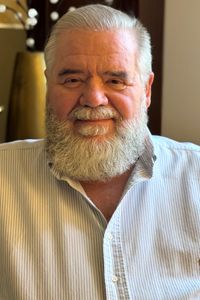
Background
Bradley Young earned a high school diploma from Blackhawk Tech. Young attended the University of Pittsburgh, Pennsylvania State University, and Denison University. Young's career experience includes working as an administrator.[1]
- High school:
- Blackhawk Tech
In their own words
Who are you? Tell us about yourself.
I’m a fifth-generation Chippewa Township native, Blackhawk graduate, and now a New Brighton resident. I studied at Pitt, Penn State, Denison University, and Pittsburgh Filmmakers. My career has included steelwork, postal work, sales work, political campaigns, and serving as Membership and Development Director for the Greater Pittsburgh Chamber of Commerce. I now work for the YMCA of Greater Pittsburgh. As primary caregiver for both parents with Alzheimer’s, I learned firsthand the challenges families face. I’ve traveled to more than half the states and seven other countries, bringing a broad perspective to my deep local roots. I’m running to help people build economic security—and yes, I’ve been a Costco member for 24 years!
Please list below 3 key messages of your campaign. What are the main points you want voters to remember about your goals for your time in office?
Jobs, jobs, jobs—and your economic security. If jobs are important to you, consider this: since 1989 through July of this year, 97.6% of America’s net job growth has occurred under Democratic presidents, compared with just 2.4% under Republicans. That should tell you something! Democrats invest in the conditions that help businesses create jobs, and we defend the programs that protect your economic security when times are tough. I will bring those priorities to Harrisburg.Property tax reform: People should be able to afford to stay in their homes. I support reducing our reliance on property taxes and developing a fairer funding system that protects homeowners while adequately funding public schools and essential local services.Consumer protection and the cost of living: Government should help protect your economic security. I will fight deceptive business practices, hidden fees, and unfair utility costs, and push to ensure that large developments, including data centers, pay their own infrastructure costs rather than shifting them onto residents.
What areas of public policy are you personally passionate about?
Healthcare has been my passion since 1974, when, as a university freshman, I advocated for universal healthcare at my father’s Rotary Club in Beaver Falls. Half a century later, I’m baffled that our wealthy nation still hasn’t guaranteed care for everyone. Healthcare is a right, not a privilege tied to an employer’s benefits package. As primary caregiver for both parents with Alzheimer’s, I saw how daunting our system can be. My father was an Army veteran, and I admired his coordinated VA care. I support a national health service modeled on the VA: comprehensive care for all citizens, lifting the burden from employers and replacing the maze of providers, insurers, and bills. I’ll advocate for Pennsylvania to advance that goal.
Who do you look up to? Whose example would you like to follow, and why?
I admire Franklin D. Roosevelt and consider myself an FDR New Deal Democrat. His commitment to jobs, opportunity, and economic security reflects what I believe government should do: help people build dignified lives and protect them when times are tough. But the people I have looked up to most personally are my parents.
Both came from modest beginnings. My mother grew up in deep poverty after losing her father as a baby. My father was her high school prom date and the love of her life. Together, they built a lovely home at the edge of the woods in Chippewa Township, on property that had been in our family since 1864. There they raised two sons and sent both to college, one to an Ivy League school.
Once my brother and I were in elementary school, my mother returned to the workforce. She worked for the Beaver Valley Chamber of Commerce before establishing a series of women’s clothing shops in Beaver Falls and neighboring counties. She was resourceful, industrious, and determined, continuing to work until Alzheimer’s made that impossible.
My father served in the U.S. Army in Japan during the Korean conflict. With help from the GI Bill, he earned an engineering degree at Geneva College while working full-time at Babcock & Wilcox. He spent 35 years there, until the plant closed. In the late 1960s, he also established a machine shop with a partner and operated it for 45 years, until Alzheimer’s ended his working life as well. Alongside his business and family responsibilities, he served on the school board.
Together, my parents worked to save the McKinley Schoolhouse, the last remaining one-room schoolhouse in Chippewa Township. My mother’s chili recipe became a staple of the organization’s monthly fundraisers—and it is still used today. That detail means a great deal to me: part of her contribution to the community lives on, one bowl at a time.
They taught me that community service is something you do, not simply something you talk about. It can mean serving on a school board, preserving local history, building a business, or helping raise the money that keeps a community organization going.
Later, as their primary caregiver, I watched these capable, confident people become increasingly dependent on others. That experience deepened my understanding of why families need dependable healthcare and practical support, no matter how hard they have worked or how carefully they have planned.
FDR’s example informs my beliefs about government. My parents’ example informs how I hope to serve: work hard, take responsibility, contribute to your community, and help others build a secure life.
What characteristics or principles are most important for an elected official?
Honesty, empathy, sound judgment, and accountability. An elected official should listen carefully, consider evidence, admit mistakes, and have the courage to challenge their own party when necessary. Public service means representing everyone in your district, respecting our constitutional system, and keeping your attention on how government decisions affect people’s everyday lives.
What do you believe are the core responsibilities for someone elected to this office?
A state representative should listen to constituents, help them navigate state government, and turn their concerns into practical legislation. That means carefully examining the budget, protecting public resources, overseeing state agencies, and working to improve jobs, healthcare, education, and economic security. Being accessible and following through on people’s problems are essential parts of the job.
What legacy would you like to leave?
I want to leave people more economically secure—not simply able to survive, but able to build stable, dignified lives: to find good work, receive the healthcare they need without facing financial ruin, and remain in the homes and communities they love. Advancing universal healthcare would be especially meaningful to me; I have advocated for it since 1974 because no one should have to choose between seeing a doctor, paying the bills, and keeping a roof over their head. Above all, I hope people remember that I listened, showed up, and stood beside them when they needed someone in their corner.
What was your very first job? How long did you have it?
Aside from mowing lawns and seasonal yard cleanup, my first job was playing Santa Claus for the Beaver Falls Merchants Association’s Santaland. My mother owned a women’s clothing store downtown, and the high school art department transformed a vacant storefront into an impressive holiday display. When the regular Santa, WBVP radio host Jim Reynolds, couldn’t make the Thanksgiving parade, I filled in. I rode atop a firetruck with students dressed as elves, Sparky the fire department Dalmatian beside me, and the Beaver Falls Senior High School marching band leading the way with “Jingle Bells.” It was quite a thrill—and my one and only acting gig! The job lasted a few weeks between Thanksgiving and Christmas. Back then, I needed pillows to fill out the Santa suit; since then, I’ve grown into the role and happily dress up every year to delight my friends and my neighbors’ kids.
What is something that has been a struggle in your life?
Both my parents were highly industrious, capable, and productive business owners who had spent their lives making decisions, solving problems, and caring for others. Alzheimer’s gradually stripped away those abilities. I watched them lose track of familiar routines, repeat the same questions, struggle with tasks they had once managed effortlessly, and become increasingly dependent on others for meals, medications, transportation, and personal care. The contrast between their former independence and their growing vulnerability was painful, and each new loss brought a fresh sense of grief.
As their primary caregiver, I coordinated appointments, medications, home support, and daily needs while trying to preserve their dignity and reassure them through moments of confusion and fear. I also had to navigate a fragmented healthcare system, often advocating repeatedly to connect services and obtain appropriate support. The responsibility was emotionally and physically exhausting, and there were times when the demands of caregiving felt nearly overwhelming. A network of care providers and social workers helped me endure those difficult years, offering guidance and practical support when I was unsure where to turn. Although the experience tested me deeply, I ultimately prevailed. It renewed my sense of purpose and strengthened my commitment to answer the call of duty by serving our community and supporting families facing similar challenges and enhance the human condition.
What do you believe is the ideal relationship between the governor and state legislature?
The relationship should combine cooperation, mutual respect, and independent oversight. The governor and legislature should work together on practical solutions while respecting each branch’s constitutional responsibilities. Legislators must ask hard questions even when the governor belongs to their own party. Lasting protections should be written into law, with public input, so they do not depend solely on an executive order or a particular administration.
What do you perceive to be your state's greatest challenges over the next decade?
I see our greatest challenge as building an economy that provides lasting security: good jobs, affordable healthcare and housing, strong public schools, and a fairer tax system. We also need reliable, affordable energy and investment in sustainable power. Development, including data centers, must protect our water and communities and pay its own infrastructure costs. Economic growth should improve residents’ lives without leaving them to shoulder the costs.
Do you believe that compromise is necessary or desirable for policymaking?
Yes. Making progress is usually evolutionary rather than revolutionary. It requires listening, negotiating, and finding common ground. I would work with anyone acting in good faith to improve people’s lives. But compromise must respect basic rights, honest government, and the rule of law. I can accept a practical step toward a larger goal while continuing to advocate for what still needs to be done.
What organizations or individuals have endorsed your campaign?
Beaver-Lawrence Central Labor Council of the AFL-CIO
National Association of Social Workers, Pennsylvania Chapter's for Candidate Election Committee
What was the first historical event that happened in your lifetime that you remember?
The assassination of President John F. Kennedy in 1963. I was in second grade, and what stays with me most is seeing my grandmothers cry. As a child, that was startling. Their grief brought home the enormity of what had happened, even though I was too young to fully understand it. That memory has stayed with me ever since.
On the 2026 ballot
Links
Compiled from the candidate’s published profile as of September 30, 2026.
Source(opens in new tab)