
Background
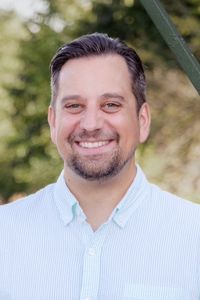
Bradley Smith was born in Neenah, Wisconsin. He served in the U.S. Army National Guard from 2000 to 2008. He graduated from Neenah High School. He earned a bachelor's degree from the University of Wisconsin, Stevens Point, in 2007 and a graduate degree from the University of Wisconsin, Eau Claire, in 2012. His career experience includes working as a management consultant. He has been affiliated with FIRST Lego League and the Wisconsin Veterans Chamber of Commerce.[1]
- Graduate:
- University of Wisconsin, Eau Claire, 2012
- Bachelor's:
- University of Wisconsin, Stevens Point, 2007
- High school:
- Neenah High School
Campaign money
- Raised
- $166K
- From individuals
- $99K
- From PACs & party
- $1K
- Own money
- —
FEC filings through July 22, 2026.
View on FEC.gov(opens in new tab)In their own words
Who are you? Tell us about yourself.
I’m a lifelong Wisconsinite, Army veteran, and business leader who’s helped grow companies from startups to public firms. I believe that when we work together, our best days are still ahead. From local businesses to family farms to college campuses, I’ve seen how hard work and community spirit make Wisconsin special.
My grandparents were dairy farmers, and I grew up in the Fox Valley. When I was born, my dad worked at a feed mill and my mom waited tables at the local supper club. From them, I learned the values of hard work and community. They built strong careers from those beginnings and created a stable, middle-class life for my sister and me. It’s a story that’s becoming less and less possible for families today.
I served as a Staff Sergeant (Forward Observer) in the Wisconsin National Guard and spent 14 months deployed in support of the Global War on Terror. Our unit earned the federal Humanitarian Award for assisting with Hurricane Katrina recovery operations. After returning home, I became the first Smith man in my family to graduate from college with help from the GI Bill and went on to build a career helping Wisconsin companies grow from startups to public firms.
I’m running to restore opportunity for working families, focused on fighting for livable wages, affordable healthcare, strong education and training, and a fair economy that puts people first over billionaires and special interests.
Please list below 3 key messages of your campaign. What are the main points you want voters to remember about your goals for your time in office?
1. Good Jobs and an Economy that prioritizes working families
I will focus on rewarding companies that hire in our local communities, fight for livable wages for every worker, and make affordability a priority so everyone can thrive. From housing to everyday costs, every Wisconsinite deserves the opportunity to build a vibrant and stable life.2. Affordable, reliable healthcare for everyone
Every Wisconsinite deserves access to affordable, dependable healthcare. I will work to lower costs, protect coverage for preexisting conditions, and expand clinics and telehealth access so care stays close to home in every community. I will fight to build a low-cost public option that competes with the best private insurance, available to all. Healthcare should be a basic right in the richest country in the world.3. Education and Training for Every Path
Everyone deserves the chance to build a better life without a mountain of debt. I will work to increase public school funding and expand access to technical colleges, apprenticeships, and affordable higher education so every Wisconsinite can gain the skills needed to succeed in a changing economy. I will also push for investment in training that supports every worker, from those just starting out to those starting over.
What areas of public policy are you personally passionate about?
I am passionate about policies that strengthen opportunity for everyone and restore fairness in our economy. That includes addressing the extreme wealth inequality and making sure everyone pays their fair share so we can invest in the things every individual needs to thrive - like healthcare, livable wages, and housing.
I care deeply about expanding sustainable energy and conservation to protect Wisconsin’s natural resources for future generations. I have solar that offsets over 100% of our home usage and want to see microgeneration available everywhere and to everyone.
As a veteran, I am also committed to ensuring that those who serve our country receive the care, opportunity, and respect they have earned.
Who do you look up to? Whose example would you like to follow, and why?
I’ve always admired Franklin D. Roosevelt for his ability to lead through crisis and his commitment to restoring hope and fairness in America in a very dark time. He understood that the government’s role is to serve everyday people, not the powerful few, and he built programs that lifted families out of poverty, put people back to work, and restored confidence in our shared future. Those programs, like social security and unemployment insurance, are now foundations that every American supports and trust as crucial safety nets.
FDR faced strong opposition but never lost sight of his mission to rebuild the middle class and strengthen the foundation of opportunity for everyone. His belief that a strong nation depends on the well-being of its people continues to resonate deeply with me.
Like FDR, I believe leadership means standing up for regular Americans and government acting as a bulwark against corporate excess and overreach, ensuring no one is left behind. His example reminds me that courage and compassion can go hand in hand, and that lasting progress happens when you put people first – not profits.
What characteristics or principles are most important for an elected official?
I believe the most important characteristics of a good elected leader are empathy, integrity, and vision.
Empathy means having a genuine concern for others. It’s taking the time to understand what people are facing in their daily lives and making decisions with that perspective in mind.
Integrity means doing the right thing, always, even when it’s not convenient or no one is watching. It’s about serving on behalf of others, not out of self-interest or personal gain.
Vision means looking beyond the moment to build a future of what’s possible. It’s having the courage to take on the big challenges and the imagination to build a better future that is transformative, not just incremental.
Together, I believe these values create the foundation for leadership that listens, acts with honesty, and builds toward a brighter future for everyone.
What do you believe are the core responsibilities for someone elected to this office?
The core responsibility of someone elected to this office is to serve people over profits and even party. The very title “Representative” means the job is to understand the needs and viewpoints of your constituents and to act in their best interest with honesty and transparency.
That requires being present and accountable. Holding regular town halls, listening to concerns, and providing ongoing help to residents who turn to the office for assistance.
It is not always possible to legislate in ways that reflect every constituent’s view, but it is always possible to listen, seek common ground, and explain the rationale behind each decision. I believe the measure of a good representative is not just how they vote, but how they communicate, engage others, and continuously earn the trust of the people they serve.
What legacy would you like to leave?
I want my legacy to be that I stood up and fought for what was right and helped narrow inequality while improving the lives of the people I represented. I want to leave behind a record of creating opportunities and programs that made life better for everyone, from good jobs and affordable healthcare to education and training that open doors for the next generation and continuation of the American Dream.
I also want to be remembered for standing up to billionaires and special interests. For restoring balance and fairness in a system that has too often left regular people behind. My hope is that future Wisconsinites will say that I gave everyone a chance to build a good life and a vibrant future, regardless of their station or background.
What is the first historical event that happened in your lifetime that you remember? How old were you at the time?
The first very big historical event I recall was the fall of the U.S.S.R. and the end of the Cold War. I recall seeing news coverage of the Berlin Wall being torn down and asking many questions about what Communism was and why the wall was there in the first place. I was 7 years old at that time, living in Neenah, WI.
What was your very first job? How long did you have it?
My very first job was when I was 15, making pizzas at Papa John’s in Neenah, WI on Commercial Ave. I had that job for a couple of years before moving into other jobs like bagging groceries, bussing tables, and working in bike shops. It was fun but also very hectic at times…slinging countless pizzas until 2am during crazy times like the 4th of July. It really taught me the value of money.
What is your favorite book? Why?
“Someone Knows my Name” by Lawrence Hill is my favorite book. Historical fiction is my favorite genre and this book follows the heartbreaking and also epic journey of a woman abducted from Africa during the Slave trade and brought to revolutionary era America.
It is beautifully written and helps understand the unthinkable journey and experience of so many like her during this period. What makes it unforgettable is how it covers the entire emotional spectrum: heartbreaking, infuriating, hopeful, inspiring. It’s a story of survival, strength, and dignity in the face of cruelty. I can’t recommend it highly enough.
If you could be any fictional character, who would you want to be?
If I could be any fictional character, I would choose Aragorn from The Lord of the Rings. He embodies the reluctant leader. He’s someone who doesn’t chase power or recognition, but steps up when leadership is needed. He leads with integrity, compassion, and quiet strength, even when success is considered impossible.
I admire him for carrying great responsibility without ego. He leads by example, earns trust through action, and puts the well-being of others before his own comfort or ambition. His courage comes from purpose and commitment.
What is something that has been a struggle in your life?
Perfectionism. A quote I love and take to heart is, “how you do anything is how you do everything”. I take pride in doing things well but that can catch up with you and become a detriment at times. Thankfully through the years I’ve gotten better at prioritizing and recognizing which things to truly dig in on versus those where it’s ok to move quickly, as well as situations where perfection is the enemy of progress.
What qualities does the U.S. House of Representatives possess that makes it unique as an institution?
To me, the House of Representatives is unique because it most directly reflects the will of the people… what the founders once called “the rabble.” Snark aside, its size and diversity are its greatest strengths. It is messy and chaotic at times, but that’s the nature of democracy and how we make progress.
The House is where every community’s voice has a seat at the table, making it one of the most vital institutions for translating the people’s needs into real change. Its shorter terms also keep representatives closely connected to the evolving priorities of their districts.
Do you believe that it's beneficial for representatives to have previous experience in government or politics?
I believe prior experience in government can be beneficial, but it isn’t essential. What matters most is understanding how to navigate complex systems to get results. That can come from serving in elected office, working within government, or leading in large organizations like corporations or nonprofits. The key is knowing how to drive change and deliver for the people you represent.
What do you perceive to be the United States' greatest challenges as a nation over the next decade?
Our greatest challenges over the next decade will be reversing extreme wealth inequality, ending the capture of government by special interests and dark money, and bridging the deep divide between Americans with different views.
We also need to proactively shape the future of Artificial Intelligence, harnessing its potential to drive progress while minimizing the disruption and harm it could cause to working people. Meeting these challenges will determine whether we continue to drift apart or come together around a stronger, fairer vision for our country.
Do you believe that two years is the right term length for representatives?
Two years can feel short and a bit hectic, but I believe it serves an important purpose. It keeps representatives closely connected to the people they serve and accountable to changing priorities in their districts. That said, the short cycle also demands constant campaigning, which can distract from governing. Ultimately, I think the two-year term works if we elect leaders focused on service rather than politics, people who stay grounded and aligned with their communities throughout their term.
What are your thoughts on term limits?
I support term limits because I believe public service should be about representation, not entitlement. Too often, long tenures in office leads to politicians becoming disconnected from the realities their constituents face every day.
Regular turnover helps bring in new energy, perspectives, and ideas that reflect the changing needs of the people. It also reminds elected officials that these positions are not careers, but opportunities to serve for a time and then pass the torch.
At the same time, experience matters, so term limits should strike a balance, ensuring leaders remain accountable and connected without losing valuable institutional knowledge. The goal should always be to keep government responsive and close to the people it serves.
Is there a particular representative, past or present, whom you want to model yourself after?
I look up to leaders like Bernie Sanders and Tammy Baldwin, who have both served in the House and built careers focused on improving life for regular working people rather than playing political games. They represent leadership that focuses on real issues faced by their constituents, instead of getting lost in partisanship and personal gain.
Bernie has been a consistent voice for working families and economic justice, unafraid to challenge powerful interests when they stand in the way of progress. Senator Baldwin leads with empathy and pragmatism, always grounded in Wisconsin’s values and the everyday concerns of her constituents across party lines.
Both have shown that strong convictions and practical collaboration can coexist. That is the kind of representative I aspire to be focused on people, guided by principle, and committed to finding solutions that make life better for everyone.
Both sitting representatives and candidates for office hear many personal stories from the residents of their district. Is there a story that you’ve heard that you found particularly touching, memorable, or impactful?
One story that has stuck with me came from a constituent who lived in an area where toxic chemicals were dumped into a popular recreational waterway to save money on safe disposal. The result was widespread contamination that caused injuries to children, long-term health problems, and decades of costly cleanup. All of it could have been prevented if stronger protections and environmental oversight had been in place.
That story stuck with me because it shows what happens when profit is put ahead of people and the environment. Without a steady hand of government ensuring accountability and public safety, unregulated capitalism too often leads to harm that can last for generations.
It reminded me why we need leaders who will fight for clean water, responsible businesses, and common-sense protections that put people and communities first, in Wisconsin and across the country.
Do you believe that compromise is necessary or desirable for policymaking?
I believe compromise is both necessary and desirable in policymaking. It is the only way to create policies that will last and stand the test of time across different administrations.
Good governance means finding common ground without abandoning core values. When leaders refuse to work together, the result is gridlock, instability, and policies that swing wildly every few years. The best ideas often come from open dialogue, active listening, and a willingness to incorporate perspectives from all sides.
The Constitution says that all bills for raising revenue must originate in the House. What role would this power play in your priorities if elected?
The House holds the power to start all revenue bills because it is closest to the people, and that is exactly how it should be. I would use that responsibility to make sure our tax and budget policies align with working people, not just the wealthy and well-connected.
We need to close loopholes that are exploited by mega corporations, reward businesses that create jobs locally, and invest in things that strengthen local communities such as healthcare, education, and infrastructure. The goal should be simple... a fair economy where everyone pays their fair share and every family has a real chance to get ahead.
How should the U.S. House use its investigative powers?
The House should use its investigative powers responsibly purposefully. Oversight is an important part in ensuring that our government, corporations, and institutions are acting in the public’s best interest. These powers should be used to uncover facts, protect taxpayers, and hold those in power accountable, not to score political points or conduct partisan show hearings. Investigations should focus on improving transparency, preventing waste and abuse, and strengthening trust in government.
Candidates hear many personal stories from voters. Is there a story that you’ve heard that you found particularly touching or memorable?
One story that has stuck with me came from a constituent who lived in an area where toxic chemicals were dumped into a popular recreational waterway to save money on safe disposal. The result was widespread contamination that caused injuries to children, long-term health problems, and decades of costly cleanup. All of it could have been prevented if stronger protections and environmental oversight had been in place.
That story stuck with me because it shows what happens when profit is put ahead of people and the environment. Without a steady hand of government ensuring accountability and public safety, unregulated capitalism too often leads to harm that can last for generations.
It reminded me why we need leaders who will fight for clean water, responsible businesses, and common-sense protections that put people and communities first, in Wisconsin and across the country.
What is an accomplishment that you are proud of?
One of the accomplishments I am most proud of is my service in the Wisconsin National Guard, where I rose to the rank of Staff Sergeant as a Forward Observer (13F) and deployed in support of the Global War on Terror. During pre-deployment training, our unit was struck by Hurricane Katrina, and we assisted FEMA with access and supply operations, for which me and my unit were awarded the Federal Humanitarian Award. That experience taught me leadership, teamwork, and the impact of stepping up when people need help.
What role should the United States government have in the development or use of artificial intelligence?
The federal government should play a leading role in supporting progress and keeping the United States at the forefront of AI innovation, while also planning responsibly for its impact on workers and society. Artificial intelligence offers enormous potential to improve productivity and quality of life, but it will also displace some jobs and industries. We need forward-looking policies and investment in retraining, education, and workforce transition programs to ensure people are not left behind.
The government also has a responsibility to set safety standards and testing protocols before new AI systems are released to the public. This helps prevent misuse and reduces the risk of low probability but potentially catastrophic outcomes. Innovation should move quickly, but it must also move safely and responsibly to ensure it does not cause more harm than benefit.
What legislation would you enact related to election administration in the United States?
I would enact legislation to outlaw gerrymandering and require all election maps to be drawn by nonpartisan commissions, ensuring voters choose their representatives, not the other way around. Every U.S. taxpayer deserves full representation in Congress, true to our founding principle of no taxation without representation, which includes residents of Washington, D.C., and Puerto Rico.
I also believe we need stronger national standards to protect elections from tampering and manipulation. That means modernizing voting systems with verifiable paper trails, improving cybersecurity, and establishing consistent, transparent procedures for how votes translate into electors. States should maintain local control, but within a fair and secure framework that prevents bad actors from undermining results or sowing distrust.
Finally, I would enact automatic and same-day voter registration, along with protections against efforts that make it harder for eligible citizens to vote. A healthy democracy depends on broad participation and public trust.
On the 2026 ballot
Links
Compiled from the candidate’s published profile as of September 30, 2026 and FEC filings.
Source(opens in new tab)