
Background
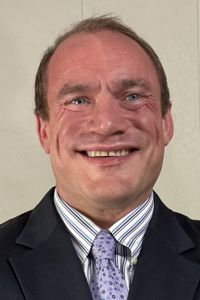
Bradford Hall earned a high school diploma from Carroll High School. He earned a bachelor's degree from the University of North Texas in 2008 and a bachelor's degree from Texas Christian University in 2014. His career experience includes working as a small business owner.[1]
- Bachelor's:
- University of North Texas, 2008
- High school:
- Carroll High School
Campaign money
- Raised
- $0
- From individuals
- $0
- From PACs & party
- $0
- Own money
- —
FEC filings.
View on FEC.gov(opens in new tab)In their own words
Who are you? Tell us about yourself.
My name is Bradford Winston Hall. I'm a native Texan and an Independent, certified write-in candidate for the U.S. Senate. My name will not be printed on your ballot. At the polls, choose WRITE-IN and type BRADFORD HALL. If you vote by mail, write BRADFORD HALL and mark the write-in box.
I went to Southlake Carroll and played football. I attended TCU and UNT. I'm an autodidact. I build software. I'm a personal trainer and small business owner, and I compete as an athlete. I study government. I attend city council meetings.
Public service runs in my family. My great-grandfather, Claude Vaden Hall, taught history at East Texas State Teachers College. He co-authored a textbook explaining the Texas Constitution, and he documented the history of Floyd County. My grandfather, Ford Hall, was a lawyer. That is my inheritance: not a claim that I am entitled to office, an obligation to understand government and demand something better from it.
On July 28, 2026, I testified before the Texas Senate Finance Committee about the missing link between state contracts and state payments. I spoke twice at Fort Worth City Council in August. I file public-records requests and publish my sources at hallrecord.pages.dev. Ordinary people helped me raise the filing fee.
I don't have a polished political resume. I have evidence that I work.
Please list below 3 key messages of your campaign. What are the main points you want voters to remember about your goals for your time in office?
Follow the money. Find the leaks. Publish the results. Texas publishes its contracts, and it publishes its payments. On July 28, 2026, I told the Texas Senate Finance Committee: "We publish both ends of the chain without a dependable public key between them." I want one persistent identifier that follows a contract from award through every payment. Then we measure fraud instead of estimating it. The test is one number you can check: how many payments match a contract. Before politicians demand more from working people, they should account for what they already take. Fraud hides in the gaps between systems, not inside them. Receipts over rhetoric.Texas should welcome useful investment. It should not write a blank check on power, water, or taxes. A large new customer that creates a new grid cost should not quietly hand it to Texas families. It should fund its own connection before any public incentive applies. When a data center takes a public tax break, it should report its electricity and water use every year, facility by facility. Publish the public cost, the jobs promised, and the jobs delivered. Judge the grid by two things: did it get more reliable, and what did it cost your household? On Aug. 11, I asked Fort Worth City Council who bears these infrastructure costs. That comment is in the city's meeting record.I'm tired of being told our choices are limited to two competing brands of political theater. Evidence does not get a party label. I hold both parties to the same standard of documentation, and when I get something wrong, I publish the correction. I will show my work and answer questions without pre-screening them. You don't have to trust my branding. Watch the work. Inspect the receipts at hallrecord.pages.dev. Challenge me. Decide for yourself. My name will not be printed on the ballot. At the polls, choose WRITE-IN and type BRADFORD HALL. By mail, write BRADFORD HALL and mark the write-in box.
What areas of public policy are you personally passionate about?
Following public money from promise to payment. A tax exemption is public spending through the tax code. Publish the recipients, value, duration, promises, and review dates, and cap or sunset it unless the agency certifies jobs and revenue above the public cost. When a data center takes a tax benefit, it should report its power and water use. In Medicare and Medicaid, one contract-to-payment identifier would let us measure fraud instead of estimating it from a national percentage. Technology should give citizens more power, not just track them. AI used in public programs should be audited by an auditor the public pays. I publish a position only when it says what changes, who pays, and how it's measured.
Who do you look up to? Whose example would you like to follow, and why?
My great-grandfather, Claude Vaden Hall. He taught history at East Texas State Teachers College, co-authored a 1932 textbook explaining the Texas Constitution, and documented the history of Floyd County. My grandfather, Ford Hall, was a lawyer whose work included a case involving Southwestern Bell. That's the example I want to follow: do the reading, explain government plainly, and leave a record other people can use. Their example isn't a claim that I'm entitled to office. It's an obligation to understand government and demand something better from it.
What characteristics or principles are most important for an elected official?
Honesty, courage, humility, service, and how you treat people when there is no camera pointed at you. An elected official should show his work. Publish the receipts. Answer questions without pre-screening them. Admit when he's wrong, and publish the correction. Hold both parties to the same standard of evidence. Ask who benefits, who pays, and whether the numbers add up, even when the answer is inconvenient. Institutions that demand trust should provide transparency. I have faith, but I have no patience for religious performance. Faith shows in how you treat people, not in campaign branding.
What do you believe are the core responsibilities for someone elected to this office?
Guard the power of the purse. Spending decisions belong to Congress, and I would fight any President, of either party, who spends money Congress did not approve or impounds money Congress did appropriate. Do real oversight. Firing an inspector general should require stated cause reported to Congress, and emergency powers should carry their own exit condition. Protect the vote. Eligible citizens vote, and paper trails and public audits, applied evenly, prove every vote counted. Account for the money already taken before asking for more. A senator should be able to tell taxpayers where their money went, who received it, what was promised, and whether it was delivered.
What legacy would you like to leave?
Systems ordinary citizens can inspect. I want any Texan to be able to look up a government contract and follow it to every payment made under it, without hiring a legal team or drowning in open records requests. That means unique, consistent identifiers connecting contracts, payments, amendments, incentives, audits, and enforcement actions. I also want to leave proof that a candidate can show his work, publish the receipts, answer questions without pre-screening them, and admit when he's wrong. The political establishment benefits when you believe nothing can change. I refuse to give it that victory for free.
What was your very first job? How long did you have it?
Bagging groceries and pushing carts at the Tom Thumb at Southlake Boulevard and White Chapel, in high school. I lifeguarded too. Nobody in either job ever thanked me for bringing the carts in, which turns out to be solid preparation for running as a write-in. You do the work because it needs doing, not because anyone is watching.
What is something that has been a struggle in your life?
Tearing both biceps tendons and having them reattached, then getting back under the bar. Three injuries in one year. I'm not going to dress that up as a metaphor. Everybody's days are a struggle; mine just showed up on an MRI. What I learned is boring and true: you don't get to skip the rehab, and nobody can do it for you. Show up, do the work, keep the receipts.
What do you perceive to be the United States' greatest challenges as a nation over the next decade?
Three, and they're connected. First, a government that can't account for its own money. If agencies can't connect a contract to the payments made under it, they're asking for trust without giving us the tools to check. Second, AI and automation are changing the economy fast. Data centers need enormous amounts of power and water, and the question is whether households carry the cost or share in the benefit. Third, trust. Institutions demand it while refusing transparency, and both parties profit from keeping us fighting over cultural outrage. The fix for all three starts the same way: systems ordinary citizens can inspect.
Do you believe that compromise is necessary or desirable for policymaking?
Yes, on policy. Not on the evidence. I'll give ground on how much regulation we need. I welcome useful investment. If we had a unique identifier connecting contracts to payments, I would be more willing to allow a lighter touch, because the public could see what happens. Receipts first, then lighter touch. What I won't compromise on is the documentation standard. Evidence does not get a party label, and I hold both parties to the same standard. No one person repairs everything alone, so a senator has to build agreement. A deal is fine. A deal nobody can check is a blank check.
What was the first historical event that happened in your lifetime that you remember?
The O.J. Simpson trial. I was in fifth grade at Carroll, and it was on in the cafeteria at lunch. Even at ten I could tell the whole country had stopped to watch one courtroom. What stuck with me wasn't the verdict. It was how completely a televised spectacle can pull everyone's attention while everything else keeps running in the background. I've been suspicious of spectacle ever since, and I've spent a lot of my adult life reading the documents nobody televises.
On the 2026 ballot
Links
Compiled from the candidate’s published profile as of September 30, 2026 and FEC filings.
Source(opens in new tab)