
Background
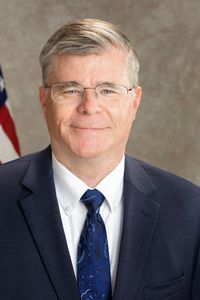
Brad Meyer was born in Brownsburg, Indiana. He earned a high school diploma from Brownsburg High School, a bachelor's degree and a graduate degree from Purdue University in Indianapolis in 1989 and 1998, respectively. His career experience includes working in local manufacturing and serving as a civilian engineer for Crane Naval Sea Systems Command.[1][2]
- Graduate:
- Purdue University Indianapolis
- Bachelor's:
- Purdue University
- High school:
- Brownsburg High School
Campaign money
- Raised
- —
- From individuals
- $0
- From PACs & party
- $0
- Own money
- —
FEC filings.
View on FEC.gov(opens in new tab)In their own words
Who are you? Tell us about yourself.
I’m a seventh-generation Hoosier. I grew up in Brownsburg and have spent my life working, raising a family, and being part of Indiana communities. I’ve seen what makes these communities strong, but I’ve also seen the challenges families face.
I married my high school sweetheart when I was 18. We went to Purdue together. I studied electronics engineering, and she studied veterinary technology. We both worked our way through school, and those years taught us a lot about working hard and making sacrifices to build a life together.
After graduation, we started our careers and our family. I spent 25 years in manufacturing, working in sensor and electronics assembly, machining, heat treat, and plating. I know what it’s like to have production goals, work mandatory overtime, and worry about whether the next round of layoffs might include you.
My first job was with a company owned by a man named Bill Janicki. He was a good example of what a responsible employer should be. He knew the workers were the ones creating the value, and he made sure they shared in it. I never forgot that.
Later in my career, I moved into management, so I got to see things from both sides. That experience also taught me that not every business owner treats people the way Bill did. That has been part of what shaped my values as a Democrat.
Please list below 3 key messages of your campaign. What are the main points you want voters to remember about your goals for your time in office?
I won’t stop working until every Hoosier has access to affordable, quality healthcare.
In America, healthcare has become a profit driven industry, leaving too many people with high costs and poor outcomes. Medicare for All offers a better path forward. By building on Medicare, we can guarantee coverage for every Hoosier, end medical bankruptcies, and ensure people can choose their doctor without fear of financial ruin.I will fight for an economy where working families can get ahead instead of being trapped living paycheck to paycheck.
For too long, our economy has been shaped to benefit billionaires and large corporations while working families struggle with rising costs and stagnant wages. We need to hold corporations accountable, invest in our communities, and build an economy that works for the people who keep this country running.
American families should be at the center of our economic decisions, not corporate profits.We need to protect Social Security. People worked for it and paid into it, and they should be able to count on it when they retire. Benefits need to keep up with the cost of living, and retirees should be able to afford the health care they need.
What areas of public policy are you personally passionate about?
Economic policy has favored big business too much and too long. Over decades, it has resulted in lower wages and less opportunity for working people. Politicians are using this economic discontent, which they caused, to undermine our democracy.
Who do you look up to? Whose example would you like to follow, and why?
Teddy Roosevelt fought to improve the lives of the people.
What characteristics or principles are most important for an elected official?
Do the right thing, be honest with people, and listen.
What do you believe are the core responsibilities for someone elected to this office?
Listen to people, understand what they’re dealing with, and go to Washington to represent them. I’d do my homework, ask questions, and make up my own mind. I’m not there to just vote the way the party tells me to.
What legacy would you like to leave?
I’d like to be remembered as a good husband, father, neighbor, and friend who tried to do the right thing. I’ve worked hard my whole life, and I’ve always believed you should leave things better than you found them.
What was your very first job? How long did you have it?
I had a door to door car wash and wax service in high school for date money. When I turned 18, I got a job as janitor and production worker in a manufacturing company. I worked there through college and eventually became the Engineering Manager
What is something that has been a struggle in your life?
My wife and I married when we turned 18, and started with nothing. It took a long time to build a secure financial future. I set that aside by leaving my job a year shy of early retirement to run for office
What qualities does the U.S. House of Representatives possess that makes it unique as an institution?
It has important oversight responsibilities and, by design, is the most accountable to the voters.
What do you perceive to be the United States' greatest challenges as a nation over the next decade?
We have some big problems to deal with over the next ten years. Too many people are working hard and still falling behind. Housing, health care, food and other everyday costs keep going up.
We also have to get the national debt under control. We can’t keep borrowing more and leave that problem for our kids and grandkids. At some point, we have to make some hard choices about how we spend money.
And we need to protect Social Security and Medicare, keep good jobs here, and make sure our communities have good schools, hospitals and infrastructure.
I’m also concerned about how divided we’ve become. We don’t have to agree with each other, but we have to be able to sit down, talk and get things done.
Do you believe that compromise is necessary or desirable for policymaking?
I think you have to be willing to compromise if you want to get things done. I’ve worked with all kinds of people over the years, and you’re not always going to agree. That doesn’t mean you can’t work together.
I’ll work with anyone when it makes sense for the people of Indiana.
That said, I’m not going to sacrifice ethics or ignore the priorities and concerned of the Hoosiers I will represent just to make a deal.
What organizations or individuals have endorsed your campaign?
Progressive Voters Network, AFL-CIO Indiana State, Indivisible Southeast Indiana, Indivisible South Central Indiana, Dearborn County Democratic Party, Jefferson County Democratic Party, Indiana High School Democrats,
What was the first historical event that happened in your lifetime that you remember?
The US bicentennial
Campaign websiteMeyer's campaign website stated the following:Economic PolicyAmerica has always been called the Land of Opportunity. But those in power have hijacked that dream, and people are feeling betrayed. Middle-class progress seems to have hit a dead end. Wages have stalled while costs keep rising. Housing, healthcare, and education are squeezing families into bankruptcy.The economic struggles people are facing are a feature, not a bug, of the current system. It is a structure that leads to worse financial stability, fewer opportunities, and lower happiness. This is common in societies where a small, shrinking class of owners dominates, which is what is happening today. This change is the direct and predictable result of decades of systemic policy decisions.The time for action is now; our economy and democracy are fundamentally linked. Special interests have written the rules long enough. It’s time for working Americans to demand an economy that works for all of us. We have to vote out those who implement policies that extract the most out of the moment, with no regard for what comes next.These reforms aren’t just about economics. Restoring fairness in the marketplace goes hand in hand with restoring trust in democracy. It is time to build a future rooted in fairness and prosperity for all. By investing in our people, we are truly investing in the future of our children and the strength of our communities. Together, we can write the next great chapter in America’s economic story, one built on fairness, freedom, and opportunity for all.Health Care PolicyIn America, healthcare is treated as a profit center, leading to tragically poor outcomes. Universal healthcare is a proven solution. By building on programs like Medicare, we can guarantee coverage for every resident, end medical bankruptcies, and free people to choose their doctor without fear of financial ruin. It’s time to demand a system that serves people, not profits.Chances are, you know someone (a family member, a friend, or a neighbor) who has been crushed by medical debt, who has delayed care because they couldn’t afford it, or who lives in fear of losing insurance. This isn’t just a personal issue; it’s a public crisis that affects all of us.Join me in demanding that Congress face the facts: that our current healthcare system is dragging families into debt, delivering worse outcomes, and derailing our prosperity.This is the message I will bring to Washington. This is why I am running for Congress.Defending DemocracyA party with a narrow majority is imposing their will upon our citizens without limits, leaving nearly half the population with no voice and no protection. My policies will seek to restore respect for truth, respect for human dignity, and responsibility for those in power. Laws and institutions must serve the Constitution, not one person’s ambition.None of us were alive for the founding of our nation, but many of us are afraid we will be here for the end of it. For nearly 250 years, we built norms and guardrails to ensure that no leader, no party, and no faction could dominate the other. Without those norms, a leader or party with a narrow majority can impose their will without limits, leaving nearly half the population with no voice and no protection. Without these institutional norms, we will have majority rule without justice, and that opens the door to tyranny.Education PolicyAmerica was made great by providing public education to all. That greatness came in the form of a promise: every child, no matter what their background or challenges, deserves to learn the skills to lead a full and dignified life. That is how we raise the prosperity of all of our citizens, and in turn, the prosperity of our nation. The Department of Education ensures that education decisions are based on facts, that money is spent wisely and fairly, and student rights are protected from partisan politics. But now, the Department’s very existence is under threat from the Trump administration.We must keep the promise of public education alive for every child across this country. I will take this message to Washington. That is why I am running for Congress.Tell me more (or less).INTRODUCTIONWhile the Constitution places responsibility for education with the states, a focused federal role strengthens local authority rather than override it. The Department of Education helps build and protect the foundation of democracy. It is essential for national strength and long-term competitiveness.Education needs improvement, and the federal role must be seen again as an investment in a skilled workforce and equal opportunity for every child. The Department operates like a national scorekeeper. It ensures the game is tracked fairly, transparently, and consistently across states.Without the Department, there would be no reliable scoreboard. There would be no objective understanding of what works, and no impartial checks when rights are violated, and no way to assess if funds are misused. It serves as a trusted observer, offering a common base of facts so that educators, families, and communities can improve outcomes together.WHAT THE DEPARTMENT ACTUALLY DOESThe Department of Education performs four key functions that help ensure accountability, fairness, and continuous improvement across the country.Providing Objective Evidence for Smarter DecisionsFamilies, educators, and community leaders need trustworthy information to make good decisions. The Department provides this through tools like the National Center for Education Statistics, the College Scorecard, and IPEDS. These resources offer neutral, standardized data that empowers parents to compare schools, helps educators identify what works, and gives policymakers the tools required to improve outcomes. They also help hold systems accountable, identify gaps, and share successes that can be scaled.The Department also provides information on long term policy changes that states make, such as voucher and charter programs, using facts rather than political spin. Since not all state leaders can be trusted to honestly assess their own programs long term success, federal data ensures everyone is able to see the real score. While some wish the federal government could block harmful policies outright, its power is limited. Its influence comes through funding, transparency, and evidence. The real fight still happens in statehouses and local school boards, but it is a stronger fight when backed by national facts.Evaluating Reforms and Protecting Taxpayer InvestmentsThe Department does more than collect data. It helps improve education through pilot programs, grants, and independent evaluation. It tests new ideas, measures what works, and helps local districts adopt proven strategies that deliver real results. It also conducts audits and investigations to stop fraud, waste, and abuse through its Office of Inspector General. This protects taxpayer dollars and ensures money goes where it is needed most.Distributing Targeted Funding That Levels the Playing FieldWhen local tax bases fall short, federal aid makes a critical difference. The Department supports local control while requiring results. Key allocations include:60% ($160.7 billion) for Federal Student Aid, including Pell Grants, work-study, and federal loans.25% ($68.1 billion) to help states address local education needs.15% ($39.9 billion) for K–12 grants, including:7% ($18.8 billion) for Title I support in low-income areas.6% ($15.5 billion) for special education under IDEA.2% ($5.5 billion) for school improvement.These programs help close opportunity gaps and ensure continuity when state budgets fluctuate. They allow young people to pursue education, economic stability, and mobility, even when their communities face hardship.Enforcing Civil Rights and Legal ComplianceThe Department enforces federal laws that protect students from discrimination. It intervenes when public funds are misused or when students are treated unfairly. This work is legal, not political. It focuses on transparency, compliance, and equal access. Despite some opponents calling it ideological, the Department’s core responsibility is enforcing the law fairly.This protection is especially important for students with physical, emotional, or learning-related disabilities. Just a few decades ago, many of these children were denied an education and pushed to the margins. That began to change with the Individuals with Disabilities Education Act (IDEA) and the work of families and advocates. Special education programs have opened doors and helped students pursue lives of independence and dignity.That progress takes resources. It requires trained teachers, adaptive tools, and time. The Department helps schools cover these costs and ensures IDEA is enforced. Without this support, many schools simply would not or could not serve these students well.Still, too many students fall through the cracks. A grandmother told me how her son had to sue the local school district to get her grandson the services the district unjustly withheld. When summer school came, the district placed him in a general class with no support. They checked a box but failed the child. This child may not grow up to lead a Fortune 500 company, but he will grow up. He will live in our neighborhoods, work in our communities, and vote in our elections. And he will do all that without his parents there to fight for him. We owe it to him to make sure he is ready.When that happens, the Department is often the only authority with the power to intervene. Despite its national role, it operates lean. Fewer than 4,000 employees oversee a $268B budget, with over 90% of that money going directly to states, students, and institutions. Eliminating the Department would force each state to recreate these services at great cost, with less consistency and weaker accountability.Environmental PolicyWhen we speak of protecting the environment, we really mean protecting our health. Indiana ranks among the worst for polluted rivers and air quality. Industry avoids responsibility and passes off the costs and the harms to us. Every one of us breathes the same air and drinks the same water. Environmental harm does not stay in distant forests or faraway rivers; it finds its way into our bodies, our families’ food, our homes, and our communities. This is not some abstract concept. This is directly connected to how we make a living and lead a decent life.Environmental decline is no longer a distant or hypothetical concern. This is a public health issue, an economic risk, and a test of whether the government will act in the public interest.I will go to Washington and fight for the safety of our communities. It’s time someone stood up and called out the polluters and the politicians who allow this to continue. That is why I am running for Congress.CALL TO ACTIONEnvironmental protection is not a partisan issue. It is a matter of national health, prosperity, and security. The technologies exist. What we need now is leadership, responsibility, and public demand.Clear and consistent rules protect public health, provide certainty for businesses, and foster innovation. Investing now in renewable energy and ecosystem resilience avoids far higher costs later. These are not speculative claims. They reflect the reality already unfolding in communities across America.We must act not only to prevent harm but to build something better: energy independence, local resilience, high-quality jobs, and a healthier environment for all. Embracing innovation and responsible resource management is not a partisan agenda; it is an American imperative.Foreign PolicyWe are becoming the kind of threat we once stood against, bullying our neighbors, ignoring diplomacy, and eroding the trust of our allies. We are replacing principled leadership with brute force and using our military power not for defense but for intimidation. This is strategically short-sighted and surrenders our leadership among nations to stand for peace and international stability.In the face of this, it is more dangerous for our nation to stay silent than it is to speak plainly.Call to ActionWe have always pulled together when it really counted. It counts now. The choice before us will determine whether America restores the principles that kept us stable for generations, or descends into a future shaped by our failure to act.Immigration PolicyImmigration is really an economic issue. The solution is clear: match immigration with legal hiring needs. We need workers, and immigrants need jobs. Illegal hiring drives undocumented immigration. Rather than design a lawful, workable system, we spend billions on policies that tear families apart and chase symptoms rather than fix the cause: illegal hiring. I will pursue reforms that address both sides lawfully, fairly, and in line with our values.I will bring clear thinking and solid, workable solutions to Washington. That is why I am running for Congress.CONCLUSION: STANDING UP FOR THE MIDDLE PATHWe have a solution. We just need the people in the middle to stand up and demand it; real progress won’t come from the extremes.Together, we can confront this divisive issue, solve it, and make A Stronger Future.— Brad Meyer's campaign website (April 17, 2026)Note: This text is quoted verbatim from the original source. Any inconsistencies are attributable to the original source.
On the 2026 ballot
Links
Compiled from the candidate’s published profile as of September 30, 2026 and FEC filings.
Source(opens in new tab)