
Background
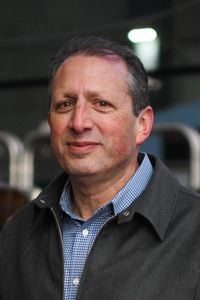
Lander graduated from the University of Chicago and received master's degrees in social anthropology and city planning from the University College London and the Pratt Institute, respectively. He directed the nonprofits Pratt Center for Community Development and Fifth Avenue Committee. Lander co-founded the New York City Council's Progressive Caucus. At the time of the comptroller primary, Lander was chairman of Local Progress, which he described as "a national network of over 800 progressive local elected officials in 45 states."[1]
Campaign money
- Raised
- $2.5M
- From individuals
- $1.7M
- From PACs & party
- $49K
- Own money
- —
FEC filings through June 30, 2026.
View on FEC.gov(opens in new tab)Campaign themes
Brad Lander has not yet completed [the profile publisher]'s 2026 Candidate Connection survey.
Send a message to Brad Lander asking him to fill out the survey.
If you are Brad Lander, click here to fill out [the profile publisher]'s 2026 Candidate Connection survey.
Who fills out the candidate survey?
Any candidate running for elected office, at any level, can complete [the profile publisher]'s Candidate Survey. Completing the survey will update the candidate's [the profile publisher] profile, letting voters know who they are and what they stand for. More than 32,000 candidates have taken [the profile publisher]'s candidate survey since we launched it in 2015. Learn more about the survey here.
You can ask Brad Lander to fill out this survey by using the buttons below or emailing info@landerfornyc.com.
Campaign websiteLander's campaign website stated the following:Fight, Don't Fold.When Donald Trump's ICE tried to kidnap our neighbors, Brad put his body on the line to stop them – and then organized to bring more people into the fight. The people of NY-10 want a congressmember who will fight rapidly-advancing authoritarianism like our lives depend on it, because they do. Brad believes that we must build a Democratic Party that has the backbone to fight fascism, the courage to stand up to lobbyists and corporate power, the strategic discipline to build a broad coalition, and the focus to make government actually deliver for people.Homes, Not Hate.New York City should be a place everyone can live with dignity – working and middle-class families, immigrants and those who have been here for generations, Jews and Muslims, queer and trans people, disable people, older New Yorkers and young people just starting out. That requires a city where everyone can afford a home. That's the work of Brad's career, from his start fighting evictions and building affordable housing, to the Gowanus Neighborhood Rezoning, to his most innovative investment as Comptroller that saved 35,000 affordable rental units put at risk when Signature Bank failed. In Congress, Brad will bring his housing expertise to the fights to make Washington help New York and other cities end street homelessness, fix our public housing, protect tenants, and especially to build more affordable homes.Workers, Not Just The Wealthy.Brad Lander is a life-long champion for workers rights. He delivered groundbreaking job protections to freelancers and fast-food workers, and a $15 minimum wage to delivery workers and Uber drivers. He secured paid sick leave for New Yorkers. He helped stop Eric Adams from pushing the city's retirees onto privatized Medicare Advantage. That required taking on Uber, GrubHub, McDonalds, health care lobbyists – and winning. In the coming era of AI, automation, and social media, billionaire-driven inequality will get worse, unless we do something about it. Brad will fight to increase the federal minimum wage, win Medicare for All, and strengthen the rights of workers to organize. He'll bring his innovative approach to winning dignity for NYC's gig workers in a changing economy to a national level. Brad will always put working people first — not billionaires.Bridges, Not BombsNew Yorkers' hard-earned tax dollars should not be going to fund forever wars and human rights violations – whether by foreign leaders or American ones. Brad believes we need a foreign policy that emphasizes global peacemaking over militarism, that defends human rights and international norms, and that defeats authoritarianism globally through alliances that address inequality and poverty. He's had the courage to stand up for those beliefs throughout his life – for freedom for Soviet Jewry, against the war in Iraq, and to stop Israel's occupation of Palestinian territory and the destruction of Gaza. Brad knows that Israelis will only be safe and free when Palestinians are free and safe. Brad will fight to rebuild USAID, save lives, and protect civilians from Ukraine to Sudan to Venezuela. He will push back against an imperial presidency – whichever party is in power – and restore Congress' constitutional role to set foreign policy. And help craft a new Democratic foreign policy that does better to build bridges at home and abroad.— Brad Lander's campaign website (April 7, 2026)Note: This text is quoted verbatim from the original source. Any inconsistencies are attributable to the original source.
Brad Lander did not complete [the profile publisher]'s 2025 Candidate Connection survey.
Brad Lander did not complete [the profile publisher]'s 2021 Candidate Connection survey.
Campaign website
Lander’s campaign website stated the following themes. Click here to read full plans.
Build A Just and Durable Recovery
From the Comptroller's office, Brad will lead with bold ideas to jumpstart our recovery, and rebuild a thriving and more equitable economy. After the fiscal crises of the 1970s, 9/11, and the Great Recession, NYC's leaders handed over public land, subsidies, and tax breaks to the private sector for too little in return. Brad will take a different approach -- one that invests in public infrastructure as a platform for shared prosperity. By making investments in the green energy, housing, and infrastructure we need for the future, we can create jobs in the present and lay a foundation for a more resilient future. By providing rent relief along with stable, long-term leases we can keep people in their homes and enable small businesses to thrive. By supporting the arts, our public health system, and universal child care, we can sustain a care economy that supports all of us. As Comptroller, Brad will ensure we are budgeting wisely and investing strategically to rebuild an economy that works for all New Yorkers.
INVESTING IN INFRASTRUCTURE
Investing in our infrastructure can play a vital role in a just recovery from the COVID-19 crisis. Just as the New Deal helped New York City recover from the Great Depression, investing now in our city’s future can create tens of thousands of good jobs, promote health in the hardest-hit neighborhoods, support new business creation and M/WBEs, and provide a platform for shared economic prosperity in the years ahead. Read more about Brad's plan to invest better in our infrastructure to create jobs, stimulate our economy, and build a resilient city.
SMARTER ECONOMIC DEVELOPMENT
Instead of giving away billions to corporations whose promises for jobs regularly fall short, we should prioritize economic development investments in public infrastructure and programs that support sustainable innovation and opportunity in the fields of the future -- technology, clean energy, green manufacturing, arts and culture, and the care economy -- with commitments to sustainable business practices, good living wage jobs, apprenticeship programs, and local hiring requirements. As Comptroller, Brad will fight to ensure that every single dollar the City spends is used wisely, cracking down on bloated corporate giveaways and redirecting that spending into bold investments that will ensure a just and durable recovery.
SMALL BUSINESS RECOVERY
NYC's small businesses are the lifeblood of our neighborhoods and a key source of jobs and economic activity. Thousands have already closed, and many more are on the brink. Federal aid has been distributed unevenly, with hard hit neighborhoods of color receiving far less access to loans and grants. The high costs of commercial rents, which have gone up by 50% on average over the last decade, has been one of the biggest challenges facing small businesses, even before the pandemic. Brad is working to create a Small Business Recovery Lease program to address past arrears, enact commercial rent control, pass a vacancy tax, and provide access to capital to help small businesses and M/WBEs recover and thrive.
REVIVE ARTS AND CULTURE
NYC’s vibrant creative sector is the soul of our city and a key driver of our economy. But jobs in arts, entertainment, and recreation shrunk by 64 percent in 2020, the greatest decrease in any industry in NYC. This drastic reduction of the sector’s workforce has severe implications for the city as a whole, given that it employs nearly 300,000 people, and constitutes $110 billion of the city’s economic activity, nearly 13% of the city’s total economic output. Brad will fight for a New Deal-style program to invest in the arts, paid work for artists in public infrastructure projects, a minimum wage for freelancers (many of whom are artists), ongoing relief for unemployed workers, and assistance to help Broadway and arts organizations get back on their feet.
HOUSING AS A PUBLIC GOOD
The pandemic has shown us just how critical housing is for public health -- and our recovery must take that lesson to heart and prioritize stable, affordable housing, for all New Yorkers. In the short term, we need rental assistance and rent forgiveness to prevent a massive wave of evictions. But in the long term, we need a new approach to creating truly affordable housing, because what we have isn't working. Read more about Brad's plan to create a new generation of social housing, so that everyone can have a safe, stable home they can afford.
FIGHTING FOR GOOD JOBS
Throughout his time in the City Council, Brad has fought successfully for good jobs, fair pay, and workplace protections, particularly in sectors like ridesharing or fast food which predominantly employ immigrants and people of color. Brad will use the tools of the Comptroller's office to ensure companies pay workers a living wage, hold employers accountable when they abuse workers'rights, raise the floor for workers in the gig economy, establish protections for essential workers, and support apprenticeship and job training programs, especially for young people of color who have lost jobs at high rates during the pandemic.
RESTORING PUBLIC HEALTH
NYC’s economic recovery cannot succeed without robust investment in public health -- to ensure we get vaccines to everyone as quickly as possible and reopen schools and our economy safely, address health disparities that were so devastating during this crisis, and build on public investment in life sciences to make NYC a hub for next generation leadership in public health. We need to be so much more ready for the next public health crisis than we were for this one.
THRIVING NONPROFITS
New York City's nonprofit community generated nearly $78 billion for NYC's economy last year, and employs over half a million people (almost 18% of NYC workers), more than 64% of whom are women. Nonprofits provide essential health and human services, enrich our cultural and spiritual lives, lift up our neighborhoods, and educate our minds. Yet nonprofits are chronically underfunded, with little or no cash reserves, and their workers are often underpaid. Despite being essential, nonprofits were left behind in many parts of Covid-19 relief. As Comptroller Brad will be champion for the nonprofit sector, advocating for nonprofits to be treated as the essential sector they are, ensuring that they are fully funded and paid on time, so that their workers can be paid living wages, their organization’s can be stable for the long term, and they can continue to serve as an economic driver in our city.
SUPPORTING M/WBES
Many minority and women owned businesses (M/WBEs) are currently at a severe risk of going out of business because of the pandemic and need additional help. Black owned businesses in particular are two times more likely to shut down because of the pandemic than white owned businesses. In response to this escalating crisis, the City of New York must do more to support M/WBEs. As NYC Comptroller Brad will push for more City contracting opportunities for M/WBEs, pursue strategies to offer direct investment to address gaps in access to capital, and bolster existing support programs for struggling businesses.
REOPENING SCHOOLS SAFELY AND SUPPORTIVELY
Nothing is more important to NYC’s recovery than getting our schools open for all our students, safely and supportively, five-days-a-week for all our kids, next fall. This year of remote and blended learning has been very hard on families, teachers, administrators and students. Reopening schools safely and supportively requires rebuilding trust, and spending wisely the influx of new federal and state funds for education. Brad is working with parents and teachers to demand the DOE start planning now for reopening in the fall, including by creating School Reopening Councils bring parents, teachers, and school staff into the process of planning for a safe and supportive reopening.
NYC schools will receive $6 billion in additional one-time federal funding and $600 million a year in additional state funding. As Comptroller Brad will work to ensure these funds are used to add guidance counselors, nurses, social workers to schools, lower class sizes, bring arts and other social and emotional programming into schools, and ensure equitable technology access. Read more about Brad's approach to a safe and supportive return to schools.
Hold City Government Accountable
We need bold government action to recover from this crisis and build a more just city -- but our city government can’t rise to that challenge when agencies are run poorly, when money is wasted, when there’s no accountability for mismanagement, or when corruption goes unchecked. As NYC's "Chief Accountability Officer" Brad will make city agencies work better, and more in sync with our shared values. Through sharp, strategic, honest, data-driven, and transparent audits, he will root out waste, fraud, and corruption to ensure NYC is delivering on its promises to serve all New Yorkers.
AUDITS TO IMPROVE AGENCY PERFORMANCE
Brad will bring an aggressive watchdog approach to City audits, working in strategic partnerships with community residents, workers, and stakeholders to ensure that audits don't just sit on dusty shelves after identifying what is wrong, but help win change to improve how our city government serves New Yorkers. Brad will conduct strategic, data-driven audits to end wasteful spending, improve performance, confront race and gender disparities, reduce our carbon footprint, make sure city services are accessible to all. Read more about Brad's plan to get more out of the Comptroller's audits.
BUDGETS ARE MORAL DOCUMENTS
As a City Council Member, Brad has been involved in over a decade of budget negotiations, fighting to ensure that City spending aligns with our shared values. As Comptroller, Brad will keep a sharp eye on the City budget to make sure it is balanced for the long term, and in accordance with our goals for a more just city, but not on the backs of New York families. Read more about Brad's successful advocacy to restore $455 million in affordable housing funding last year and more on why he ultimately voted against the FY21 budget because it didn't sufficiently shift funding from the NYPD to social services.
LEARNING FROM SETTLEMENTS
As Comptroller, Brad won't just rubber stamp payouts for settlements against the City, he'll use data-driven audits to get to the root causes of issues like police misconduct and traffic crashes by City vehicles (the top two sources of settlements that cost the city hundreds of millions of dollars a year). Brad will help the City save money and improve public safety by identifying the worst actors who repeatedly drive recklessly or abuse their power as police officers, using the data from speed cameras and the new data on police misconduct made available by the repeal of 50-A, to intervene proactively before more people get hurt. Read Brad's plan for more traffic safety with less policing.
TRACKING FEDERAL RESCUE SPENDING
The American Rescue Plan is truly coming to the rescue for New York City. The City of New York is projected to receive about $13 billion in federal relief funding from now through 2024, including $7 billion for NYC schools and $6 billion for general City expenses. Brad is advocating to ensure NYC spends rescue funds strategically and with accountability, focusing on safe re-opening, supporting those hit hardest, and investing in key infrastructure and job creation to support robust and much equitable economic growth. But we must do so smartly to create more stimulus and fewer long-term obligations like new hires that we can't sustain.
Brad is advocating for an American Rescue Plan Spending Tracker, modeled on the NYC Sandy Funding Tracker, to provide accountability and transparency over the goals and outcomes of recovery spending. As New York City Comptroller, Brad will audit this spending aggressively to make sure we spend them in the most effective way to secure a just recovery, jump-start our economy, confront the racial and economic inequities we’ve seen so painfully during this crisis, and make sure we are more prepared for future crises than we were for this one.
HUMAN SERVICE CONTRACTING
Nonprofits in NYC provide essential human services, in many cases contracted directly by the City of New York to care for our kids, our seniors, and our most vulnerable. Yet when City agencies contract for this work, they are chronically underfunded -- not paid enough to provide their human service workers with good pay and benefits, or for organizational stability -- and often paid months or even years late. City Hall recently reneged on an agreement to increase the “indirect cost rate” to cover more of the full cost of their work, and has failed to reduce contracting delays. As Comptroller Brad will focus aggressively on improving the human service contacting process and fairly valuing and increasing the indirect cost rate, so nonprofit human service providers can achieve organizational stability, pay their workers fairly, and support our communities.
BETTER PUBLIC SAFETY WITH LESS POLICING
New York City spends more on policing than we do on the Departments of Health and Mental Hygiene, Homeless Services, Housing Preservation and Development, and Youth and Community Development combined. In our streets and in our communities, we are seeing the consequences of spending more on policing than on healthy neighborhoods, mental health services, affordable housing, and youth programming. Brad has been a long-time advocate for police accountability, working with Public Advocate Jumaane Williams to pass legislation to curb stop-and-frisk and create the office of the NYPD Inspector General. He believes that we can achieve better public safety by shifting many social service functions to non-policing alternatives. He voted against the city's FY21 budget because it did not meaningfully shift funding away from the NYPD and towards social services, and has outlined a detailed plan to do that for FY 22.
BUILDING A MORE ACCESSIBLE AND INCLUSIVE CITY
Too often, accessibility and language access are treated as an afterthought rather than tools for radical transformation. Prioritizing investments in the accessibility of our City’s built environment and culture will pave the way toward a more inclusive and just City for all New Yorkers. Yet our City barely complies with federal laws and often only prioritizes accessibility in our City’s budget and operations when forced by court order. As Comptroller, Brad will conduct accessibility audits to ensure our agencies are doing everything in their power to improve accessibility for people with visible and invisible disabilities, meeting the needs of thriving senior populations citywide, and fulfilling and expanding our City's commitments to language access.
Through these audits, Brad will encourage agencies to implement best practices for accessibility and language access proactively, before audits are even conducted, to drive real change in this City rather than prioritizing political wins. Brad will start these audits with a review of our City’s transportation infrastructure and streetscapes, as outlined in Brad’s transportation platform, and will work directly with advocates and New Yorkers to identify and prioritize audits of our City agencies’ operations, service provision, built environment, and compliance with court orders to advocate for the radical changes our City needs.
Secure NYC's Future
The job of the Comptroller is to take the long-term view on our city and invest in a more equitable and sustainable future, for public sector retirees, for our finances, for our infrastructure, and for our neighborhoods. Brad will take a broad view of the Comptroller's responsibility to care for our city’s long term future. As fiduciary for the pension funds, he will ensure the retirement security of our teachers, firefighters, nurses, and other public workers. He will make securing a future for all New Yorkers to thrive a top priority, by investing in green energy, broadband, public education institutions, jobs, and the resilient infrastructure we need to mitigate rising sea levels and other impacts of climate change.
RESPONSIBLE INVESTING
Brad will build a team, from the Chief Investment Officer on down, that takes a strategic and integrated approach to achieving maximum risk-adjusted market returns, that is attentive to the fund-level and systemic risks posed by dangers including climate change and inequality, and that acts as steward for the goals and values of the workers and retirees. He will lead an interactive process to establish a Strategic Plan for Responsible Fiduciary Investing that will fuse maximizing risk-adjusted market returns with investing in our communities, bringing an equity and sustainability lens to the portfolio, and securing long-term sustainable growth – so we can guarantee retirement security for our city’s teachers, firefighters, nurses, and payroll administrators, along with a better future for their families and neighborhoods.
LONG-TERM RISK ANALYSIS FOR NYC
We were not adequately prepared for the Covid-19 crisis, and tens of thousands of people died as a result. We don’t have a crystal ball to identify all future crises, but we can conduct smart analyses of the long-term risks our city is facing -- and the Comptroller’s office is the perfect venue to do it. Brad will bring together a team of experts to inform a long-term risk analysis that identifies the most catastrophic threats facing New York City’s people, finances, and infrastructure, and the steps we should be taking now to minimize those risks and to prepare us to face them in the future. Read more about Brad's plan for long-term risk assessments for the City.
CONFRONTING THE CLIMATE CRISIS
The climate crisis poses the most catastrophic long-term risks to New York City. It also holds immense economic opportunity to create high-quality green jobs that can steer us out of this recession towards a just recovery. Facing up to our climate risks also offers a generational economic opportunity, and our best bet to recover strongly from the COVID-19 economic crisis in a way that confronts racial and economic inequality. Vastly reducing our economy’s reliance on fossil fuels and building a resilient city will create tens of thousands of good, green jobs in NYC and reduce energy costs for millions of struggling families.
As Comptroller, Brad will utilize tools of the office to further efforts to divest from fossil fuels, reduce emissions, invest in renewable energy and climate resilience, and decarbonize New York City’s economy while creating new, green union jobs. From establishing a dedicated audit team to assess agencies from a lens of sustainability and environmental justice, to creating new “climate loans” to assist property owners in transitioning to renewable energy and retrofits to reduce emissions, the proposals draw on the office’s responsibility to audit city agencies, oversee pension investments, and oversee the City’s contracting and procurement with a focus on climate justice. Read Brad’s plan to deploy the tools of the Comptroller’s office to confront climate change and accelerate a just transition to a clean energy economy.
SUPPORTING OUR STUDENTS
New York City’s public schools are the largest area of the City budget, representing $27 billion, or 31% of the operating budget. This is the right financial choice: investing in the next generation through improving education in our public schools is one of the most important ways we can ensure a better future, a thriving economy, and a vibrant multiracial democracy. But we must do more to make sure we are getting the most for the dollars we spend, and attend especially to the needs of our most vulnerable students. As Comptroller, Brad will work to ensure that the Department of Education is investing effectively in early childhood education (beginning with universal 3K and expanded child care), improving the quality of services for students with disabilities and dismantling the barriers to receiving them, and moving forward with meaningful integration so we can deliver high-quality education to all our kids.
INFRASTRUCTURE TO BUILD ON
New York City's backlog of needed repairs to century-old schools, water mains, train and sewer lines is growing every year. At the same time, our City fails to do any serious long-term planning, leaving us ill-prepared to help bring our aging infrastructure to where it needs to be for a more resilient future in the face of climate change. As Comptroller, Brad will continue to overhaul the City’s capital project management systems -- with a plan to build more and better infrastructure, on-time and on-budget, in the neighborhoods that need it most, to create high-quality jobs, and build a more resilient and equitable city for generations to come. Read Brad's transportation agenda.
21ST CENTURY TRANSPORTATION
Transportation – how easy, safe, and affordable it is to get around the city – will be a critical factor in securing a just and durable recovery for NYC. For New York City to be a place where people of all backgrounds can continue to live, work and thrive, we need robust, 24-hour public transit that serves all neighborhoods in the city, investment in protected cycling infrastructure, a transformation of the streetscape, and to tackle the epidemic of traffic violence. As Comptroller, Brad will be an advocate for a stronger, more sustainable, convenient and accessible transportation infrastructure that better serves New Yorkers, spurs economic recovery, promotes climate justice, and sustains livable neighborhoods. Read Brad's transportation agenda.
COMPREHENSIVE PLANNING
Comprehensive planning is a best practice that almost every other major city in the world uses to center shared goals and values in a full range of budget, land use, and policy tools to build a long-term vision for the City’s infrastructure, growth, and development that takes into account both citywide needs and neighborhood priorities. For years, Brad has worked alongside the Thriving Communities Coalition and Council Member Antonio Reynoso to bring comprehensive planning to NYC. Brad will use the powers of the Comptroller’s office to demonstrate how an up-front investment in thoughtful planning rooted in objective data and informed by public input will better support shared and sustainable economic growth, prioritize scarce City resources to fund the most urgent needs and critically important infrastructure, and prepare us to face long-term risks.
PUBLIC BANK FOR NYC
Public money should work for the public good, not private gain. The City of New York deposits billions of dollars in Wall Street banks whose investments often extract wealth from low-income communities, perpetuating racial and economic inequality. Brad is a co-sponsor of legislation to create a NYC Public Bank that would enable the City to invest in our communities, in minority and women-owned businesses, in community land trusts, and in renewable energy infrastructure. Read more about Brad's approach to public banking in NYC.
AFFORDABLE NON-PROFIT SPACE
Nonprofit institutions play a critical role in our City, delivering vital services and employing over 600,000 New Yorkers. But too often, these nonprofit institutions struggle to keep their heads above water in the face of rising rents and displacement pressures. Even where nonprofits own their own space, tight budgets and barriers to accessing capital often force these institutions into spaces that are far too small or in desperate need of renovation. The City’s capital budget process is extremely cumbersome, making it nearly impossible for smaller nonprofits to compete for funds, let alone navigate the City’s complex and bureaucratic capital contracting and construction process. In order to effectively support the City’s nonprofit ecosystem, the City should set up a dedicated capital fund for the express purpose of helping smaller and less-resourced nonprofits acquire, renovate, and expand administrative and community spaces citywide. This fund could be administered with a partner like the Fund for the City of New York or a City agency like the Economic Development Corporation which have the expertise and capacity to help these small non-profits access and use City capital dollars. This fund would better enable these critical institutions to renovate their spaces, expand their footprints, and maximize their impact in neighborhoods all across the City.
ENABLE PRIVATE SECTOR NYC WORKERS TO SAVE FOR RETIREMENT
Nearly 60% of private-sector workers in New York City have no access to a workplace retirement savings plan. For those at companies with fewer than 10 employees, the figure is nearly 90%. As a result, too many New Yorkers face retirement with little or no savings to rely on. To address this issue, Comptroller Scott Stringer convened a group of national experts to develop the New York City Nest Egg Plan, which would provide an opportunity for workers to save for retirement -- at no cost to taxpayers, and taking the compliance burden off small business owners -- through 401k
On the 2026 ballot
Links
Compiled from the candidate’s published profile as of September 30, 2026 and FEC filings.
Source(opens in new tab)