
Background
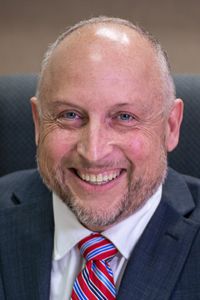
Bill Flanigan was born in Clarksburg, West Virginia. He graduated from Liberty High School. He earned a bachelor's degree from Salem Teikyo University in 1996, a graduate degree from the University of San Francisco in 2000, and a law degree from West Virginia University College of Law in 2006. His career experience includes working as an attorney and business owner. He has been affiliated with Saints and Sinners.[1]
- Law:
- West Virginia University College of Law, 2006
- Graduate:
- University of San Francisco, 2000
- Bachelor's:
- Salem Teikyo University, 1996
- High school:
- Liberty High School
Campaign themes
Bill Flanigan did not complete [the profile publisher]'s 2026 Candidate Connection survey.
blockquote{border-left:none !important;padding-left:2em;position:relative;color:#444;font-family:"Libre Franklin",Helvetica,Arial,sans-serif;font-size:16px;color:#202122;font-style:normal;}blockquote::before{content:open-quote;font-size:3em;line-height:0.1em;position:absolute;left:-10px;top:40px;color:#ccc}blockquote::after{content:close-quote;font-size:3em;line-height:0.1em;position:absolute;right:0;bottom:0;color:#ccc}
Campaign websiteFlanigan's campaign website stated the following:Constitution FirstThe West Virginia Supreme Court is the final authority on the meaning of our Constitution.That authority must be exercised with restraint.Judges interpret the law.They do not rewrite it.They do not legislate from the bench.Bill Flanigan will apply the Constitution as written — without regard to politics or pressure.Not PoliticsBill Flanigan believes courts must remain independent from:• Party insiders• Political pressure• Activist agendas• Powerful interestsJustice must be guided by the Constitution.That is why Bill Flanigan is running: to ensure the Supreme Court answers to the Constitution, not political insiders.Government In Its Proper LaneThe judiciary exists to enforce constitutional limits.When government exceeds its authority, courts must uphold the boundaries set by the Constitution.Limiting overreach protects liberty. Bill Flanigan will enforce those limits faithfully.Protecting Everyday West VirginiansThe law must apply equally.Whether a case involves a private citizen, a business, or a government official, the standard is the same: the Constitution.Bill Flanigan will ensure the Supreme Court serves the people of West Virginia.— Bill Flanigan's campaign website (May 7, 2026)Note: This text is quoted verbatim from the original source. Any inconsistencies are attributable to the original source.
Who are you? Tell us about yourself.
In the heart of West Virginia, amidst the rolling hills and vibrant communities that define our state, the need for genuine representation has never been more critical. For too long, the voices of our people have been overshadowed by the loud whispers of corporate interests, with lobbyists walking the halls of power, shaping policies that serve the few at the expense of the many.
My name is Bill Flanigan, and I am running to be your voice in the House of Delegates. I stand before you not with the backing of big corporations or the endorsement of distant lobbyists, but with a simple, unwavering belief: the strength of West Virginia lies in its people. It’s time to bring that strength to the forefront of our political discourse and decision-making.
Our state is at a crossroads, facing challenges that touch every corner of our lives, from the quality of our education and healthcare systems to the protection of our natural resources and the creation of good-paying jobs. These issues are complex, but the path forward starts with listening – truly listening – to the people who live these realities every day.
I am committed to opening doors and breaking down the barriers that have kept your voice out of the conversations that matter most. My campaign is built on the promise of transparency, accountability, and active engagement with you, the heart and soul of West Virginia.
Please list below 3 key messages of your campaign. What are the main points you want voters to remember about your goals for your time in office?
Your Voice: I work for you. And I want to hear directly from you about the issues that matter most. Your concerns will guide my actions.Accessibility and Engagement: My office will always be open to you. We will use every tool available, from social media to traditional town hall meetings, both in-person and online, to ensure your voice is heard and valued.Policy, Not Politics: My focus will be on crafting and supporting legislation that speaks to the real needs of West Virginians, not the agendas of out-of-state corporations.
What areas of public policy are you personally passionate about?
West Virginia's future prosperity is intricately linked to our ability to foster a culture of innovation. My vision is to transform the state into a thriving ecosystem for entrepreneurs and inventors, a place where ideas are not just born but are nurtured and brought to fruition.
I propose a multi-faceted approach that focuses on patents, idea development, and support for startups. We will establish a state-funded assistance program to help with patents and the development of the idea through thte creation of innovation incubators across the state. Finally, I propose 5 years of zero tax for startups that meet two critical criteria, first, employee West Virginians and second, create their products right here in West Virgina!
Who do you look up to? Whose example would you like to follow, and why?
My grandfathers. Both men were beyond impeccable and both West Virginians. Both served in World War II. My mother's father joining the Navy at 15 because his mother lied for him and told the recruiter he was 16. He received his high school diploma in Hawaii because he had left school early to go and join the battle in the pacific. He went on to became a gunnery sergeant and witnessed the atomic testing at Bikini Atoll before his completed tour. He returned to West Virginia and became a police officer. He purchased a 60 acre farm in Harrison County West Virginia and raised 6 children. He took in his wife's brothers when needed, he provided for an extensive family of in-laws and loved ones. He worked with the USDA in developing his small farm while retaining his various positions in law enforcement. He retired from law enforcement at 65. He was then immediately diagnosed with cancer, his battle was long and drawn out and painful. But it was a battle he faced just like everything else in his life, head on.
My father's father joined the Army and became and Airborne ranger. He is still living in Harrison County West Virginia. His mind is still sharp as a tack and I venture to say he could probably still physically outwork me.
He told me storied of jumping out of the planes above England. He was a test jumper for the Airborne. That sounded safe until he explained they would jump out of the plane with instructions to wait until a set time before they could pull the cord on the parachute. Free falling towards utter blackness as wartime England turned off all lights at night to prevent German bombers directions.
He became a Union Carpenter and has likely built more structures than I could count.
Both men taught me the value of caring for others and providing for those you love. Honesty, integrity and consideration for others were taught to me from both sides of the family and I can never thank either of them enough for the life lessons I learned.
Is there a book, essay, film, or something else you would recommend to someone who wants to understand your political philosophy?
A Field of Dreams - If you build it, they will come
What characteristics or principles are most important for an elected official?
All elected officials should operate at an ethical level above reproach. Meaning that honesty and integrity should be the center of their being.
Integrity: honest, ethical, and consistent in actions and decisions. Officials with integrity act in the public’s best interest, even when it conflicts with personal gain or political pressure.
Transparency: Openness in governance builds public trust. Elected officials should be transparent about their actions, decisions, and the processes by which they arrive at those decisions.
Accountability: Being answerable to the constituents is a critical aspect of democratic governance. Officials must take responsibility for their actions and decisions, be willing to admit mistakes, and work to correct them.
Empathy and Compassion: Understanding and caring about the needs, challenges, and aspirations of constituents.
Dedication to Public Service: The primary motivation should be the desire to serve and improve the community, state, or nation, rather than personal ambition or gain.
Vision and Leadership: Effective leadership involves making tough decisions, navigating complex negotiations, and fostering unity.
Competence and Knowledge: Officials should be committed to ongoing learning and understanding new challenges and opportunities.
Communication Skills: The ability to communicate clearly, effectively, and honestly with constituents, stakeholders, and opponents is key.
Commitment to Justice: Ensuring that policies and decisions promote fairness and justice for all citizens
Pragmatism: While ideals are important, the ability to be pragmatic and work within the confines of reality are essential to an elected official.
Courage: It takes courage to stand up for what is right, especially in the face of opposition or unpopularity.
What qualities do you possess that you believe would make you a successful officeholder?
Honesty, Integrity, Intelligence, Accountability, Communication.
What do you believe are the core responsibilities for someone elected to this office?
Legislation Drafting and Review: Delegates are responsible for drafting, introducing, reviewing, amending, and voting on proposed laws (bills).
Committee Participation: Delegates are typically assigned to several committees that focus on specific areas such as education, health, judiciary, finance, and more. Within these committees, they examine bills in detail, hear from experts and the public, and determine whether the full House should consider the bills.
Constituent Representation: Delegates represent the interests and concerns of their constituents within the legislature. This involves keeping in close contact with constituents, understanding their needs and opinions, and advocating on their behalf in legislative matters.
Budget Approval: The House of Delegates, along with the Senate, is responsible for reviewing and approving the state budget. Delegates must work to ensure that the budget reflects the priorities of their constituents and addresses the needs of the state, including education, infrastructure, healthcare, and public safety.
Oversight of State Agencies and Programs: Members of the House of Delegates have a role in overseeing the implementation of laws and the operation of state agencies and programs.
Informed Decision-Making: Delegates are expected to stay informed about a wide range of issues affecting their district and the state as a whole.
Public Service and Engagement: Beyond their legislative duties, delegates often engage in various forms of public service.
Ethical Leadership: Delegates are expected to uphold high ethical standards, demonstrating integrity, transparency and accountability of work.
Advocacy and Public Policy Development: Delegates play a key role in advocating for policies that will benefit their districts and the state.
What legacy would you like to leave?
I would like West Virginia to move out of the depths of economic sewers and propel forward due to an idea I came up with or even identified as an idea that would be beneficial in West Virginia's positive growth.
What is the first historical event that happened in your lifetime that you remember? How old were you at the time?
I was four years old and my family moved to Texas so that my father could gain employment as a Union Carpenter. This didn't last long and the most poignant memory of my childhood was my father taking me fishing on a small body of water in Texas. He had always taken me fishing and often tied me off to a tree to prevent me from falling into the water.
This fishing trip however caused us to promptly return to West Virginia, and as I recall, led my father to believe he never wanted to go anywhere else.
Water moccasins began attacking the boat, literally trying to get in. Perhaps I embellish somewhat, but in my mind I remember a swarm from all directions and my father bravely using the oar of the row boat to smack them as they tried to climb aboard. He later said it was the most fear he can remember having in his life.
He would often cite this instance as to why he did not want to visit anywhere in the south of the United States, and questioned anyone that wanted to live there. "I'll stick to these hills, worse I'll see is a copperhead, and while scary, they sure wont chase you like those cottonmouths"
What was your very first job? How long did you have it?
My first job was mowing my grandfathers lawn. I'm not sure if you can consider it a job in the idea of tax paying jobs, but I always spent summers bailing hay and doing labor work for my father and uncles. This included roofing and other constuction jobs.
What was the last song that got stuck in your head?
TNT
What is something that has been a struggle in your life?
Learning to accept criticism.
What do you believe is the ideal relationship between the governor and state legislature?
Effective Communication
Open Lines of Communication between the bodies and the governors office is crucial.
Cooperation and collaboration with shared goals and an ability to negotiate and compromise when those goals do not match perfectly.
Joint planning and strategy for policy development.
Focus on Public Service
Prioritizing the Public Interest: Above all, both the governor and the legislative body should prioritize the welfare of the state and its residents, setting aside personal and lobbyist interests in favor of what is best for the public.
Engagement and Communication with the Public: Keeping the public informed and engaged with the governance process, including transparently explaining decisions and policies, reinforces democratic principles and public trust.
What do you perceive to be your state's greatest challenges over the next decade?
Economic Diversification and Growth
West Virginia has historically relied heavily on coal mining and related industries for economic prosperity. However, the decline in coal demand due to cheaper alternatives like natural gas and renewable energy sources, along with increasing automation, has led to job losses and economic downturns in many communities. The challenge lies in diversifying the state's economy to reduce its dependence on extractive industries and create sustainable, well-paying jobs in emerging sectors such as technology, healthcare, and green energy.
Demographic Shifts
The state faces significant demographic challenges, including population decline, an aging population, and the outmigration of young, skilled workers seeking opportunities elsewhere. Reversing these trends by attracting and retaining talent and encouraging immigration to the state will be crucial for its economic health and community vitality.
Health and Well-being
West Virginia has struggled with some of the nation's highest rates of opioid addiction, obesity, and other health-related issues. Addressing these health crises is not only a matter of improving the quality of life for residents but also a critical component of strengthening the workforce and attracting economic investment.
Do you believe that it’s beneficial for state legislators to have previous experience in government or politics?
Understanding of the Legislative Process: Individuals with prior experience in government or politics have a better understanding of the legislative process, including how bills are drafted, debated, and passed.
Policy Expertise: Experience in government roles can provide legislators with in-depth knowledge of specific policy areas, helping them to craft more informed and effective legislation.
Navigating Bureaucracy: Understanding the intricacies of government bureaucracy is crucial for implementing policies effectively. Experienced legislators may be better equipped to navigate these complexities and advoEntrenchment and Resistance to Change: There’s a concern that individuals with long careers in politics might become entrenched, potentially making them resistant to new ideas or reforms.
Drawbacks of previous
Perception of Being Out of Touch: Voters may perceive career politicians as being out of touch with the everyday challenges faced by ordinary people, especially if they have spent much time in roles removed from direct public service.
Risk of Cronyism: A long tenure in politics can sometimes lead to cronyism, where decisions are influenced more by personal relationships and allegiances than by what’s best for the public.
Do you believe it’s beneficial to build relationships with other legislators? Please explain your answer.
Yes it is beneficial to build relationships with other legislators.
Networks and Relationships: Politics often relies on relationships and networks. Having established connections within the government can aid legislators in building coalitions, negotiating compromises, and getting things done.
Supports Effective Advocacy
Advocating for Legislation: Strong interpersonal relationships can be leveraged to gain support for specific pieces of legislation. Legislators are more likely to listen to and support colleagues with whom they have developed a positive working relationship.
Resource Sharing: Relationships among legislators often lead to the sharing of resources, information, and expertise, which can be crucial for successfully advocating for and implementing policy initiatives.
Both sitting legislators and candidates for office hear many personal stories from the residents of their district. Is there a story that you’ve heard that you found particularly touching, memorable, or impactful?
I have a client that requested my assistance in forming his business. After hearing his idea I realized it was a unqiue and novel concept. I was unable to find the licensing from the West Virginia secretary of states office website.
I contacted the WVSOS directly to figure where his business should be licensed. They responded by saying that he would need to go outside the state and work with someone else doing this idea for a year and then he could return and they would find a way to license him.
I was appalled, no one should expect this young man to leave the state, start a business, and then return to West Virginia.
This is one of the main reasons I chose to get back into polictics. There are so many things that we can do to propel West Virginia forward. We have to remove hurdles like the one just presented for us to take off.
Should the legislature oversee or grant the use of emergency powers?
The question of whether the legislature should oversee or grant the use of emergency powers is central to the balance of power within a democratic system of government. Emergency powers are special authorities granted to the executive branch (often to the head of state) that enable swift action in times of crisis, such as natural disasters, pandemics, or security threats. While these powers are crucial for effective crisis management, their potential for abuse makes legislative oversight and involvement in their granting and use essential.
Checks and Balances
Preventing Abuse of Power: One of the fundamental principles of democracy is the separation of powers, designed to prevent the concentration of power and its potential abuse. Legislative oversight of emergency powers acts as a check on the executive branch, ensuring that such powers are used responsibly and only when absolutely necessary.
Ensuring Transparency and Accountability: By requiring executive actions under emergency powers to be subject to legislative review, we can ensure greater transparency and accountability.
Legislative oversight and the granting of emergency powers are not just beneficial but necessary for maintaining a healthy democratic system. This approach ensures that while the executive has the authority needed to act decisively in times of crisis, such powers are exercised within a framework of accountability and transparency. Balancing the need for swift executive action with the principles of democratic oversight is crucial for safeguarding democracy and the rule of law, even—perhaps especially—in times of emergency.
What is the first bill you would introduce if elected?
Draft Bill of Legislation: Innovate West Virginia Act
Preamble
WHEREAS, the State of West Virginia recognizes the vital role of innovation and entrepreneurship in driving economic growth and job creation;
WHEREAS, the State is committed to fostering an environment that supports inventors, innovators, and entrepreneurs;
WHEREAS, it is imperative to incentivize the development of products within the State and the hiring of West Virginians to strengthen the local economy and workforce;
NOW, THEREFORE, Be it enacted by the Legislature of the State of West Virginia:
Section 1: Title
This Act may be cited as the “Innovate West Virginia Act”.
Section 2: Definitions
For the purposes of this Act:
“Innovator” refers to any individual or entity engaged in the development of new products, services, or processes.
“Incubator” refers to a program designed to assist innovators and entrepreneurs in developing their startups into viable, scalable businesses.
“Qualified Innovator” refers to an innovator that meets the requirements set forth in Section 4.
Section 3: Creation of the Innovate West Virginia Program
There is hereby established the Innovate West Virginia Program, to be administered by the Department of Commerce.
The Program’s objectives will include providing financial support in the form of grants and tax breaks, offering access to incubators, and facilitating development opportunities for qualified innovators.
Section 4: Qualification Criteria
To qualify for assistance under the Innovate West Virginia Program, an innovator must:
Employ a workforce where at least 100% are residents of West Virginia.
Manufacture or develop their product(s) predominantly within the State of West Virginia.
Agree to participate in periodic reviews and evaluations by the Department of Commerce to ensure compliance with the Program’s objectives.
This is a brief outline, there will be further information and of course a cost evaluation must be performed prior to enacting.
What organizations or individuals have endorsed your campaign?
West Virginia Society of Anesthesiologists, AFL-CIO, Upper Ohio Valley Building Construction Trades Council, West Virginia State Trooper Association, West Virginia's for Life, Painters and Allied Trades International Union, UMWA, Ohio Valley Trades and Labor Assembly, WVRAC, WVADA,
What committees interest you?
Judiciary, government organization, and energy and manufacturing.
What are your views on financial transparency and government accountability?
Our government should be fully transparent and held accountable. The very fact that our federal government can literally lie to the people and have no accountability is terrifying. I believe it is single handedly destroying our country.
Financial transparency and government accountability are deeply interconnected. Transparency provides the information necessary for accountability mechanisms to function. Without access to accurate and timely information, it is difficult for citizens and oversight bodies to hold government officials accountable for their actions and decisions.
Together, transparency and accountability build public trust in government institutions. They reassure citizens that government officials are acting in their best interest, that public resources are being managed responsibly, and that mechanisms are in place to correct errors or address misconduct.
In sum, financial transparency and government accountability are not just administrative or bureaucratic concerns; they are central to the health and vitality of a democracy. They empower citizens, enhance the legitimacy of government actions, and contribute to more equitable, efficient, and effective governance.
Flanigan's website highlighted the following campaign themes:[8]
Block Obamacare in West Virginia
Reverse the unfair DMV fees
Support our coal industry
Fight for the unborn
Protect our second amendment rights
Address our failing infrastructure
On the 2026 ballot
Links
Compiled from the candidate’s published profile as of September 30, 2026.
Source(opens in new tab)