
Background
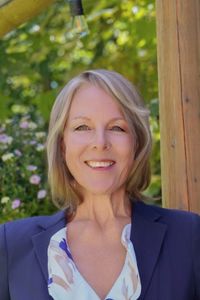
Barbara Kahl earned a high school diploma from Hillsboro High School. She earned a bachelor's degree from Oregon State University in 2001 and graduated from the Oregon State University, College of Veterinary Medicine in 2006. Her career experience includes working as a veterinarian.[1][2]
- Bachelor's:
- Oregon State University, 2001
- High school:
- Hillsboro High School
Campaign money
- Raised
- $4K
- From individuals
- $3K
- From PACs & party
- $500
- Own money
- —
FEC filings through June 30, 2026.
View on FEC.gov(opens in new tab)In their own words
Who are you? Tell us about yourself.
Dr. Barbara J. Kahl, DVM
Nominee, Oregon's 1st Congressional District
I am a fourth-generation Oregonian with deep roots here. I worked as a child to help pay for my own school clothes. When older, I married and traveled with my husband during his military deployments. I attended college while raising a family. I live with my husband on farmland in rural Oregon. A USDA-APHIS Nationally Accredited Veterinarian, I spent nearly 20 years running a mobile veterinary practice serving large animals, equine, small animals, exotics, and livestock across the district. I'm knowledgeable of ODA, DEA, USDA, APHIS, FSIS, and FEMA in this career. I founded the USPCA nonprofit and rescue organization and received the Oregon Veterinary Medical Association's 2012 Animal Welfare Award.
Before veterinary medicine, I spent two decades in corporate accounting, finance and purchasing, including work in the frozen food, utilities, and high-tech sectors, among them Intel's Hillsboro campus from 1990 to 1997.
I served as Territorial Veterinarian in American Samoa, where I helped raise veterinary standards, expand public health knowledge, and co-create veterinary practice legislation.
I've testified before the Oregon Legislature on multiple bills and currently serve as a public member of the Oregon Department of Agriculture's CAFO Advisory Committee.
I enjoy family outings, ride horses and grow a vegetable garden at home, that is surrounded by hazelnut orchards.
Please list below 3 key messages of your campaign. What are the main points you want voters to remember about your goals for your time in office?
Oregon families are being squeezed by cost of living, and government spending is a big part of the problem. I support real spending constraints, cutting redundant federal offices, removing padding from federal grants, and removing citizens who don't qualify for programs from benefits. It starts with fiscal discipline, not more borrowing.Our schools need to get back to basics. Id like to revise ESSA to create a Student Teacher Excellence Path (STEP), where schools are tiered depending on academic rigor, reinvigorating core academics: math, science of reading, writing, civics, history, science. Restore PE / music / art for K-6, remove ideologic curricula. Provide genuine education for special needs students, by re-addressing IDEA to create stronger support in needed areas. Overall, we need to get back to academics.Every taxpayer dollar deserves a paper trail. I want government budgets held to strict discrepancy standards, year-end close enforced across every account, and full public accessibility to spending reports. Require agencies to justify funding requests and show real results or lose the money.
Along with this, forensic financial audits should be normalized, not a unique accountability standard.
What areas of public policy are you personally passionate about?
-Housing: expanding land/timber use for supply, trades workforce training, cutting permitting time and costs, a "buildable homes" package
-Government accountability & transparency. Full spending visibility, strict budget discrepancies, prove benefit-or-lose-it funding justification
Education: Grow young minds with ability to discern and think on their own.
Addiction & mental health: smaller residential facilities with real psychiatric/psychological partnership, moving away from NGOs and large hospital-scale units
-Veteran support. Ensure what they earned is provided without red tape.
Who do you look up to? Whose example would you like to follow, and why?
Sec of State Marco Rubio. He uses logic and compassion in decision making and a belief in Americans first priority.
What characteristics or principles are most important for an elected official?
Transparency, integrity, work for the people in the district
What do you believe are the core responsibilities for someone elected to this office?
Legislative action benefitting Oregonians, funding integral programs creating better Oregon for all. Supporting those in need of help with federal programs
What legacy would you like to leave?
When I leave office, I want to be remembered as the representative who helped bring Oregon's economy back from the brink; restoring fiscal discipline, cutting the waste and red tape that strangled growth, and creating the conditions for real, sustainable job creation. I want Oregonians to look back and see a state that became more livable: affordable to raise a family in, with housing supply that met demand and communities strengthened rather than left behind. And I want that progress to have been achieved without sacrificing what makes our state unique: protecting our agricultural land, our coastlines, and our natural resources while ensuring our economy and environment aren't treated as competing interests, but as responsibilities we can meet together.
What was your very first job? How long did you have it?
Picking berries, 3 summers.
What is something that has been a struggle in your life?
One of the hardest stretches of my life was balancing a career in business with raising my children, going back to university to change careers, caring for our horses, and doing much of the day-to-day parenting on my own since my husband's job kept him 60 miles away. There were plenty of nights juggling homework, coursework, chores in the barn, and work deadlines with no one else in the house to hand things off to. But that's exactly where I learned to model the values I wanted my kids to have: you show up, you follow through, and you figure it out even when it's hard. I'm proud that they grew up seeing that firsthand, and it's the same grit and dependability I'd bring to representing OR-1.
What qualities does the U.S. House of Representatives possess that makes it unique as an institution?
The House of Representatives holds several powers that make it a uniquely accountable institution. It controls the power of the purse. All revenue bills must originate there, giving it the lead role in federal spending and budget priorities. Its' members face election every two years, keeping it directly and frequently accountable to voters, and its 435 seats are apportioned by state population, so representation shifts as demographics change. The House also holds the sole power to impeach federal officials. Being larger and more frequently reelected, it tends to move quickly and respond closely to shifting public opinion and everyday constituent concerns.
What do you perceive to be the United States' greatest challenges as a nation over the next decade?
Over the next ten years, our nation faces three challenges that will define whether America still feels like America to the people living in it: holding onto the values of hard work, family, and self-reliance that built this country, even as the culture around us shifts. Making sure that as artificial intelligence reshapes entire industries, it's our neighbors, not algorithms, who keep their place at the table: their jobs, their dignity, their ability to provide. Finally, restoring real control over our borders, so that the sovereignty and safety we ask our communities to trust in government for is actually delivered. These aren't separate fights. They're all really one fight, for a country where the people who built it, and the people still building it, come first.
Do you believe that compromise is necessary or desirable for policymaking?
Effective policymaking doesn't strictly require compromise, but durable, legitimate policy rarely happens without it. Compromise means each side gives ground to reach a deal; consensus means building genuine shared agreement on the right path. Compromise is often a necessary tool, but consensus is the higher goal. It produces policy with real public buy-in rather than a fragile truce. The one line that stays non-negotiable is the Constitution: compromise and consensus both operate within its checks, balances, and protections, never as currency to trade away.
What organizations or individuals have endorsed your campaign?
Log Cabin Republicans
Americans for Tax Reform Pledge
Principled Candidate 2026
Stand for Health Freedom
Unites States Term Limits Pledge
Inseparable Action-Mental Health Now Pledge
Donna Kreitzberg - School Choice
Bob Terry - Ret Washington County Commissioner
Jenny Kamprath-Washington County Commissioner Candidate
Tracy Honl - OR RNC Chair
What was the first historical event that happened in your lifetime that you remember?
The moon landing.
Note: Kahl submitted the above survey responses to [the profile publisher] on August 30, 2026.
April 27 submission
Who are you? Tell us about yourself.
Barbara's long-term professional identity is anchored in three parallel careers: roughly two decades in business (finance, purchasing, and accounting, including at Intel), two decades in veterinary medicine spanning multiple species and sectors, and civic/military family service. Her legislative advocacy background includes Oregon testimony on agricultural property rights, constitutional fiscal analysis, veterinary practice standards, animal welfare legislation, and opposition to lowering the voting age. Her campaign's foundational policy pillars: jobs and economy, education, affordability, and federal fiduciary accountability, are grounded in this cross-sector professional experience.
Please list below 3 key messages of your campaign. What are the main points you want voters to remember about your goals for your time in office?
Jobs & Economy: Making Affordability a Reality Again
Oregonians aren't struggling because they stopped working hard, federal policy made it harder to build, grow, and hire at home.
Restoring affordability means unlocking timber supply, revitalizing Columbia River and coastal ports, cutting regulatory burdens on small businesses, and aligning workforce investment with real jobs.
Discipline. Accountability. Transparency. Results. That's what I'll bring to Congress.Educational Improvement, Pathways to College or Trades, School Choice, Teacher Freedom
Oregon ranks 50th in reading, dead last in the nation. Only 40% of 3rd graders read proficiently, yet the OEA helped block phonics mandates for years and fights school choice at every turn. Union contracts lock teachers into seniority systems that reward tenure over results, stripping the classroom freedom great educators deserve.
Oregon's students need real pathways to college, to trades, to opportunity. I support empowering teachers, expanding school choice, and demanding evidence-based reading, writing, and math instruction.
Livability Matters. Students first.Federal Fiduciary Accountability. Removal of NGOs in the Management of Funds for Projects.
Your tax dollars shouldn't vanish into NGO overhead and politically connected middlemen. Nearly one-third of nonprofit revenue now comes from government sources, and large nonprofits report almost half their funding from taxpayers. Funneling federal funds through NGOs has become a strategy to hide your dollars from accountability.
Federal dollars for Oregon projects must flow directly to results, not to administrators managing administrators.
Livability Matters. Your money, your accountability.
What areas of public policy are you personally passionate about?
Public Policy - Put Oregon First!
I'm invested in real results, not career politics.
We need small business growth and jobs, restoring timber and agricultural economies, fixing federal land mismanagement, holding the Columbia River and coastal ports open for trade, demanding evidence-based reading and math instruction, expanding pathways to college and trades, parental school choice, freeing teachers from union constraints that block better tools, cutting NGO middlemen from federal project funds, and protecting farmland and water from poorly planned industrial development.
Rooted in accountability. A fiduciary mindset. Experience across veterinary medicine, business, and military family service, not ideology.
Livability Matters!
Who do you look up to? Whose example would you like to follow, and why?
When people ask me who inspires me, I don't have to look far from home, or far from history.
Governor Tom McCall, Oregon's 30th governor and a fellow Republican, is the standard I measure leadership against. McCall understood something that too many politicians today have forgotten: that a thriving economy and a protected environment are not enemies, they are partners. He cleaned up the Willamette River. He secured our coastline for every Oregonian, not just the privileged few. He passed the nation's first bottle bill and the first statewide land-use planning law. And he did it all while growing Oregon's identity as a place people genuinely wanted to live, work, and build a future.
That word, "livability", was McCall's word first. It is my campaign's word now, because the principle still holds. Oregonians deserve a state where a family can afford a home, where a small business can take root, where clean water runs through working farms, and where the next generation inherits something worth inheriting.
My own career has taken me through business, veterinary medicine, military family service, and public health work across this district and beyond. In every one of those roles, the lesson was the same: responsible stewardship and real-world results are not in conflict. You plan wisely, you act boldly, and you're honest about tradeoffs.
That's what McCall did. That's what Oregon needs again. And that is exactly the standard I intend to hold myself to in Congress.
What characteristics or principles are most important for an elected official?
Truly effective elected officials bring real-world working experience outside of politics to the table, use that foundation to authentically represent their constituents' voices, operate with full transparency in their actions and decisions, and treat every public dollar with the fiduciary responsibility it deserves.
What do you believe are the core responsibilities for someone elected to this office?
As the U.S. House Representative for Oregon's 1st Congressional District, the core responsibilities come down to four foundational commitments:
A representative for CD-1 must be a tireless advocate for jobs and economic opportunity, fighting to improve Columbia River and coastal maritime commerce, supporting Oregon's timber and agricultural industries, and ensuring federal policy drives real employment across the broader district, expand jobs from the suburbia beltway to every region in this district.
I will exercise genuine fiduciary responsibility with taxpayer dollars, treating the federal budget with the same discipline and accountability that working families apply to their own finances, demanding federal spending serve the people of CD-1 rather than special interests or partisan agendas.
I will be the true voice of constituents, holding open forums, listening before legislating, and bringing the priorities of farmers, veterans, small business owners, and working families directly to Congress, rather than letting party leadership or caucus pressure override what the people of the district actually need and want.
I must champion livability across the district, ensuring that decisions about land use, water systems, infrastructure, housing affordability, and community safety reflect the values and long-term interests of the people who actually live and work in CD-1, not the preferences of political insiders.
The office exists to serve the district, not the party, not the caucus, and not a career. That distinction is exactly what Livability Matters is built on.
What legacy would you like to leave?
Governor Tom McCall left Oregon better than he found it. That is the only standard worth setting, and it is the one I hold myself to.
The legacy I intend to leave is not measured in legislation passed or press releases issued. It is measured in lives improved, communities strengthened, and a state, and a nation, restored to its founding promise: that hard work, honest dealing, and good governance create a life worth living for everyone willing to build one.
I want to leave Oregon with healthy, working forests, managed wisely, harvested responsibly, and no longer surrendered to catastrophic wildfire because ideology blocked common sense. I want our fishing communities thriving on a Columbia River that moves commerce again, our timber families back at work, our small businesses freed from regulatory strangleholds, and our high-tech sector competing at the front edge of the global economy. Oregon has always been a state of extraordinary industry and ingenuity. I intend to help it act like one again.
I want to leave our veterans whole, not navigating bureaucratic labyrinths to claim what they earned with their service. They kept their commitment to this country. This country must keep its commitment to them.
I want to leave our students as the envy of the nation, not just college-bound, but genuinely prepared. Whether a young Oregonian is heading to a university, an apprenticeship, a trade, a farm, or a startup, I want employers and industries competing for the privilege of hiring them. Education that produces capable, confident, skilled human beings is not an expense. It is the highest return on investment a society can make.
And I want to leave the next generation a government that lives within its means, because debt is not an abstraction. It is a burden we are choosing, right now, to place on people who have no vote yet. Reducing federal spending, bringing down inflation, cutting the tax burden on working families and businesses, and restoring fiscal discipline to Washington D.C. is not cruelty. It is the most basic act of intergenerational respect.
Tom McCall's Oregon twinkled from afar, his words, not mine, and among the truest ever spoken about this state. I want Oregon to twinkle again. I want Americans to look at what we built here and see what principled, courageous, honest governance actually produces.
That is the legacy worth leaving. And it is the work I am asking Oregonians to trust me to begin.
What was your very first job? How long did you have it?
My very first job was picking Hood strawberries and Marion berries in Hillsboro, summers spent in the fields alongside my brothers and sisters. We woke at four in the morning to catch the berry bus by five, arriving at the rows just as the day was cool enough to work. We picked until early afternoon, when the heat settled in and called the day done, then rode home again, fingers and clothes stained red, a little money waiting at the end of the week. Enough to save for school clothes, and not much more. I did that for three summers before graduating to a paper route with my sister and the occasional babysitting job. It was honest work, and it taught me early that effort has a reward.
What qualities does the U.S. House of Representatives possess that makes it unique as an institution?
The US House is unique, as defined by our U.S. Constitution:
Sole origination of revenue bills. Article I, Section 7 requires all bills for raising revenue to originate in the House, giving it primacy over the power of the purse.
Sole power of impeachment. The House alone brings charges against federal officers; the Senate only tries them.
Electoral College contingency elections. If no presidential candidate wins an Electoral College majority, the House chooses the President, but by state delegation, not individual member vote.
Proportional representation with mandatory reapportionment. The only chamber required to reflect population shifts through decennial reapportionment, making it constitutionally tethered to the census.
Shortest terms in federal elected office. Two-year terms mean every member faces voters before most major policy cycles complete, the most electorally accountable branch by design.
Lower age and citizenship thresholds. Members need only be 25 years old and a citizen for 7 years (vs. 30 and 9 for the Senate), reflecting its design as the more populist, accessible chamber.
Size-driven procedural power concentration. The House's 435 members necessitated strong Rules Committee authority and majority leadership control, structural tools the Senate never required.
Taken together, these features make the House the branch most directly tethered to democratic accountability and the will of the people.
What do you perceive to be the United States' greatest challenges as a nation over the next decade?
The greatest challenge facing the United States over the next decade is not any single policy failure or foreign threat, it is the fracturing of the American people themselves. Decades of deliberate division, institutional erosion, and coordinated efforts to undermine America's sovereignty and sense of shared identity have left us a nation that struggles to agree on its own foundation. Healing that fracture is the precondition for solving everything else.
A nation carrying nearly $37 trillion in debt, with citizens who no longer trust their institutions, their elections, or each other, is a nation vulnerable, not just economically, but strategically. Bad actors, both foreign and domestic, understand this. Division is the weapon; doubt is the ammunition. Too many in positions of power have either enabled it or failed to name it plainly.
The path forward requires courage more than cleverness. It requires leaders willing to speak clearly about who we are, what we stand for, and what we will not surrender: our sovereignty, our constitutional order, our fiscal future, and our unity as a people. Strength is not aggression. Peace through strength means that no adversary miscalculates, no ally doubts us, and no American wonders whether their government is working for them or against them.
Reducing the national debt is not separate from this work, it is central to it. A government that cannot live within its means cannot be trusted to govern. Fiscal discipline is an act of national respect, and restoring it is among the most unifying things Washington could do.
The America I believe in is not a nation in decline. It is a nation that has been pulled off course and needs principled, clear-eyed leadership to find its bearing again. That is the challenge of this decade. And it is exactly the kind of challenge Americans have always risen to meet.
Do you believe that compromise is necessary or desirable for policymaking?
Compromise in policymaking is genuinely complicated, and my honest view is: it depends on what's being compromised.
There's a strong case that compromise is necessary in pluralistic democracies, legislators represent constituents with legitimately different values and interests, and a system that produces no workable agreements grinds into dysfunction. Practically, compromise is often the price of getting anything done.
But "compromise is always good" is also too simple. Some positions aren't morally symmetric. Compromising between a good policy and a harmful one doesn't produce a neutral midpoint, it produces a lesser harm. Strategic bad-faith actors can exploit a "always meet in the middle" norm to pull outcomes in their direction simply by starting from an extreme position.
The more useful frame is probably: principled negotiation over unprincipled splitting of differences. Find genuine overlap in underlying goals; trade concessions across issues where each side gives up less than they gain; hold firm where core principles are actually at stake.
So, necessary in practice, not automatically virtuous in principle.
What organizations or individuals have endorsed your campaign?
Inseparable Action - Mental Health Now
Aaron Dumbrow - Mayor of North Plains, OR
Ayla Hofler - Candidate - WA County Commissioner District 4
What was the first historical event that happened in your lifetime that you remember?
The first historical event I remember watching unfold in real time was the Apollo missions. A television would be rolled into the classroom, and everything stopped, lessons, schedules, the ordinary business of the school day, because what was happening on that screen was anything but ordinary. We watched American astronauts leave this earth, walk on the moon, and splash down safely in the ocean. As a child, I didn't have the words for what I was witnessing. I only knew it mattered. Looking back, I think that is where I first understood what my Dad always told me: "You can be anything you want to be or do anything you want to do, if you put your mind to it."
On the 2026 ballot
Links
Compiled from the candidate’s published profile as of September 30, 2026 and FEC filings.
Source(opens in new tab)