
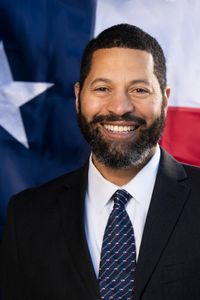
Background
Email editor@[the profile publisher].org to notify us of updates to this biography.
Avery Ayers is from Jersey Village, Texas. He served in the U.S. Air Force from 1987 to 1994. He graduated from Jersey Village Senior High School. Ayers holds an A.A.S. in paralegal technology, a B.S. in business administration, and an M.B.A. Ayers is an A.I. certified consultant. He served in the U.S. Air Force for seven years and was honorably discharged. Ayers' career experience includes working as the president and CEO of a nonprofit based in Houston and as a paralegal for Kelly P. Joseph & Associate.[1][2][3]
- Graduate:
- University of Phoenix, 2010
- Associates:
- Houston Community College System, 2022
- Bachelor's:
- University of Phoenix, 2008
- High school:
- Jersey Village Senior High School
Campaign money
- Raised
- $0
- From individuals
- $0
- From PACs & party
- $0
- Own money
- —
FEC filings through October 31, 2025.
View on FEC.gov(opens in new tab)In their own words
U.S. Senate
Avery Ayers has not yet completed [the profile publisher]'s 2026 Candidate Connection survey.
Send a message to Avery Ayers asking him to fill out the survey.
If you are Avery Ayers, click here to fill out [the profile publisher]'s 2026 Candidate Connection survey.
Who fills out the candidate survey?
Any candidate running for elected office, at any level, can complete [the profile publisher]'s Candidate Survey. Completing the survey will update the candidate's [the profile publisher] profile, letting voters know who they are and what they stand for. More than 32,000 candidates have taken [the profile publisher]'s candidate survey since we launched it in 2015. Learn more about the survey here.
You can ask Avery Ayers to fill out this survey by using the button below or emailing info@ayers4.us.
U.S. House
Who are you? Tell us about yourself.
I’m a conservative who believes in the strength of America’s founding principles—faith, family, hard work, and personal responsibility. I was raised right here in Northwest Houston, attending Post Elementary, Dean Middle School, and Jersey Village High School. This district shaped me, and now I’m stepping forward to fight for it.
I proudly served seven years in the United States Air Force, both stateside and overseas. Service taught me discipline, accountability, and what it means to put something greater than yourself first. Those lessons have stayed with me my entire life.
I’ve faced challenges, including mistakes earlier in life. I don’t hide from that. I owned it, rebuilt, and turned my life into something that inspires others to rise after a fall. That experience gives me a level of grit most politicians don’t have—you can’t teach resilience; you earn it.
Through years of hard work, I completed my Associate Degree in Paralegal Technology, a Bachelor’s in Business Administration, and a Master of Business Administration. I didn’t stop there—I trained in artificial intelligence and became a Certified AI Consultant, because the world is moving fast and leaders must know how to prepare their communities for the next era of opportunity.
Professionally, I’ve spent years as a paralegal and the early stage of AI consultant, helping families, veterans, small businesses, and young adults navigate complex challenges. I’m here to serve with integrity, strength, and a steady hand
Please list below 3 key messages of your campaign. What are the main points you want voters to remember about your goals for your time in office?
Strong Conservative Leadership With Real-Life Grit
I stand on the traditional values that built this country—faith, family, hard work, and personal responsibility. I’ve lived through challenges, rebuilt my life, and came back stronger. Voters can count on a leader who doesn’t fold under pressure and doesn’t make excuses.A Practical Plan for Affordability, Jobs, and Economic Stability
Families in District 38 need relief and opportunity. My focus is simple: bringing down the cost of living, creating 21st-century jobs, and driving economic growth through small business development and responsible innovation. I will fight for policies that protect your wallet, your work, and your future.A Champion for Veterans, Youth, and Second Chances
I’ve served my country, and I know the sacrifices veterans make. I’ll fight for them, and I’ll stand up for young adults who deserve real pathways to purpose—not empty promises. I believe in redemption, responsibility, and giving people the tools to rise. A stronger district includes everyone who’s willing to work for it.
What areas of public policy are you personally passionate about?
1. Affordability & Economic Stability:
2. Veterans’ Care & Military Strength
3. Youth Empowerment & Workforce Development
4. Criminal Justice Reform & Second Chances
5. Homelessness & Community Support Systems
6. Protecting Seniors & Families
7. Innovation, Technology & AI-Driven Growth
Who do you look up to? Whose example would you like to follow, and why?
I look up to people whose lives reflect discipline, integrity, and service — men and women who stood firm when it wasn’t easy and lived out their values with consistency.
1. My parents and elders who taught me responsibility and faith:
Before any public figure, I look up to the people who raised me. They taught me the basics:
- work hard,
- tell the truth,
- take responsibility,
- stand by your word,
- keep God first.
Those lessons shaped everything I am today. Their example reminds me that leadership begins at home.
2. Great American leaders who put service above self
I admire leaders like Ronald Reagan for his clarity, confidence, and conviction. He believed deeply in America’s promise and spoke with strength without tearing people down. His steady optimism and tough-minded realism are qualities worth following.
I also look to Sam Houston for his integrity and his willingness to stand alone when principle demanded it. He proved that leadership isn’t about popularity — it’s about character.
3. Veterans and service members who answered the call
As someone who served in the U.S. Air Force, I have lifelong respect for every man and woman who puts on the uniform. Their example reminds me to stay humble, stay disciplined, and remember why we serve. Their courage is a standard I try to honor in how I lead.
Why Their Example Matters to Me
Because each of them — my family, our great leaders, and our military — reflect qualities that never go out of style:
- integrity,
- courage,
- humility,
- devotion to service,
- and a willingness to stand firm when it counts.
Those are the qualities I try to model every day, and the qualities I’ll bring with me to Congress.
What characteristics or principles are most important for an elected official?
1. Integrity — even when no one is watching.
An elected official must be honest, dependable, and willing to stand firm when it counts. If a leader bends with every political wind, the people can’t trust them. Character should never be for sale.
2. Accountability — owning decisions and results.
A true public servant doesn’t make excuses. They take responsibility, fix problems, and follow through. Voters deserve someone who treats public office as a duty, not a steppingstone.
3. Respect for the Constitution and Limited Government.
Government works best when it stays in its lane. A strong leader protects individual freedoms, upholds traditional American values, and prevents government from overreaching into people’s lives.
4. Courage — the backbone to take tough positions.
Leadership isn’t about popularity; it’s about doing what’s right. An elected official needs the courage to say “no” when others cave, and to lead boldly when the district needs a steady hand.
5. Practical Wisdom — the sense to listen, learn, and act.
Experience, education, and real-life hardship matter. The best leaders use common sense, understand how policy affects everyday families, and make decisions based on facts, not feelings.
6. Service Before Self.
An elected official must remember they work for the people, not the other way around. Humility, discipline, and a servant’s mindset keep leaders grounded and focused on the community they represent.
What do you believe are the core responsibilities for someone elected to this office?
1. Protect the Constitution and Defend the Nation:
The first duty of any federal official is to uphold the Constitution as written. That means safeguarding individual freedoms, maintaining strong national defense, and resisting government overreach. The oath of office is not symbolic — it’s a binding commitment.
2. Represent the People of the District, Not the Party or Special Interests:
A Member of Congress must listen to the concerns of their district and act on them directly. The job is to be the voice of the people — not a rubber stamp for Washington, not a pawn for lobbyists, and not a follower of political trends. The district comes first, every time.
3. Pass Laws That Strengthen Families, Communities, and the Economy:
Congress should focus on legislation that lowers costs, improves economic opportunity, supports small businesses, and strengthens workforce development — especially for veterans and young adults. The responsibility is to deliver real improvements, not empty promises.
4. Provide Oversight and Hold Government Accountable:
Congress must keep federal agencies in check, ensure taxpayer dollars are spent responsibly, and demand transparency from every corner of the federal government. Waste, fraud, and abuse should never be ignored, and no agency should operate without accountability.
5. Serve Constituents with Dignity and Discipline:
Whether it’s helping a veteran navigate the VA, supporting a senior with Social Security issues, or guiding families through federal services, a Member of Congress must be accessible and responsive. The office exists to serve, solve problems, and deliver results.
6. Lead with Integrity and Consistency:
The job requires moral clarity, steady judgment, and a willingness to stand firm even when it’s unpopular. Leadership isn’t about headlines — it’s about doing the right thing and being dependable in every decision.
What legacy would you like to leave?
I want to leave a legacy built on service, integrity, and impact — not headlines or political games.
1. A Leader Who Stood Up When It Mattered:
I want to be remembered as someone who told the truth, stood firm on principle, and never backed down when the people of District 38 needed a voice. Not perfect — but steady, honest, and reliable.
2. A Representative Who Made Life Better for Working Families
My goal is to leave behind a district that is:
- more affordable,
- safer,
- stronger economically,
- and better prepared for the future.
If families can say, “He helped us get ahead,” then I’ve done my job.
3. A Champion for Veterans, Youth, and Second Chances
I want people to say I helped veterans get the support they earned…
that I opened new doors for young adults finding their purpose…
and that I stood up for those rebuilding their lives, because I know what redemption looks like.
4. A Public Servant Who Respected the Constitution
Above all, I want to be remembered as someone who honored the oath — defended liberty, restrained government power, and protected the rights of every citizen.
5. A Man Who Lifted People Up
Whether through mentorship, service programs, or simply showing up when others didn’t, I want my legacy to reflect encouragement, accountability, and belief in the potential of every person willing to work for it.
Bottom line:
I want to leave a legacy of stability, responsibility, and hope — a legacy that proves a person’s past does not define their future, and that strong leadership can change the course of a community.
What is the first historical event that happened in your lifetime that you remember? How old were you at the time?
The first major historical event I clearly remember was the Space Shuttle Challenger explosion in 1986. I was 18 yrs old at the time, old enough to understand that something tragic had happened and to feel the weight of the nation’s shock.
I remember the silence in the room, the adults glued to the television, and the sense that the country had just witnessed something bigger than any one of us. Even at that age, I understood that bravery has a cost, and that America—despite our strength—still faces moments that test our spirit.
It was one of the first times I realized what national unity looks like in a moment of grief, and how deeply this country values courage, sacrifice, and exploration.
What was your very first job? How long did you have it?
I worked for Red Lobster at 14 yrs old. I was a busboy and dishwasher for five years.
What is your favorite book? Why?
One of my favorite books is “The Autobiography of Malcolm X.”
Not because I agree with everything in it, but because it’s a powerful story of transformation, discipline, and personal responsibility.
What speaks to me most is how a man can walk through failure, hardship, and adversity — and still rise through faith, focus, and a commitment to self-improvement. It’s a reminder that your past does not define your future unless you let it.
The book captures several values that matter deeply to me:
Accountability — owning your decisions and changing your direction.
Discipline — rebuilding your life through education and hard work.
Resilience — refusing to stay down after a setback.
Purpose — using your experiences to lift others up.
That message reflects my own journey. I know what it means to rebuild. I know what it means to grow. And I believe every person — if they’re willing to put in the work — can rise higher than where they started.
It’s a story of perseverance, conviction, and transformation… qualities that matter in leadership and in life.
If you could be any fictional character, who would you want to be?
If I could be any fictional character, I would choose Atticus Finch from To Kill a Mockingbird.
Not because he’s perfect, but because he embodies qualities that stand the test of time:
1. Integrity When It Counts
Atticus does the right thing even when the entire world is against him. He doesn’t bend, he doesn’t hide, and he doesn’t chase popularity. He stands firm in truth.
2. Moral Courage
He shows the kind of quiet, unwavering strength that real leadership requires — the ability to hold the line when others take the easy path.
3. Respect for the Law and for People
He understands that justice isn’t just a system — it’s a responsibility. He treats people with dignity, no matter their status or story.
4. Strong Father, Strong Example
Atticus leads his family the same way he serves his community: with discipline, honesty, and humility. That’s the kind of legacy any leader should aim for.
What is something that has been a struggle in your life?
One of the greatest struggles in my life was overcoming the consequences of my own early mistakes. I don’t hide from that part of my story. I faced legal challenges when I was younger, and the road back was not easy. It took discipline, humility, and a commitment to rebuilding my life the right way.
There were days when doors were closed, opportunities were limited, and people doubted whether I could ever rise above my past. But instead of giving up, I went to work:
I earned multiple degrees — including an associate, bachelor’s, and MBA.
I built a career in the legal field and in AI consulting.
I served my community and chose a life rooted in faith, service, and responsibility.
I dedicated myself to helping others find their second chance, because I know what it means to need one.
That struggle taught me something politicians rarely learn:
redemption is real, but it requires action — and you must take full responsibility for your life before you can lead others.
I don't pretend to be flawless. I stand here as someone who has lived through failure, fought my way forward, and came out stronger. That experience gives me a level of grit and authenticity you can’t manufacture.
It shaped my backbone, sharpened my judgment, and reminded me daily that this country is still a place where a person can start again and rise.
What qualities does the U.S. House of Representatives possess that makes it unique as an institution?
The House of Representatives stands apart from every other institution in our government because it is the chamber closest to the people. Its entire design is built around accountability, responsiveness, and direct representation. A few qualities make it unique:
1. The House Is the People’s Chamber:
Members are elected every two years, which keeps representatives tightly connected to the everyday concerns of their districts. If we lose touch, the voters can correct it quickly. That level of accountability is unmatched in federal government.
2. Representation Is Based Strictly on Population:
Unlike the Senate — where every state has equal voice — the House reflects the true size and diversity of the American population. That means communities like District 38 have a direct and powerful voice in shaping national policy.
3. All Taxation and Spending Bills Must Begin in the House:
The Founders believed the power of the purse should stay closest to the people. That responsibility is serious. It means the House is the first line of defense against reckless spending, over-taxation, and financial mismanagement.
4. The House Moves Fast — By Design:
It’s built for action. Shorter terms, larger membership, and direct accountability make the House the chamber where national concerns, local issues, and public sentiment are heard and acted on quickly. It’s where problems hit the floor first.
5. The House Provides the Nation’s Strongest Oversight:
Investigations, inquiries, and government oversight begin in the House. This chamber is essential for keeping federal agencies in check, exposing misuse of power, and defending the Constitution from overreach.
6. It Represents Every Corner of America — Up Close:
From rural towns to major cities, from small businesses to working families, the House captures the full picture of the American experience. That makes it the most grounded, most immediate voice of the nation.
Do you believe that it's beneficial for representatives to have previous experience in government or politics?
Experience can be useful, but it’s not the deciding factor. What matters most is character, competence, and commitment to the people — not time spent in political circles.
Let’s be real:
Washington is full of people with decades of “experience,” and many of them are the very reason our country is off track. Experience alone doesn’t guarantee good leadership. Sometimes it leads to complacency, entitlement, and a disconnect from the real world.
Here’s what I believe:
Real-life experience matters more.
Military service, working in the community, navigating hardship, building a career — these experiences shape a leader far better than years of political maneuvering.
Understanding the law and how government works is valuable — but it shouldn’t replace common sense.
My background as a paralegal, my education, and my experience navigating complex systems give me the knowledge needed to serve effectively.
Fresh voices and fresh perspectives are healthy for democracy.
Our government benefits when people who’ve lived real American lives step up and lead.
Integrity outweighs insider status.
The country needs representatives who will stand firm, not fall in line.
Bottom line:
Prior experience can help — but it’s no substitute for honesty, discipline, and a servant’s heart. I bring real-world experience, not political baggage. And that’s exactly what Washington needs.
What do you perceive to be the United States' greatest challenges as a nation over the next decade?
1. Economic Instability and the Erosion of the American Middle Class-The cost of living is outpacing wages, families are stretched thin, and too many young adults feel they’re starting life at a disadvantage. If we don’t restore economic discipline, revive American manufacturing, and prepare workers for the 21st-century job market — especially in technology and AI — we will fall behind. A strong nation requires strong, financially secure families.
2. National Security in an Increasingly Volatile World
Our adversaries are moving fast — China, Russia, Iran, cyber-threats, AI warfare, and border vulnerabilities. The next decade will test whether the United States still has the strength, resolve, and unity to remain the world’s leading force for stability. We must maintain a powerful military, secure our borders, and protect our technological edge.
3. Cultural Division and the Decline of Shared American Values-A nation cannot thrive if its people can’t agree on basic truths. We’re watching a breakdown in respect for faith, family, responsibility, discipline, and patriotism. Restoring unity will require leaders who are willing to tell the truth, defend traditional values, and remind this country of what made it strong in the first place.
4. The Rise of Artificial Intelligence and Technological Disruption-AI is transforming every industry, and the next decade will either lift America forward or catch us unprepared. We must ensure AI strengthens our economy, not replaces our workforce. That means training our young adults, supporting small businesses, and ensuring American companies lead the global innovation race.
5. A Strained Social Fabric — Homelessness, Crime, and Addiction-Major cities are struggling. Homelessness is rising, mental health systems are overwhelmed, and too many communities feel forgotten. If we don’t address root causes with accountability and compassion, we risk losing entire generations. It’s time for real solutions — not political theater.
Do you believe that two years is the right term length for representatives?
Yes — I believe the two-year term is appropriate, and it serves an important purpose.
The Founders designed the House to be closest to the people, and the short term keeps representatives accountable. Every two years, voters get the chance to decide if their voice has been heard, if promises have been kept, and if their representative still deserves the job. That level of accountability is healthy.
But let’s be honest:
A two-year term also means representatives must work with urgency and discipline. There’s no time to get comfortable or detached. You have to stay connected to your district, stay focused on results, and stay grounded in the needs of the people you represent.
Two years forces responsiveness.
Two years forces transparency.
Two years forces humility:
At the same time, I recognize the challenge: it leaves less room for distractions and political games. Representatives must hit the ground running and deliver.
Bottom line:
Yes, two years is the right length — because the people deserve a government that answers to them early and often. It’s a system that rewards results, not longevity, and I’m fully prepared to work within that framework with discipline and purpose.
What are your thoughts on term limits?
I believe term limits are not only reasonable — they’re necessary:
For too long, Washington has rewarded longevity instead of results. When politicians stay in office for decades, they become disconnected from the people they’re supposed to serve and far too comfortable with the power of the position. That’s how you end up with career politicians who protect their seats instead of protecting their constituents.
Fresh leadership keeps Congress accountable:
It ensures new ideas can rise, prevents entrenched political machines from forming, and restores the spirit of citizen-led government that our founders intended. Congress should never be a lifetime appointment. Public service is a privilege, not a career track.
Term limits promote humility, responsibility, and focus:
If leaders know their time is finite, they’re more likely to work, less likely to play games, and far less likely to forget who put them in office.
Bottom line:
I support strong term limits because the American people deserve a government that serves them — not itself.
Is there a particular representative, past or present, whom you want to model yourself after?
Yes — but not in the sense of copying anyone’s style. I look to leaders who combined principle, backbone, and service without chasing popularity or political favor.
1. Sam Houston — for integrity and independence.
He stood his ground even when it cost him politically. He believed loyalty belonged to the people, not to parties or power structures. That kind of moral courage is rare, and it’s something I strive to uphold.
2. Ronald Reagan — for communication rooted in conviction.
Reagan spoke plainly and confidently about America’s strength, faith, and future. He didn’t sugarcoat reality, and he never apologized for loving this country. His clarity and optimism continue to set a standard for conservative leadership.
3. Mike Johnson — for faith-driven leadership and steadiness.
His approach shows that humility and conviction can coexist. He demonstrates that you can lead boldly without losing sight of your values.
I don’t aim to be a replica of any one figure.
But I do aim to carry Houston’s integrity, Reagan’s clarity, and Johnson’s steadiness into every decision I make.
Bottom line:
I want to model myself after leaders who stood firm, told the truth, and served with conviction — not careerists who chased titles and forgot the people.
Both sitting representatives and candidates for office hear many personal stories from the residents of their district. Is there a story that you’ve heard that you found particularly touching, memorable, or impactful?
One story that has stayed with me came from a young father I met here in the district. He was working two jobs, doing everything right, yet still falling behind because of rising costs—rent, groceries, utilities, childcare. He told me something that hit hard:
“I’m not asking for a handout. I’m asking for a fair shot to take care of my family.”
He wasn’t complaining. He wasn’t looking for government to solve every problem. He simply wanted a chance to get ahead through his own hard work, the same way generations before him did.
What struck me most was the pride in his voice. He didn’t want Washington to step in and run his life. He wanted Washington to stop making it harder for him to live it.
His story reflects what countless families face today:
Rising costs with no relief
Jobs that don’t stretch as far as they used to
A desire to stand on their own two feet
A system that often feels stacked against them
That conversation reminded me why I’m running. People are doing everything right, and they’re still struggling because of decisions made far from their daily reality.
It reinforced a simple truth:
The job of a representative isn’t to speak over people — it’s to listen to them, fight for them, and never forget who sent you to Washington in the first place.
Do you believe that compromise is necessary or desirable for policymaking?
Compromise has a place in policymaking, but it must never come at the expense of principle.
Here’s the truth:
Good government requires cooperation, but it also requires a spine. Too many leaders in Washington confuse compromise with surrender. They give up core values just to “get along,” and the people pay the price.
I believe in responsible compromise — not blind compromise.
If a negotiation helps families, strengthens the economy, protects our veterans, secures our border, or improves daily life here in District 38, then I’m willing to sit down at the table and hammer out solutions.
But if compromise means weakening the Constitution, raising taxes on working families, expanding government power, or abandoning our traditional values?
That’s a hard no.
A leader must know when to cooperate and when to stand firm.
Real leadership isn’t about pleasing everyone — it’s about doing what’s right, even when it’s tough.
Bottom line:
Compromise is a tool, not a worldview. I’ll use it when it serves the people — and reject it when it threatens their freedoms.
The Constitution says that all bills for raising revenue must originate in the House. What role would this power play in your priorities if elected?
The Constitution places the power to originate all revenue-raising bills in the House for a reason:
the chamber closest to the people should control how their money is taken and how it is spent.
If elected, this responsibility would drive several core priorities:
1. Protecting Families From Higher Taxes:
I will oppose any effort to raise taxes on working families, seniors on fixed incomes, small businesses, or young adults trying to build their lives. Washington doesn’t have a revenue problem — it has a spending problem. My focus will be on discipline, not digging deeper into citizens’ pockets.
2. Restoring Fiscal Responsibility:
The House must serve as the guardrail against reckless spending. I will push for balanced budgeting, targeted cuts to waste, and strict oversight of federal agencies. Every dollar taken from taxpayers should be treated with respect, not thrown into bloated programs that don’t deliver results.
3. Supporting Policies That Grow the Economy, Not Government:
Revenue authority can be used to strengthen the private sector. That means:
- tax incentives for small businesses,
- support for companies hiring veterans and young adults,
- pro-growth policies that expand jobs — especially in advanced technology and AI-driven industries.
When the economy grows, families thrive and America stays competitive.
4. Ensuring Transparency and Accountability:
As a representative, I will demand clarity about where taxpayer dollars go. The federal government should not hide behind bureaucracy. Revenue bills must reflect the priorities of the people — not the preferences of lobbyists or bureaucrats.
5. Standing Firm on Constitutional Duty:
This is not just a procedural power — it’s a check on government overreach. I will uphold it exactly as the Founders intended:
to keep financial decisions closest to the people and safeguard freedom by limiting the federal government’s hand in their wallets.
How should the U.S. House use its investigative powers?
The investigative power of the House is one of the most important checks in our constitutional system — and it must be used with discipline, integrity, and a clear purpose.
On the 2026 ballot
Links
Compiled from the candidate’s published profile as of September 30, 2026 and FEC filings.
Source(opens in new tab)