
Background
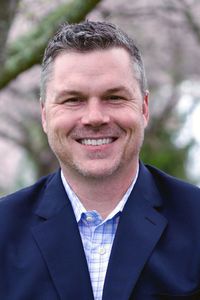
Austin Dyches (Democratic Party) ran for election to the U.S. House to represent Maryland's 3rd Congressional District. He lost in the Democratic primary on June 23, 2026.
- Graduate:
- Georgetown University, 2021
- Bachelor's:
- The University of Oklahoma, 2005
- High school:
- Stillwater Area High School
In their own words
Who are you? Tell us about yourself.
I'm Austin Dyches, a U.S. Army veteran and cybersecurity professional running for Congress in Maryland's 3rd District because working people deserve representation that actually fights for them.
I grew up understanding that the system is rigged. I served my country in uniform, earned a TS/SCI clearance, and built a career in cybersecurity protecting critical infrastructure. But every day I watched politicians in both parties sell out their constituents to corporate donors while families in Howard, Anne Arundel, and Carroll Counties struggled to afford rent, healthcare, and groceries.
I'm running a 100% grassroots campaign. No corporate PAC money. No defense contractor cash. No AIPAC dollars. Just working people funding a campaign that will answer to them.
My opponent, Sarah Elfreth, took millions from AIPAC-aligned groups and defense contractors before voting to continue arming Israel's assault on Gaza and expanding ICE's deportation machine. That's not representation. That's auction-house politics.
I'm offering something different: Medicare for All, a $25 minimum wage, universal housing as a human right, abolishing ICE, ending military aid to Israel, and taxing billionaire wealth to fund our communities.
This isn't reform. This is transformation. And it starts with a Congress that belongs to the people, not the donors.
Please list below 3 key messages of your campaign. What are the main points you want voters to remember about your goals for your time in office?
I'm running a 100% grassroots campaign with zero corporate PAC money, zero defense contractor donations, and zero AIPAC funding.
Every dollar comes from working people, which means I'll answer only to them. My opponent has accepted millions from corporate and pro-war interests, and her votes reflect it. Maryland's 3rd District deserves a representative whose loyalty isn't up for sale.
Real change doesn't come from tinkering around the edges of a broken system. It comes from building political power independent of the billionaires and corporations who profit from that brokenness.Every person in MD-03 deserves guaranteed healthcare, safe housing, and a wage they can actually live on.
I support Medicare for All to end medical bankruptcy and the cruelty of tying health coverage to employment. I support universal housing guarantees and massive public investment to address our affordability crisis, especially in Howard County where families are being priced out.
I support a $25 federal minimum wage indexed to inflation. These aren't radical ideas. They're basic standards every wealthy nation except ours already provides. It's time to stop asking permission from corporate lobbyists and start delivering for our neighbors.I will vote to end all U.S. military aid to Israel and oppose every authorization for endless war. The billions we send to fuel genocide abroad and build detention camps at home could fund schools, transit, clean energy, and Chesapeake Bay restoration.
I support abolishing ICE, a rogue agency terrorizing immigrant families across Maryland, and replacing it with humane, community-based immigration processing.
I support taxing extreme wealth to rebuild our infrastructure, including the Francis Scott Key Bridge, and to invest in the federal workforce that keeps our region running. Our tax dollars should build up our communities, not tear families apart.
What areas of public policy are you personally passionate about?
Healthcare justice, housing as a human right, and ending American militarism are the issues that drive me.
I've watched families ration insulin while insurance CEOs buy yachts, seen neighbors priced out of Howard County while developers flip properties, and served alongside troops sent to fight wars that enriched contractors and destroyed communities.
I'm equally passionate about labor rights and a $25 minimum wage, abolishing ICE and defending immigrant families, taxing extreme wealth, protecting the Chesapeake Bay, and defending the federal workforce under attack across our district.
Who do you look up to? Whose example would you like to follow, and why?
I look up to the everyday people who work diligently in silence to support others.
The nurses who stay past shift change, the teachers who spend their own money on supplies, the parents working two jobs to keep the lights on, the organizers knocking doors in the rain.
They don't get book deals or cable news segments, but they hold communities together.
Their example is the one I want to follow because real change has never come from the top down. It comes from ordinary people refusing to accept that things have to stay the way they are.
What characteristics or principles are most important for an elected official?
Integrity, courage, and accountability to the people you serve. An elected official must be willing to vote their conscience even when it costs them politically, and especially when the pressure comes from wealthy donors or party leadership.
What do you believe are the core responsibilities for someone elected to this office?
A member of Congress has three core responsibilities. First, to legislate in the direct interest of constituents, which means fighting for healthcare, housing, wages, and safety rather than corporate tax breaks and endless war funding.
Second, to serve as a check on executive overreach and protect civil liberties, something both parties have failed at for decades. Third, to be genuinely accessible to the people they represent through town halls, open offices, and honest communication.
Too many representatives treat the job as a career milestone. It should be treated as an obligation to the community that elected you.
What legacy would you like to leave?
I want to leave a legacy of improving the lives of the working class.
If families in MD-03 can see a doctor without going bankrupt, afford a home near where they work, earn wages they can actually live on, and raise their children in a country that invests in people instead of weapons, then I'll have done my job.
What was your very first job? How long did you have it?
I worked food service jobs in high school, a printing factory and hauling hay during summers, and Barnes and Noble all through college.
Those jobs taught me what most politicians never learn: what it actually feels like to be on your feet all day and still not be sure you can cover rent.
What is something that has been a struggle in your life?
A sense of security has always been a struggle, for me and for most of my fellow Americans. Economic security, housing security, healthcare security.
That constant low-grade anxiety about whether things will hold together is something tens of millions of people live with every day, and it's something our political system has chosen to ignore. It's a major reason I'm running.
What qualities does the U.S. House of Representatives possess that makes it unique as an institution?
The House of Representatives is the chamber closest to the people.
With two-year terms and districts small enough that a single member actually represents a community, it has the potential to be the most responsive body in the federal government.
That's what the founders intended, and it's what the House can still be if its members choose that path.
What do you perceive to be the United States' greatest challenges as a nation over the next decade?
Our greatest challenge will be throwing off the mantle of fossil fuels and endless war and moving toward a progressive society built on trade, cooperation, and genuine investment in human wellbeing.
That means confronting the climate crisis with the urgency it demands, dismantling the war economy that has defined American foreign policy for generations, and building an economic system that works for everyone rather than the handful of billionaires currently hoarding most of it.
It's a massive undertaking, but the alternative is continued decline, and I don't believe we have the option of looking away any longer.
Do you believe that compromise is necessary or desirable for policymaking?
Compromise can be valuable when both sides are negotiating in good faith toward the public interest. That's not the situation we're in.
Republicans have made clear they will not stop their destruction of public institutions, worker protections, reproductive rights, and immigrant communities until we stop them. You cannot compromise with a movement whose goal is to dismantle the social contract. Democrats have spent decades meeting the right halfway and watching the goalposts move further every time. That approach has failed.
There are also moral questions where compromise is not acceptable. I will not compromise on whether every American deserves healthcare. I will not compromise on whether working people deserve a living wage. I will not compromise on whether we should fund genocide abroad or tear families apart at home.
On those questions, the answer is no, and it will stay no.
Real coalition building across differences is important, and I'll work with anyone genuinely trying to deliver for working people. But compromise for its own sake, treated as a virtue regardless of outcome, is how we got into this mess.
What organizations or individuals have endorsed your campaign?
Our Revolution Howard County, MD
Track AIPAC
Progressive Voter Network
What was the first historical event that happened in your lifetime that you remember?
The bombing of the Alfred P. Murrah Federal Building in Oklahoma City. It left a lasting impression on me about what political extremism and hatred can do to ordinary Americans just trying to go to work.
On the 2026 ballot
Links
Compiled from the candidate’s published profile as of September 30, 2026.
Source(opens in new tab)