
Background
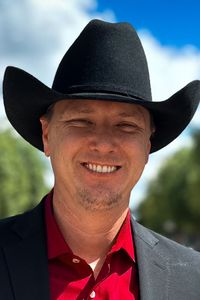
Andrew Trakas was born in Riverside, California. He earned a high school diploma from Future High School. His career experience includes working as a chief executive officer for Freedom 75, a firefighter, and in the private security sector.[1]
- High school:
- Future High School
Campaign money
- Raised
- $0
- From individuals
- $0
- From PACs & party
- $0
- Own money
- —
FEC filings.
View on FEC.gov(opens in new tab)In their own words
Who are you? Tell us about yourself.
I’m Andrew Trakas. I’ve served and fought for our great state firsthand, not from behind a desk, but out in the real world where leadership truly matters. Now, I’m running for U.S. Senate to continue serving the people. I will fight for Texas to keep our state strong and ensure that every voice is heard, not forgotten.
Please list below 3 key messages of your campaign. What are the main points you want voters to remember about your goals for your time in office?
1. Economy, Taxes & Cost of Living
My Fix:
“I’ll work to put more money back in Texans’ pockets and I will cut federal red tape, lowering taxes for working families, and protecting Texas industries from overregulation."2. Border Security & Immigration
My Fix:
“As Senator, I’ll push for a Texas-first border security plan, no illegal immigrants in our cities, towns or neighborhood's."3. Energy & Grid Reliability
My Fix:
“I’ll fight to protect Texas energy independence by investing in modernizing the grid, supporting both traditional energy and smart infrastructure, and ensuring Texans never freeze or sweat in the dark again."
What areas of public policy are you personally passionate about?
I’m passionate about key areas of public policy that directly impact our communities. Public safety and border security are top priorities keeping Texans safe and supporting law enforcement. I care deeply about economic growth, cutting red tape, and empowering small businesses to create jobs. I’m committed to improving veterans’ services and mental health care, ensuring those who served receive the support they deserve. Lastly, I believe in strong education, where parents have a voice, teachers are supported, and students are prepared for the future. These issues drive me because they affect real people every day.
Who do you look up to? Whose example would you like to follow, and why?
The first historical event I vividly remember was September 11, 2001. I was 14 years old, and my family was stationed at Camp Pendleton, which went into lockdown after the attacks. I remember the fear, tension, and uncertainty of that day, and witnessing it firsthand shaped my sense of duty and commitment to serving and protecting our country. It was a defining moment that influenced my values, perspective on leadership, and dedication to ensuring the safety of others.
What characteristics or principles are most important for an elected official?
The most important characteristics and principles for an elected official are integrity, accountability, and a genuine commitment to serve the people not personal or political interests. Integrity means being honest, transparent, and standing firm on core values, even when it’s difficult. Accountability ensures that leaders take responsibility for their actions and remain answerable to the people who put their trust in them.
Strong leadership and courage are essential to make tough decisions, defend what’s right, and resist the temptation to follow the easy or politically convenient path. An effective elected official should be a good listener, staying connected to the communities they represent and understanding the real issues people face every day.
Humility and respect are equally important recognizing that leadership is a privilege, not a right. A true public servant leads by example, treats others with dignity, and works to unite rather than divide. Above all, an elected official must uphold the Constitution, protect individual freedoms, and work tirelessly to build a stronger, safer, and more prosperous future for the people they serve.
What do you believe are the core responsibilities for someone elected to this office?
The core responsibilities of someone elected to this office are to represent the people with honesty, strength, and accountability. First and foremost, they must uphold the Constitution and protect the rights and freedoms of all citizens. They are entrusted to listen to their constituents, understand their needs, and be their voice at every level of decision-making.
They must craft, support, and vote on legislation that strengthens communities, boosts the economy, ensures public safety, and preserves the values that make our state and nation strong. It’s their duty to oversee government actions, hold agencies accountable, and make sure taxpayer dollars are spent wisely and transparently.
Finally, they must lead with integrity, act in the best interest of the people not special interests and work every day to build trust through action, communication, and results.
What legacy would you like to leave?
The legacy I want to leave is one of service, integrity, and tangible results for the people I represent. I want to be remembered as someone who stood up for what was right, protected communities, and strengthened the opportunities and freedoms that make our country great.
I hope my work inspires trust in public service, showing that leadership is about dedication to others, not personal gain. Whether through defending our citizens, supporting veterans, creating economic opportunities, or empowering communities, I want my legacy to reflect a life spent uniting people, solving real problems, and leaving a stronger, safer, and more prosperous nation for future generations.
What is the first historical event that happened in your lifetime that you remember? How old were you at the time?
The first historical event I vividly remember was September 11, 2001. I was a young adult at the time, and like so many Americans, that day left a lasting impact on me. I remember exactly where I was and how the world seemed to change in an instant. It was a moment that tested our nation’s strength, unity, and resolve. Witnessing the bravery, sacrifice, and patriotism that followed inspired my deep commitment to service and defense of this country. It shaped the path I would take in my life and career.
What was your very first job? How long did you have it?
My very first long-term job was as a defensive marksman with BGD. I served full‑time from May 2005 to September 2020 about 15 years and 5 months providing defensive marksman services, personal protective security, advance security preparations, and manning static posts or command positions as required.
That role taught me discipline, attention to detail, calm under pressure, and an absolute commitment to the safety of others. After that I served as a firefighter, joined the Texas State Military, worked as a financial director in the private sector, and eventually founded Freedom 75 a business that brings together community members, law enforcement, and veterans. Those experiences shaped my leadership, operational experience, and my drive to serve my community.
What is your favorite book? Why?
One of my favorite books is “Team of Teams” by General Stanley McChrystal. I admire it because it emphasizes leadership, adaptability, and collaboration lessons that resonate deeply with my own experiences in the military, firefighting, and business. The book shows how success comes from trust, communication, and empowering people at every level, rather than relying solely on rigid hierarchies.
It’s a book that reinforces my belief that whether in government, business, or community service, strong teams and shared purpose are essential to achieving meaningful results. It inspires me to lead with clarity, humility, and a focus on empowering others to succeed.
If you could be any fictional character, who would you want to be?
I would choose Captain America. He embodies unwavering integrity, courage, and a deep commitment to protecting others values I’ve carried throughout my life of service. He stands firm on principle, even when it’s unpopular, and leads by example, inspiring others through action rather than words.
Captain America represents the idea that true strength comes from character, not power, and that resonates with how I strive to lead: with honor, loyalty, and a relentless dedication to doing what’s right for the people I serve.
What is something that has been a struggle in your life?
One of the biggest struggles in my life has been the transition from years of service in high intensity, high stakes environments to civilian life. After spending over 15 years as a defensive marksman and serving in roles where discipline, structure, and mission focus were everything, adjusting to a world that moved differently was challenging.
It required me to rebuild my identity outside of uniform, learn new skills, and find meaningful ways to continue serving my community. That journey led me to firefighting, leadership roles in the private sector, and ultimately founding Freedom 75. While the transition wasn’t easy, it shaped my resilience, deepened my empathy for others facing change, and strengthened my commitment to serve in new ways.
What do you perceive to be the United States' greatest challenges as a nation over the next decade?
Over the next decade, the United States will face several critical challenges that will shape our nation’s future. First, national security and public safety we must protect our borders, strengthen law enforcement, and safeguard against evolving threats both domestic and international.
Second, economic growth and opportunity we need to ensure a thriving economy that supports small businesses, creates jobs, and allows working families to prosper without excessive regulation or burdens. Inflation, energy independence, and supply chain stability will be key priorities.
Third, the strength of our democratic institutions we must safeguard the rule of law, maintain election integrity, and ensure government accountability. Polarization and political division threaten our ability to govern effectively.
Fourth, education and workforce development preparing the next generation with the skills, knowledge, and values necessary to compete in a global economy is essential.
Finally, healthcare and veterans’ services, including mental health care, will remain central, ensuring all Americans receive the support and care they need. Addressing these challenges will require principled leadership, collaboration, and a commitment to putting the American people first.
What are your thoughts on term limits?
I believe term limits are an important tool to keep government accountable and responsive to the people. Public service should be about representing constituents, not building a lifelong political career. Term limits help prevent the accumulation of power, reduce entrenched political interests, and open the door for fresh ideas and new leadership.
By encouraging regular turnover, term limits ensure elected officials stay connected to the real world, not the political bubble. At the same time, it’s important to maintain enough time for effective leadership and experience to make a difference. Overall, term limits strengthen democracy by promoting accountability, limiting career politicians, and ensuring government remains truly by and for the people.
What qualities does the U.S. Senate possess that makes it unique as an institution?
The U.S. Senate is unique because it was designed to provide stability, deliberation, and equal representation for every state, regardless of population. Unlike the House, where representation is based on size, each state has two senators giving every state an equal voice in shaping national policy.
The Senate plays a critical role as a deliberative body, where legislation is carefully examined, debated, and refined. Its longer terms allow senators to take a broader, long-term view rather than focusing only on short-term political pressures.
Additionally, the Senate has exclusive powers that make it distinct: confirming presidential appointments, ratifying treaties, and conducting impeachment trials. These responsibilities give the Senate a powerful role in maintaining checks and balances within the federal government, ensuring thoughtful governance and accountability.
Do you believe that it’s beneficial for senators to have previous experience in government or politics?
Previous experience in government or politics can be beneficial, but it’s not the only path to effective leadership. Experience can provide valuable knowledge of how the system works, how to navigate legislation, and how to build coalitions to get things done. It can help a senator hit the ground running and understand the complexities of federal policymaking.
However, real world experience outside of politics is equally important. Leaders who have served their communities, run businesses, or worked on the front lines bring fresh perspectives and practical solutions. What matters most is integrity, leadership, and a genuine commitment to serve the people. A balance of experience and real world perspective often leads to the strongest, most effective representation.
What do you think of the filibuster?
The filibuster is a powerful tool that plays a unique role in the U.S. Senate. It’s designed to protect the rights of the minority and encourage debate and compromise, ensuring that major legislation requires broader support than a simple majority. This helps prevent one party from pushing through drastic changes without meaningful discussion or bipartisan input.
That said, the filibuster can also be misused to stall progress or block important legislation indefinitely, which can frustrate the legislative process. Overall, I believe the filibuster serves an important purpose when used responsibly it encourages deliberation, balance, and stability in lawmaking. Any changes to it should be carefully considered to preserve the Senate’s role as a deliberative body, not just a partisan battlefield.
Is there a particular senator, past or present, whom you want to model yourself after?
I admire senators from both history and the modern era who demonstrated principled leadership, courage, and a commitment to serving the people. From history, I respect Sam Houston for his unwavering dedication to Texas and his willingness to stand firm on his convictions, even when it was unpopular. From more recent times, I admire John McCain for his courage, integrity, and ability to work across the aisle while remaining true to his principles. I aim to model myself on leaders who combine dedication to constituents, respect for the Constitution, and the courage to do what’s right, no matter the political pressure.
How would you evaluate a judicial nominee?
When evaluating a judicial nominee, I would focus on several key criteria to ensure they are qualified, fair, and committed to the rule of law:
1.
Qualifications and experience. The nominee should have a strong legal background, demonstrated expertise, and a record of competence in handling complex legal issues.
2.
Integrity and ethics. A judge must uphold the highest ethical standards, demonstrate honesty, and avoid conflicts of interest.
3.
Commitment to the Constitution. They should interpret the law faithfully, respecting the Constitution and the separation of powers rather than legislating from the bench.
4.
Judicial temperament. Fairness, impartiality, and the ability to consider differing viewpoints are critical.
5.
Respect for precedent. While innovation is sometimes necessary, understanding and respecting legal precedent ensures stability and predictability in the law.
What kind of relationships would you build with other senators?
I would focus on building relationships with other senators based on respect, trust, and a shared commitment to serving the American people. While we may come from different parties or ideologies, I believe it’s essential to find common ground, engage in open dialogue, and collaborate on solutions that benefit the nation rather than just one party.
I would prioritize professionalism and integrity, treating colleagues with courtesy even during disagreement, and working to foster an environment where debate is constructive rather than divisive. At the same time, I would stand firmly on my principles and the interests of my constituents, ensuring that collaboration never comes at the cost of core values.
Ultimately, the goal is to form relationships that enable effective governance, build coalitions for meaningful legislation, and uphold the Senate’s role as a deliberative body that delivers results for the American people.
Do you believe that compromise is necessary or desirable for policymaking?
Yes, I believe compromise is both necessary and desirable in policymaking. Effective governance requires balancing different viewpoints and finding solutions that serve the greater good, not just one party or ideology. Compromise allows lawmakers to pass meaningful legislation, address urgent problems, and represent a broad range of constituents.
That said, compromise should never come at the expense of core principles or the rights of the people. It works best when it is guided by integrity, respect, and a genuine desire to solve problems rather than score political points. In a diverse nation like ours, the ability to collaborate while standing firm on key values is essential to achieving results that last.
How should the U.S. Senate use its investigative powers?
The U.S. Senate should use its investigative powers carefully, responsibly, and with a clear focus on accountability and transparency. These powers exist to protect the Constitution, ensure government integrity, and safeguard the public interest. Investigations should be conducted impartially, based on facts and evidence, rather than political agendas or partisan advantage.
The Senate should use these powers to oversight of federal agencies, examine potential abuses of power, and evaluate the implementation of laws, ensuring that taxpayer dollars are spent wisely and that the government operates efficiently and ethically. When done properly, investigations strengthen public trust, reinforce the rule of law, and maintain the checks and balances that are fundamental to our democracy.
What organizations or individuals have endorsed your campaign?
So far, my campaign has received endorsements from community leaders, veterans’ groups, and local advocates who share our vision for a stronger, safer Texas. Key supporters include individuals with firsthand experience in public safety, military service, and community leadership who believe in our mission to put Texans first and unite people around common values.
What criteria would you apply when deciding whether to confirm presidential appointees to their Cabinet?
When deciding whether to confirm presidential appointees to their Cabinet, I would apply clear, principled criteria focused on qualifications, integrity, and commitment to the Constitution.
First, the nominee must be highly qualified, with the experience, knowledge, and leadership skills necessary to manage their department effectively. Second, they must demonstrate honesty, accountability, and ethical behavior, with a record that shows they can be trusted to serve the American people not political or special interests.
Third, I would evaluate whether the nominee will uphold the Constitution and the rule of law, respect the separation of powers, and faithfully execute their duties. Lastly, I’d consider their ability to work in good faith with Congress and represent all Americans, not just one party or ideology. Confirmation should never be a rubber stamp it’s a serious responsibility to ensure the right people are in positions of power.
Candidates hear many personal stories from voters. Is there a story that you’ve heard that you found particularly touching or memorable?
One story that has stayed with me comes from a veteran I met while building Freedom 75. He shared how difficult it had been to adjust to civilian life after serving overseas, struggling with both physical injuries and the invisible wounds of service. What struck me most was his determination to give back to his community despite these challenges.
Hearing his story reinforced why I do what I do to create opportunities, support those who serve, and build communities where no one feels forgotten. It reminded me that behind every policy and decision are real people whose lives are directly affected and that service isn’t just about titles or positions, it’s about making a tangible difference in people’s lives.
What is an accomplishment that you are proud of?
One accomplishment I’m most proud of is founding Freedom 75, a company that unites community members, law enforcement, and military veterans. It started from my experiences in the military, firefighting, and leadership roles, and became a place where people can train, grow, and support one another while building stronger bonds across our communities.
What makes this accomplishment meaningful isn’t just the business itself it’s the positive impact it has on people’s lives, giving veterans purpose, supporting public safety, and creating opportunities for personal growth. It’s a tangible way I’ve been able to serve and make a difference beyond my years in uniform.
What role should the United States government have in the development or use of artificial intelligence?
The U.S. government should play a proactive but balanced role in the development and use of artificial intelligence. Its primary responsibility is to ensure that AI is developed safely, ethically, and in ways that protect the public interest, while also fostering innovation and economic growth.
This includes establishing clear standards and regulations to prevent misuse, protect privacy, and ensure transparency, without unnecessarily stifling technological advancement. The government should also invest in research and workforce development to maintain American leadership in AI and prepare citizens for the evolving job market.
Finally, AI policy must prioritize national security, fairness, and accountability, ensuring that this powerful technology benefits society as a whole rather than serving narrow interests. The goal is to strike a balance between innovation, safety, and ethical responsibility.
What legislation would you enact related to election administration in the United States?
If I were to propose legislation related to election administration in the United States, I would focus on strengthening election integrity, accessibility, and transparency.
Key components would include:
1.
Secure and transparent voting systems. Mandate the use of verifiable paper ballots, secure electronic systems with audits, and standardized cybersecurity protocols to protect against interference.
2.
Accessible elections for all eligible voters. Expand options for early voting, absentee ballots, and accessible polling places while maintaining robust identity verification to prevent fraud.
3.
Clear and uniform election standards. Encourage consistency across states for voter registration, ballot handling, and reporting results to ensure public trust and reduce confusion.
4.
Enhanced election security funding. Provide federal support to states for election infrastructure, cybersecurity, and training for election officials.
5.
Transparency and oversight. Strengthen reporting requirements and oversight mechanisms to ensure accountability in election administration.
The goal of such legislation would be to protect the integrity of every vote, increase public confidence, and make the process fair and accessible for all Americans.
On the 2026 ballot
Links
Compiled from the candidate’s published profile as of September 30, 2026 and FEC filings.
Source(opens in new tab)