
Background
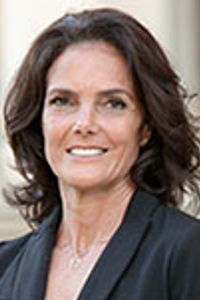
Amy Perruso was born in San Diego, California. She earned a bachelor's degree from the University of Southern California in 1990. She attended the University of California, Los Angeles. She earned a Ph.D. in political science from the University of Hawaii at Mānoa in 2013. Her career experience includes working as a legislator, and as a teacher with Mililani High School, Punahou School, Kapolei Middle School, and Highlands intermediate School.[1] She also served as secretary-teacher of the Hawaii State Teachers Association and a member of Governor David Inge's Every Student Succeeds Act Team. She was elected to the Hawaii State House of Representatives in 2019. Perruso has been affiliated with the Wahiawā Lions Club, with the Central O'uhu Soroptimists, with the Wahiawā-Waialua Rotary Club, with the Hawaiian Civic Club of Wahiawā, with the Wahiawā Agricultural Association as a co-founder, and with the Civic Education Council as a founder.[2][3]
- Ph.D:
- University of Hawaii, 2013
- Bachelor's:
- The University of Southern California, 1990
Campaign themes
Amy Perruso has not yet completed [the profile publisher]'s 2026 Candidate Connection survey.
If you are Amy Perruso, click here to fill out [the profile publisher]'s 2026 Candidate Connection survey.
Who fills out the candidate survey?
Any candidate running for elected office, at any level, can complete [the profile publisher]'s Candidate Survey. Completing the survey will update the candidate's [the profile publisher] profile, letting voters know who they are and what they stand for. More than 32,000 candidates have taken [the profile publisher]'s candidate survey since we launched it in 2015. Learn more about the survey here.
Help improve [the profile publisher] - send us candidate contact info.
Amy Perruso did not complete [the profile publisher]'s 2024 Candidate Connection survey.
Amy Perruso did not complete [the profile publisher]'s 2022 Candidate Connection survey.
Who are you? Tell us about yourself.
Born and raised on a ranch in the small agricultural town of Fallbrook, California, I am a longtime resident of beautiful Launani Valley and Wahiawa communities. A teacher at heart, my endeavor to educate our children has taken me around the world, from California to Shanghai to Finland and, finally, to Central O'ahu, where I taught social studies in the Hawai'i Department of Education for almost 20 years. I earned my BA from USC, completed graduate work at the University of Helsinki and doctoral work at UCLA, and wrote my dissertation on neoliberalism and public education in the Political Science at UH Mānoa. I was a Fulbright Scholar and a finalist for the Gilder-Lehrman National History Teacher of the Year Award. I served as Secretary-Treasurer of the Hawai'i State Teachers Association, and as a member of Gov. David Ige's Every Student Succeeds Act Team, which crafted a blueprint for the future of Hawai'i's public schools. I am an active member of the Wahiawā Lions Club, the Central O'ahu Soroptimists, the Wahiawā-Waialua Rotary Club, the Hawaiian Civic Club of Wahiawā, and co-founded the Wahiawā Agricultural Association and the Civic Education Council. I enjoy surfing, reading, and spending time with my family.
Please list below 3 key messages of your campaign. What are the main points you want voters to remember about your goals for your time in office?
· Education: Our children are our future. Yet, they're often forced to endure overheated classrooms, decaying buildings, and a lack of extracurricular activities. Rather than developing creativity and critical thinking skills, they are subjected to hours of standardized testing. Their hardworking teachers take on second and third jobs because Hawai'i's teacher salaries rank last in the nation. As Vice Chair of the House Education Committee, I worked hard to deliver the schools our keiki deserve by ensuring that every child is provided with a rich curriculum that includes arts and cultural content. To recruit and retain excellent educators, I have sponsored legislation that increases funding for public education.· Sustainability: We must balance economic growth with environmental preservation. As COVID-19 has shown, Hawai'i's wealth comes not just from financial management, but careful stewardship of our natural resources. New economic development must be managed with care for future generations, who will inherit the results of today's public policy decisions. As your representative, have made combating climate change a top priority. I have sponsored legislation to make renewable energy affordable to all and ensure that our state achieves its goal of becoming 100 percent clean energy dependent by the year 2045, while growing green jobs that pay a living wage.· Working Families: We work hard to care for our families and our neighbors, especially those who are most vulnerable. I am committed to expanding access to quality healthcare for our community by increasing funding for Wahiawā General Hospital, addressing our state's physician shortage, and devoting additional support to patients covered by Medicare or Medicaid. I will continue to advocate for truly affordable housing for hardworking families, by increasing funding for nonprofit housing developers. Most importantly, I support increasing the minimum wage to at least $17/hr.
What areas of public policy are you personally passionate about?
I am passionate about public education, climate change, food sovereignty and public health/emergency preparedness. I will use this space to address the final issue, given its current criticality. Protecting public health requires proactive decision-making. COVID-19 has exposed the gaps in Hawai'i's public health and emergency preparedness systems. Yet, the pandemic allows presents an opportunity to reexamine how we connect data, hospitals, health care providers, safety nets, and housing to improve public health outcomes. We should invest in healthcare infrastructure that can provide aid-including food, housing, and life-saving medical treatments-at all times and to anyone in need. We must also be wise about our state's emergency preparedness plans. As climate change and sea level rise continue to accelerate, we are becoming increasingly vulnerable to hurricanes, flooding, drought, and fire. As a public official, I take responsibility for preparing our community for the impact of climate change and sea level rise. For over a year, I have been working diligently with the Hawai'i Hazards Awareness and Resilience Program (HHARP) and a dedicated team of community volunteers to make our community more resilient. I will also continue to fight for funding to improve climate resilience statewide, so that our islands are prepared to adapt to any environmental challenges we might face.
Who do you look up to? Whose example would you like to follow, and why?
I admire both Queen Liliʻuokalani and Patsy Mink, although they provide very different models of women exercising political power for benefit of the common good. What I admire most about the Queen is her grace and strength under pressure, and her commitment to peaceful conflict resolution even in the face of traitorous betrayal. What I admire most about Patsy Mink was her willingness to stand up against the powerful in defense of the most vulnerable. Both used their considerable intelligence, gravitas and ability to move people to make critical change, even as they were denigrated and demeaned as women of color. And both operated with an understanding of political power that was elevated and elevating for those who interacted with them.
Is there a book, essay, film, or something else you would recommend to someone who wants to understand your political philosophy?
"Kaulana Nā Pua" (literally, "Famous are the flowers") is a Hawaiian patriotic song written by Eleanor Kekoaohiwaikalani Wright Prendergast in 1893 for members of the Royal Hawaiian Band who protested the overthrow of Queen Liliʻuokalani and the Hawaiian Kingdom. The song is also known under the title of Mele ʻAi Pōhaku, the Stone-Eating Song, or Mele Aloha ʻĀina, the Patriot's Song. It begins with "Famous are the children of Hawaiʻi, Ever loyal to the land" and beautifully expresses resistance to oppression in ways that are still not understood by the tourists who listen to it on a daily basis in Waikiki. While my political philosophy has multiple layers or levels, this song speaks to the principle of aloha 'āina that informs how I think about the common good - that 'āina is both 'ohana and that which sustains, and must be valued about all else.
What characteristics or principles are most important for an elected official?
Humility, integrity and willingness to serve, to act to protect the common good, especially the most vulnerable, are, I think, the three most important qualities for an elected official. The ways in which representatives in our system are elected contributes to ego inflation and leads candidates/officials to focus on their own image and self-gratification at the expense of their community's needs. Our system, grounded so firmly in pork barrel politics, also leads those in positions of power who want to be reelected to make compromises with respect to their principles for short-term material gains for their communities. The short-term focus of the legislative/election cycle also makes it difficult for elected officials to act with vision and integrity, because the short-term gains are rewarded much more by the reelection process than actions that have long-term positive effects.
What qualities do you possess that you believe would make you a successful officeholder?
I am hard-working, well-educated and knowledgeable about political theory and practice, and have devoted my whole life to the study and teaching of politics and civics. I am also politically independent, and moreover, not psychologically dependent on being in office as a source or determinant of my sense of self-worth, so I am unlikely to make unfortunate or unethical compromises in order to stay in office. I love teaching but feel that I can useful serving in office at this point in time - I do not plan to spend the remainder of my working life in office if there are others who can do this work as well or better than I. I am also curious about my fellow humans - I tend to listen more than I speak, and try to think about what I've heard before speaking. And most importantly, as I mentioned at the outset, I try to follow George Helm's direction to do my homework.
What do you believe are the core responsibilities for someone elected to this office?
The core responsibilities for anyone elected to this office include bringing the community together to discuss shared issues and concerns, and to lead the problem-solving discussions and actions, whether they involve lawmaking or negotiating with other power players and stakeholders. It's interesting, because, from my perspective, one need not be elected to this position to do the work of community organizing that is so necessary for this job. To be an effective lawmaker, the other side of this office, one needs to be knowledgeable not just about how the government works but also about the very specific ways in which government can and should be involved in making people's lives better. Elected officials must have deep and broad understanding of the state and federal constitutions and the ways in which the principles expressed therein inspire AND constrain our work. They are responsible for generating and organizing people around policy proposals that will support not only their community, but the whole.
What is the first historical event that happened in your lifetime that you remember? How old were you at the time?
I remember the election of Jimmy Carter (1976), which occurred when I was eight. I remember quite clearly being struck by his quiet demeanor and grace under pressure. All of that, due to the celebrations happening all year around the 200th anniversary of the Declaration of Independence, was wrapped in patriotism, so that quiet humility and kindness, for me, epitomized what it meant to be a leader of our country.
What was your very first job? How long did you have it?
I galloped Thoroughbred racehorses at San Luis Rey Downs, first as an unpaid exercise rider for my father and later working for other trainers. I became a professional jockey at the age of 15, riding on racetracks in California, Arizona, Nevada and Colorado. I let my license expire when I was an undergraduate at USC, as a result of a decision to stop riding professionally when my one of best friends was killed exercising one of her father's horses at SLRD.
What is your favorite book? Why?
I have so many favorite books, because they change as I grow, but my current favorite is Slavok Zizek's The Courage of Hopelessness - A Year of Acting Dangerously, because Zizek is so deep and brilliant. He peels back the nice veneer of hope that we try to maintain even in the face of climate crisis, neo-fascism, mass migration, and pandemic, to suggest that it is only when we admit that the situation is completely hopeless that we can truly and courageously make change, understanding that we cannot avoid the oncoming tsunamis but only figure out how to surf them in ways that maintain our compassion and human dignity.
Every state besides Nebraska has two legislative chambers. What do you consider the most important differences between the legislative chambers in your state?
Currently, because so much power is lodged in the executive branch as we are operating under emergency orders due to COVID-19, the most important difference is the power of Senate to advise and consent to the appointment of agency heads (as well as judicial appointments). We have had a slew of resignations from the Department of Labor, Department of Health, and Department of Human Services, and the Senate has played a much more active role than the House in interacting with these key agencies, and the members of the Senate will be able to ke sure there is a lively public discussion about the appointments of the new agency heads.
Do you believe that it’s beneficial for state legislators to have previous experience in government or politics?
I believe it is important to build relationships with other legislators based on shared values, vision and integrity. Our most important challenge with respect to building a community of lawmakers who can work together for the common good, is to create an environment in which diverse voices are listened to and heard, where opposition is not cause for ostracization and marginalization but opportunity to think and act differently. Furthermore, I also think that challenging corrupt and socially damaging political practices is often as important for the public good as building superficial relationships with other legislators.
What do you perceive to be your state’s greatest challenges over the next decade?
Our state's greatest challenge will be to effect a just transition to a more diverse and sustainable economic system. We are currently desperately dependent on tourism, American military presence, and property speculation for economic prosperity, and these drivers provide only the most distorted and unequal benefits for our communities. This is no small challenge, confronted as we are by the current narrative of economic collapse and austerity in the face of pandemic and erasure of our tourism industry. We must begin by building upon our strengths, using traditional knowledge combined with modern technology and practices to relearn how to feed ourselves and fuel a green energy economy. And this starts by centering the most vulnerable, especially indigenous women and women of color, in our public policy decisions.
What do you believe is the ideal relationship between the governor and the state legislature?
The ideal relationship between the governor and state legislature is one marked by mutual respect and shared vision. It is critical, especially in times of extraordinary social and economic stress such as we are currently experiencing, that the governor and the leadership of the state legislature be able to provide mutual support and resist the temptation to engage in scapegoating for the sake of perceived political gain. While it is also critical that each branch be held accountable, if the leaders of one branch succumb to this temptation, then public discourse and political behavior degenerate rapidly, to the detriment of the common good.
Do you believe it’s beneficial to build relationships with other legislators? Please explain your answer.
I believe it is important to build relationships with other legislators based on shared values, vision and integrity. Our most important challenge with respect to building a community of lawmakers who can work together for the common good is to create an environment in which diverse voices are listened to and heard, where opposition is not cause for ostracization and marginalization but opportunity to think and act differently. Furthermore, I also think that challenging corrupt and socially damaging political practices is often as important for the public good as building superficial relationships with other legislators.
What process do you favor for redistricting?
I support the process currently in use in Hawaii, wherein a nine-member commission of politicians draws both congressional and state legislative district lines based on new census data. The majority and minority leaders of the Hawaii State Senate and House of Representatives each select two members. These eight members then select a ninth tie-breaking commissioner. This process delimits the possible negative consequences of gerrymandering, because the state constitution requires that both congressional and state legislative district boundaries must be contiguous and compact, and must follow natural boundaries and align with census tracts, and are prohibited from drawing lines to unduly favor one politician or party.
If you are not a current legislator, are there certain committees that you would want to be a part of?
N/A
If you are a current legislator, what appealed to you about your current committees?
As a member of the Tourism/Agricultural committees, I have been grateful for the opportunity to address our state's most critical economic needs, to diversify our economy away from over-reliance on tourism and towards sustainable agriculture. On the Agriculture Committee, I've been able to work on making sure that pesticides like glyphosate are banned on public school campuses, holding the Agriculture Development Corporation accountable, and developing our farm-to-school pipeline. On the Judiciary Committee, I've been able to work on issues related to police accountability, gender equity and sexual assault, and I was gratified to be able to pass legislation banning non-disclosure agreements.
If you are not currently a member of your party’s leadership in the legislature, would you be interested in joining the leadership? If so, in what role?
Yes, I would be interested in joining the leadership at some point, in whatever capacity in which I can be useful, which will likely be in the areas of education or agriculture. I also hope to be able to provide support around civic engagement and youth empowerment - one of the projects which I hope to resurrect after the pandemic is a high school legislative internship which we had organized through the Women's Legislative Caucus. That kind of work, work that builds civic capacity and democratic skills, in another area where my professional experience can be useful.
Is there a particular legislator, past or present, whom you want to model yourself after?
While she is of the opposite party and we do not share the same views on many topics, I have a great deal of respect for Representative Cynthia Thielen, who recently retired. I had the great good fortune to serve with her on the Judiciary Committee and on Agriculture for one session, and it was marvelous. She brought great energy, intelligence and critical analysis to every public policy question, yet she never failed to demonstrate kindness and graciousness even to those who treated her poorly. She was always positively joyful about doing this work, and expected everyone else to similarly appreciate the high honor it is to serve.
Are you interested in running for a different political office (for example, the U.S. Congress or governor) in the future?
At this point, I am not considering running for Congress or the governorship. There is a great deal of important work that needs to be done at the level of the state legislature. As far as I am concerned, the most important changes can and should happen at the local level - hyper-localization is the most important antidote to our dangerous dependence on globalization.
Both sitting legislators and candidates for office hear many personal stories from the residents of their district. Is there a story that you’ve heard that you found particularly touching, memorable, or impactful?
I have been privileged to hear many stories, but the most powerful are the most private. We live in a small community, and it is not my place to share the stories of others, stories that were shared in confidence, for this type of publication. When we are in community, that is different, because these stories inform our conversations and can be questioned and interrogated. Mahalo.
On the 2026 ballot
Links
Compiled from the candidate’s published profile as of September 30, 2026.
Source(opens in new tab)