
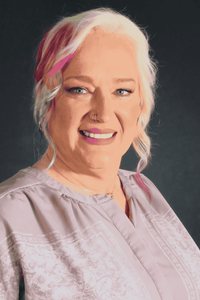
Background
Alleria Stanley served in the U.S. Army from 2003 to 2023. She earned a high school diploma from The McCallie School and an associate degree from Frederick Community College in 2025. Her career experience includes working in advocacy.[1]
- Associates:
- Frederick Community College, 2025
- High school:
- The McCallie School
In their own words
Who are you? Tell us about yourself.
I am a retired 20-year U.S. Army veteran, Senior Enlisted Leader, combat veteran deployed to Afghanistan, and candidate for the Maryland House of Delegates in District 4. My military service spanned roles from Apache helicopter repairer and radiology technologist to managing large medical departments—an experience that ingrained in me the core principles of servant leadership, accountability, and mission success.
Beyond my military career, I serve as a Commissioner on both the Frederick County Human Relations Commission and the Equity & Inclusion Commission, a Board Member on the Maryland State Board of Dental Examiners, and a Director for Mission Belonging.
I am a parent of five children, a grandmother, and a dedicated Frederick County resident committed to protecting our natural resources, strengthening our public schools, and ensuring smart, sustainable community growth. I demand that large industrial projects fund their own infrastructure so taxpayers are protected. I am running as a proven servant leader to deliver evidence-based, transparent, and responsive governance that directly supports our working families, veterans, and local communities.
Please list below 3 key messages of your campaign. What are the main points you want voters to remember about your goals for your time in office?
Large industrial developments, such as data centers, must pay their own way. I advocate for smart growth policies that require major commercial projects to fully fund their own energy, environmental, and infrastructure requirements rather than shifting those costs onto local taxpayers. Protecting our agricultural land, natural resources, and water supply in District 4 is paramount. We must balance economic development with responsible stewardship to preserve our quality of life and safeguard our environment for future generations.Fully funding public education is a direct investment in our economic future and community stability. I am committed to supporting our teachers, enhancing classroom resources, and ensuring every student in Frederick County has access to a safe, modern, and high-quality educational environment. Strong public schools build strong neighborhoods, attract stable businesses, and empower our children to thrive. We must prioritize state and local funding streams that keep our educational system robust, equitable, and competitive.With two decades of military service as a Senior Enlisted Leader, I bring proven accountability, discipline, and a servant-leader mindset to the General Assembly. Governance should rely on evidence-based solutions, transparent processes, and direct responsiveness to constituents—not partisan political rhetoric. My focus remains centered on expanding accessible healthcare, protecting individual civil rights, supporting our veterans, and upgrading critical road and pedestrian safety infrastructure across District 4.
What areas of public policy are you personally passionate about?
I am personally passionate about four policy areas where governance directly impacts our daily lives:
Environmental Stewardship & Smart Growth: Safeguarding natural resources and water supplies in District 4. Industrial expansion—like data centers—must fund its own energy and infrastructure demands so taxpayers never bear the burden.
Veterans' Care & Civil Rights: Serving those who served by expanding access to veteran healthcare and transition services. Through my commission work, I champion civil rights and equity for every community member.
Public Education: Funding public schools as an economic necessity. Strong schools create resilient neighborhoods and support families.
Healthcare Access: Expanding affordable care,
Who do you look up to? Whose example would you like to follow, and why?
I look up to leaders who blend courage, grassroots advocacy, and an unshakeable commitment to human dignity, qualities exemplified by Eleanor Roosevelt and Brandi Carlile.
Eleanor Roosevelt transformed public service by acting as a fearless champion for human rights, labor protections, and civil rights. She traveled the country to listen directly to everyday people and brought their real struggles into the policy conversation. Her legacy proves that effective governance requires remaining deeply connected to your community and standing firm for justice.
Brandi Carlile inspires me through her authentic, purpose-driven leadership and advocacy. Beyond her art, she uses her platform through the Looking Out Foundation to support vulnerable youth, advocate for LGBTQ+ equality, and empower marginalized communities. She demonstrates how to turn personal visibility into direct, impactful action for others.
In public service, I emulate leaders who operate with clarity and quiet resolve, those who view leadership as service rather than status. My two decades as a Senior Enlisted Leader in the U.S. Army taught me that the best leaders eat last, listen first, and measure success by the well-being and strength of the people they serve. I strive to follow the example of leaders who stand firm in their principles, protect the vulnerable, and do the hard work of building a more just, transparent, and equitable community.
What characteristics or principles are most important for an elected official?
An elected official must lead with strict personal integrity and an unwavering commitment to servant leadership. Holding public office is a trust placed by the community, requiring leaders to prioritize the real needs of their constituents over partisan gamesmanship or personal ambition. Decisiveness, transparency, and evidence-based decision-making are essential. An effective official listens carefully, reviews facts objectively, and takes decisive action to deliver practical results.
Accountability and accessibility form the foundation of public trust. Elected leaders must remain open, approachable, and responsive to the people they represent, regularly engaging with the community to answer tough questions. Finally, a steadfast commitment to equity, civil rights, and public stewardship ensures that every decision protects taxpayer dollars, strengthens public institutions, and serves all residents fairly and respectfully.
What do you believe are the core responsibilities for someone elected to this office?
The core responsibilities of a Delegate in the Maryland General Assembly center on effective representation, diligent stewardship, and active constituent service:
Evidence-Based Lawmaking: Drafting, reviewing, and passing legislation that addresses the actual challenges facing our communities. This requires thorough policy evaluation, fiscal responsibility, and prioritizing practical solutions over partisan politics.
Fiscal & Community Stewardship: Allocating state budget resources wisely to safeguard taxpayer dollars. Delegates must ensure state funding directly strengthens local public schools, upgrades critical road and pedestrian infrastructure, and protects natural resources.
Constituent Advocacy & Accessibility: Serving as a direct bridge between residents and state government. An elected official must remain accessible, helping constituents navigate state agencies, resolving service issues, and listening directly to community needs.
Oversight & Accountability: Exercising rigorous legislative oversight over state departments and large-scale industrial projects to guarantee transparency, protect consumer rights, and defend public health and safety.
What legacy would you like to leave?
I want to leave a legacy defined by accountable governance, protected communities, and expanded opportunity for the people of Frederick County and Maryland.
I want my tenure to show that a servant-leader mindset can transform state government into a more responsive, transparent, and evidence-based institution. I hope to be remembered as a leader who stood firm against irresponsible corporate growth, ensuring that major industrial developments like data centers paid their fair share so our taxpayers, natural resources, and agricultural lands were protected.
Ultimately, I want my legacy to be measured by the strength of the foundation left behind: public schools that are fully funded and equipped to serve every child, upgraded infrastructure that keeps our roads and neighborhoods safe, and policy that protects civil rights, body autonomy, and healthcare access for every resident. I want to demonstrate that two decades of military discipline and community service can translate into practical, compassionate leadership that leaves our district stronger, fairer, and more resilient for the next generation.
What was your very first job? How long did you have it?
My early work history combines independent micro-entrepreneurship with public health service, building a strong work ethic from a young age:
Independent Lawn Care Service (First Paid Work)
My very first paid work was operating an independent lawn mowing business. Through word of mouth and reliable service, I grew a client base of approximately ten regular customers. This included maintaining the grounds for the city's largest swimming pool center, teaching me early lessons in business management, scheduling, and physical labor.
Mosquito Abatement Technician (First Formal Employment)
My first formal job was with the Bamberg County branch of the South Carolina Department of Health and Environmental Control (DHEC) in the Mosquito Abatement program. I worked in this role for several years, protecting public health through seasonal pest management, larvicide application, and vector control across the county.
Both experiences instilled a deep appreciation for public service, environmental health, and community responsibility long before my military career began.
What is something that has been a struggle in your life?
Navigating the loss of my spouse, Ellicia, on New Year's Eve 2006, while serving in the military, was the most profound struggle of my life. Grief tested every ounce of my personal resilience, especially as I worked to balance my duties, remain a steady foundation for my children, and move forward through deep personal heartbreak.
That experience reshaped my perspective on strength, vulnerability, and community. It taught me that real resilience does not mean walking alone; it means leaning on those around you and building support systems that keep families whole during their darkest moments.
Living through that loss deepened my empathy as a parent, a Senior Enlisted Leader, and a public servant. It cemented my dedication to advocating for accessible mental health resources, strong family support networks, and compassionate care for everyone facing unexpected hardship.
What do you believe is the ideal relationship between the governor and state legislature?
The ideal relationship between the governor and the state legislature is a co-equal partnership rooted in mutual respect, clear communication, and institutional accountability.
While the governor sets executive priorities and manages state agencies, the General Assembly holds the constitutional duty to craft laws, allocate budget resources, and exercise rigorous oversight. Neither branch should act as a rubber stamp or an adversarial obstacle for political gain. Effective governance requires both branches to maintain an open dialogue, collaborate early in the legislative process, and focus on evidence-based solutions that directly serve the public interest.
Respecting the separation of powers ensures that policy reflects the full diversity of Maryland's communities. When the executive and legislative branches work in good faith, they protect taxpayer dollars, strengthen public institutions, and deliver lasting, meaningful results for our residents.
What do you perceive to be your state's greatest challenges over the next decade?
Yes, compromise is both necessary and desirable for effective, lasting policymaking.
A vibrant democracy represents people with diverse backgrounds, values, and priorities. Successful lawmaking relies on bringing together many voices and lived experiences, providing a richer, more vibrant collaboration that yields stronger policy outcomes. During my twenty years as a Senior Enlisted Leader in the U.S. Army, I learned that mission success rarely comes from rigid inflexibility; it comes from uniting stakeholders, assessing evidence, and leveraging diverse perspectives to achieve shared objectives.
Compromise does not mean abandoning core principles, defending civil rights, or failing to protect our communities. Rather, it means engaging in good-faith negotiation to build durable, inclusive solutions that can survive changing legislative cycles. When elected officials collaborate across the aisle and incorporate varied viewpoints, they create policies that reflect the broader public good, protect taxpayers, and strengthen the overall stability of our state.
Do you believe that compromise is necessary or desirable for policymaking?
Yes, compromise is both necessary and desirable for effective, lasting policymaking.
A vibrant democracy represents people with diverse backgrounds, values, and priorities. Successful lawmaking requires setting aside political theater to find common ground that delivers practical, real-world results. During my twenty years as a Senior Enlisted Leader in the U.S. Army, I learned that mission success rarely comes from rigid inflexibility; it comes from bringing stakeholders together, assessing the evidence, and focusing on shared objectives.
Compromise does not mean abandoning core principles, defending civil rights, or failing to protect our communities. Rather, it means engaging in good-faith negotiation to build durable, bipartisan solutions that can survive changing legislative cycles. When elected officials collaborate across the aisle, they create policies that reflect the broader public good, protect taxpayers, and strengthen the overall stability of our state.
What organizations or individuals have endorsed your campaign?
US Rep. April McLain-Delaney
US Rep. Sarah McBride
Maryland Delegate Kris Fair
Maryland Delegate Joe Vogel
Maryland Delegate Teresa Woorman
Sierra Club - Maryland
League of Conservation Voters - Maryland
American People's Compact
LGBTQ+ Victory Fund
A4TE
Center for Freethought Equality
Reproductive Justice Maryland
Mental Health Now (Designation)
Moms Demand Action (A Gun Sense Candidate)
What was the first historical event that happened in your lifetime that you remember?
The first major historical event I distinctly remember was the launch of the Space Shuttle Columbia on April 12, 1981. Watching STS-1 lift off from Kennedy Space Center was an unforgettable moment that captivated the entire nation. Unlike previous crewed spaceflights that relied on single-use capsules, Columbia was the world's first operational reusable spacecraft, flying with astronauts John Young and Bob Crippen aboard a vehicle that had never been tested in space before.
Seeing that massive white orbiter ascend on a column of smoke and fire left a lasting impression on me as a child. It demonstrated what human ingenuity, technical precision, and bold ambition could achieve when dedicated professionals rallied around a common mission. The image of Columbia returning to Earth two days later, gliding in like an airplane to touch down safely, showed that even the most complex, unprecedented challenges could be met with meticulous planning and disciplined execution.
That moment sparked a lifelong fascination with flight, engineering, and service. It instilled in me a deep appreciation for science, innovation, and teamwork—values that later guided my 20-year career in the U.S. Army working on advanced military technology like the AH-64 Apache helicopter. That early launch proved that when we invest in research, support our workforce, and dare to solve hard problems, we can expand the boundaries of what is possible.
On the 2026 ballot
Links
Compiled from the candidate’s published profile as of September 30, 2026.
Source(opens in new tab)