
Background
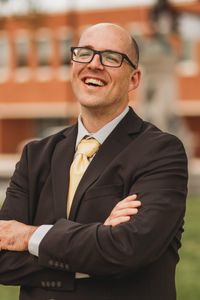
Alexander Hardy served in the U.S. Army from 2005 to 2010. He earned a high school diploma from Perry Meridian High School, an associate degree from the Northern Virginia Community College, Annandale in 2014, and an associate degree from Valencia College in 2014. Hardy also attended Vassar College. As of 2025, he was affiliated with Indiana 50501.[1]
- Associates:
- Valencia College, 2014
- High school:
- Perry Meridian High School
Campaign money
- Raised
- $0
- From individuals
- $0
- From PACs & party
- $0
- Own money
- —
FEC filings.
View on FEC.gov(opens in new tab)In their own words
Who are you? Tell us about yourself.
Alex Hardy is a progressive candidate running for U.S. House of Representatives in Indiana’s 6th Congressional District. An Army veteran who served as a 25Q (Army IT specialist) from 2005 to 2010, Hardy completed two deployments to Iraq during Operation Iraqi Freedom (OIF 5 & 7). After military service, Hardy worked on the frontlines of the COVID-19 pandemic as a janitor at the Orlando VA Hospital.
Hardy has worn many hats over the years—including writer, game designer, stand-up comedian, cocktail server, janitor, and Army IT specialist—gaining a broad range of experiences that inform his perspective on community and leadership. His commitment to understanding global issues has taken him abroad, including study of water quality in China and time in Bogotá, Colombia, examining the peace process between the Colombian government and FARC.
Hardy entered the 2025 congressional race with a vision to bring progressive policies rooted in justice, equity, and dignity to Indiana. His campaign focuses on Medicare for All, the Green New Deal, labor rights, reproductive justice, and ending endless wars. Guided by the simple mission of “More Rights, Not Less,” Hardy aims to build a government that works for everyday people, not corporate interests.
Please list below 3 key messages of your campaign. What are the main points you want voters to remember about your goals for your time in office?
Healthcare for All
Advocating for universal healthcare coverage, this policy aims to ensure every person has access to affordable, high-quality medical care regardless of income or employment status. Often linked with Medicare for All proposals, it focuses on reducing costs, eliminating insurance barriers, and improving public health outcomes through a government-managed system or other inclusive healthcare models.DEI Expansion
Diversity, Equity, and Inclusion (DEI) expansion involves broadening efforts within organizations and institutions to actively promote representation and fair treatment of marginalized groups. This includes enhancing recruitment, retention, and leadership opportunities for people of color, LGBTQ+ individuals, women, and people with disabilities, while fostering inclusive environments that value diverse perspectives and reduce systemic bias.Abolish ICE
The movement to abolish U.S. Immigration and Customs Enforcement (ICE) calls for dismantling the federal agency responsible for immigration enforcement and detention, citing concerns over human rights abuses, family separations, and aggressive immigration policing. Advocates propose replacing ICE with community-based, humane immigration policies focused on due process, refugee protections, and alternatives to detention.
What areas of public policy are you personally passionate about?
I’m deeply passionate about policies that honor and protect our greatest generation and elderly, ensuring they receive the care and respect they deserve. I also care strongly about improving infrastructure in ways that promote longevity and minimize environmental impact—building sustainable systems that serve communities now and for the future. Finally, I’m committed to expanding public transportation, especially connecting rural areas, so everyone has access to reliable, affordable transit options that boost economic opportunity and reduce isolation.
Who do you look up to? Whose example would you like to follow, and why?
I look up to leaders like Bernie Sanders, Elizabeth Warren, Jasmine Crockett, Cory Booker, AOC, and Senator Chris Van Hollen. They’re not just talking—they’re doing. They’re proactive, principled, and focused on making real change, especially for working people and marginalized communities. That’s the kind of leadership I want to bring to Congress.
What characteristics or principles are most important for an elected official?
An elected official should lead with integrity, empathy, and courage. They need to be accountable to the people—not corporate donors or political elites—and they must be willing to listen, learn, and act with transparency. We need leaders who tell the truth, even when it’s hard, and who put people first, always.
What qualities do you possess that you believe would make you a successful officeholder?
I’ve spent my whole life asking hard questions, raising awareness, and fighting for justice—even when it wasn’t easy or popular. I don’t shy away from uncomfortable truths. I listen. I organize. I show up. And I’m not afraid to challenge systems that aren’t serving the people they’re supposed to.
What do you believe are the core responsibilities for someone elected to this office?
A member of the House of Representatives is responsible for legislating in the public interest, securing resources for their district, and serving as a direct connection between constituents and the federal government. That includes showing up in the community, responding to constituent needs, and fighting for policies that improve people’s daily lives.
What legacy would you like to leave?
I only made it to Second Class in the Boy Scouts, but one lesson stuck with me: leave the campsite better than you found it. That’s how I see public service. The 6th District—and this country—is our shared campsite. I want to leave it fairer, safer, more just, and more hopeful for those who come after me.
What is the first historical event that happened in your lifetime that you remember? How old were you at the time?
The first major event I remember clearly is 9/11. I was 13 and had just moved to Indianapolis. It changed the world—and my own path. It set the stage for the wars I’d later serve in and made me start asking bigger questions about power, purpose, and policy.
What was your very first job? How long did you have it?
My first real job was serving in the U.S. Army for five years and three months during the Iraq War. It was a time when the military was taking just about anyone, and I stepped up. Before that, I joined Job Corps at 16, trying to build a future for myself with the tools I had. Both experiences shaped my work ethic and perspective on service.
What is your favorite book? Why?
Slaughterhouse-Five by Kurt Vonnegut. It helped me process PTSD and that strange disconnection you feel when you return to “normal life” after trauma. Vonnegut’s way of showing the absurdity and tragedy of war gave me a new lens for understanding my own experience—and the world around me.
What was the last song that got stuck in your head?
"Chaotic" by Ellise
What is something that has been a struggle in your life?
Life has been a struggle, especially early on. My sister and I grew up without the support and safeguards kids should have. We had to grow up fast. That experience is a big part of why I’m running. I want to make sure fewer kids have to survive what we did—and more families get the support they deserve.
What qualities does the U.S. House of Representatives possess that makes it unique as an institution?
The House is designed to be the people’s chamber—directly elected every two years, with representation based on population. That makes it more responsive and accountable to everyday Americans. Its structure allows for bold new voices and rapid shifts in leadership, which is critical for a living democracy.
Do you believe that it's beneficial for representatives to have previous experience in government or politics?
Not necessarily. In fact, I believe we need more people without traditional political backgrounds—folks who’ve worked tough jobs, served in the military, cared for family members, or organized in their communities. Diverse life experience brings a much-needed perspective to policymaking and helps restore trust in our institutions.
What do you perceive to be the United States' greatest challenges as a nation over the next decade?
We’re facing overlapping crises: rising economic inequality, a climate emergency, threats to democratic institutions, and a growing disconnect between government and working people. We must also confront aging infrastructure, healthcare inaccessibility, and social fragmentation. These challenges require bold, compassionate leadership and long-term thinking—not business as usual.
Do you believe that two years is the right term length for representatives?
Two years keeps representatives close to the people, which is a strength. It forces regular accountability and gives voters the power to correct course quickly. That said, it also creates challenges for long-term planning. I support exploring structural reforms, but until then, I’ll use those two years to fight like hell for the people.
Do you believe that compromise is necessary or desirable for policymaking?
Compromise can be necessary, but it must be principled. I’ll work across the aisle when it moves us forward without compromising on core human rights or justice. Too often, compromise has meant leaving the most vulnerable behind. I believe in collaboration, but not at the cost of dignity, equity, or truth.
The Constitution says that all bills for raising revenue must originate in the House. What role would this power play in your priorities if elected?
Budgets are moral documents. As a member of the House, I’d use that authority to push for a tax system that works for working people—not just the wealthy. I’d fight for progressive revenue policies to fund healthcare, infrastructure, education, and climate action—not endless war or corporate subsidies.
How should the U.S. House use its investigative powers?
The House must use its investigative powers to hold the powerful accountable—whether that’s corporate fraud, government corruption, or abuses of civil rights. Oversight should be nonpartisan, principled, and focused on truth. It’s not about scoring political points—it’s about protecting democracy and rebuilding public trust.
What organizations or individuals have endorsed your campaign?
IN50501, Laboratories of Democracy
What are your views on financial transparency and government accountability?
Financial transparency is essential to a functioning democracy. Voters deserve to know where their representatives' money comes from and how tax dollars are spent. I support public campaign financing, strict disclosure requirements, and robust oversight mechanisms to make sure government serves the people—not wealthy donors or corporate interests.
On the 2026 ballot
Links
Compiled from the candidate’s published profile as of September 30, 2026 and FEC filings.
Source(opens in new tab)