
Background
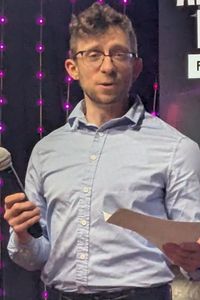
Alexander Bobella earned a bachelor's degree from Marlboro College in 2015 and a graduate degree from the University of Vermont in 2022. His career experience includes working as a social worker.[1]
- Graduate:
- University of Vermont, 2022
- Bachelor's:
- Marlboro College, 2015
In their own words
Who are you? Tell us about yourself.
Growing up, I was taught that commitment to family, service, and the community should guide our decisions. That means work hard, lead with compassion, and fight like hell for the person next to you.
Those values led me to a career of care work. I’ve supported patients at the Brattleboro Retreat and UVM Medical Center, helped people navigate Medicaid, answered calls on an anti-violence hotline for the Pride Center, and organized healthcare workers to fight for better conditions. In every role, the goal has been the same: be there when people need it most.
Today, as a social worker, I continue that work by helping Vermont families navigate healthcare access, housing, and the support they need to live with dignity. I see every day how much of a difference it makes when someone has the services they need, and how devastating it can be when they don’t.
After attending UVM, I chose Franklin County. I bought my home on Lake Street in Saint Albans because I believe in this community and wanted to be part of building something stronger here. I also serve on the Saint Albans City Climate and Energy Advisory Commission, working with neighbors to lower costs and create a more sustainable future.
My work in our community has led me to what we all already know: that our neighbors are still being left out and left behind by a system that isn’t working for working people.
That’s why I’m running for Franklin State Senate.
Please list below 3 key messages of your campaign. What are the main points you want voters to remember about your goals for your time in office?
Vermonters deserve a healthcare system that works for them, not wealthy CEOs. We need to transform our healthcare system away from the for-profit, broken status quo towards a future where everyone can go to the doctor without worrying about how to pay the bill. As a state senator, I would:
Implement a statewide single-payer healthcare system that applies to all Vermonters
Increase number of qualified providers in Vermont by working with state systems academic institutions
Increase resources for local Agencies on Aging so that more Vermonters can age on their own termsI hear constantly from renters and small business owners struggling with unlivable rents and poor upkeep from their landlord. Meanwhile, we’re asking modest homeowners to constantly foot the bill for education. What we need is to protect the housing stock we do have, continue to build, and transition away from a broken property tax system. I would:
Work to pass rent stabilization statewide so tenants can stay in their homes
Reform the education tax system to be based on income and not the value of your home
Make huge investments in affordable housing, mixed-use housing, and housing for seniors to age in placeThe truth is that our economy is not built for the most Vermonters. Instead, the ultra-wealthy make off just fine, while the rest of us struggle to get by. We must transform our economy and begin investing in our people. I would:
Protect local businesses from being priced out by huge corporations
Restore power to local communities to lead land use planning - don’t let Montpelier draw our maps for us
Tax the ultra-wealthy to fund critical services like affordable housing and gaps left by the Trump administration
What areas of public policy are you personally passionate about?
Equitable, high-quality healthcare with more options, reduced wait times, and strong community foundation; accessible and affordable education for all; housing and responsible housing development; constitutionalized civil rights and protection of vulnerable individuals/groups.
Who do you look up to? Whose example would you like to follow, and why?
Bernie Sanders was the first politician who seemed to care about the people he represented and is a great source of inspiration to me. I endeavor to stay focused on the working class the way that Bernie does.
What characteristics or principles are most important for an elected official?
Clarity of ideas and goals; ability to hold fast to convictions and constituent needs; willingness to be flexible in dialogue to ensure all constituent voices are represented; a visceral understanding of how governmental/social systems affect individuals.
What do you believe are the core responsibilities for someone elected to this office?
Elevating the voices of constituents and ensuring that constituents feel engaged in discussion, that they're empowered to make systems-level change; holding a broad view of how governmental systems and decisions will affect individuals and their access to goods/resources.
What legacy would you like to leave?
Universal healthcare and economic redistribution that allows everyone to live comfortably, with the value of their work and personhood respected.
What was your very first job? How long did you have it?
Many odd jobs when younger, including table service at cafes and data management at a local Primary Care office; I held these roles seasonally for a few years.
What is something that has been a struggle in your life?
Like many Franklin County residents, and Vermonters, I struggle to get by financially with the rising cost of goods (especially food and utilities). The economy is tight and many months are paycheck to paycheck despite the hard work being put in.
What do you believe is the ideal relationship between the governor and state legislature?
The governor and the state legislature need a balance of power. There must be collaboration, but each must also ensure that the other remains within the bounds of participatory American democracy and remains attuned to the needs of ordinary people.
What do you perceive to be your state's greatest challenges over the next decade?
Affordability; sustainable energy/fuel use; enshrinement and guarantee of our civil rights.
Do you believe that compromise is necessary or desirable for policymaking?
Yes, but to a limit. Certain lines cannot be crossed and certain concessions cannot be made, especially those regarding civil rights or safety; but certain compromise is the only way to ensure that legislators don't lose sight of broad perspectives and various constituent needs.
What was the first historical event that happened in your lifetime that you remember?
I was quite young when 9/11 occurred and it's one of my earliest memories: the surge of patriotism and the following war on terror defined the next few years of my political consciousness.
On the 2026 ballot
Links
Compiled from the candidate’s published profile as of October 6, 2026.
Source(opens in new tab)