
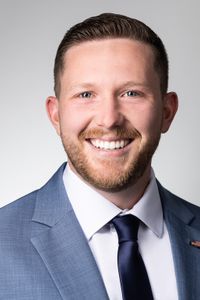
Background
Alex Hawkins began serving in the U.S. Army in 2015. He attended Oakland Community College and earned a bachelor's degree from Central Michigan University in 2021. His career experience includes working as an Explosive Ordnance Disposal Officer in the Army and as a congressional aide.[1]
Hawkins has been affiliated with the following organizations:[1]
Explosive Ordinance Disposal Warrior Foundation
Association of the United States Army
National Guard Association of the United States
Air Force Association
United States Air Force Auxiliary, Civil
Civil Air Patrol
Michigan National Guard Association
Military Officers Association of America
National Defense Industrial Association
Women In Defense
American Legion
Veteran’s of Foreign Wars
FBI National Citizens Academy Alumni Association
Central Michigan University Alumni Association
Oakland Community College Alumni Association
Michigan Democratic Party
Oakland County Democratic Party
North Oakland Democratic Club
Rochester Area Democratic Club
- Bachelor's:
- Central Michigan University, 2021
Campaign money
- Raised
- $376K
- From individuals
- $83K
- From PACs & party
- $0
- Own money
- —
FEC filings through September 30, 2025.
View on FEC.gov(opens in new tab)In their own words
Michigan House of Representatives
Who are you? Tell us about yourself.
Alex Hawkins is a U.S. Army National Guard officer, Reserve Sheriff’s Deputy, and community advocate running for the Michigan House of Representatives in District 55. His background includes military service, public safety work, and hands-on involvement with local organizations. He is focused on pragmatic, people-first solutions that improve affordability, public safety, education, and government accountability for Michigan families.
Please list below 3 key messages of your campaign. What are the main points you want voters to remember about your goals for your time in office?
Pragmatic leadership focused on results: Michigan needs problem-solvers who show up, listen, and deliver. Alex Hawkins believes government should work efficiently, transparently, and in partnership with local communities to solve real problems.Affordability and economic security: Alex is focused on lowering everyday costs, supporting workers and small businesses, and strengthening consumer protections so families can get ahead without falling behind.Public safety, service, and accountability: Drawing on his experience in the military and public safety, Alex supports smart investments in mental health, infrastructure, and emergency services while holding government accountable to the people it serves.
What areas of public policy are you personally passionate about?
Public safety and emergency preparedness, affordability and cost-of-living issues, education and workforce development, veterans’ services, infrastructure reliability, and government transparency.
What organizations or individuals have endorsed your campaign?
VoteVets
New Politics
UNITE-HERE Local 24
Michigan Machinists Council
State Representative Donovan McKinney
State Representative Joey Andrews
State Representative Sam Steckloff
State Representative Jason Morgan
State Representative Mike McFall
State Representative Denise Mentzer
Oakland County Commissioner Brendan Johnson
Macomb County Commissioner Michael Howard
Community leaders Eric Chung, Katrina Manetta, Amanda Treppa, Sarah Pounds, and Emily Busch
U.S. House
Alex Hawkins did not complete [the profile publisher]'s 2026 Candidate Connection survey.
Who are you? Tell us about yourself.
Army Bomb Tech, Veteran, and dedicated public servant Alex Hawkins is vying for a seat in the Michigan State House representing District 55, deeply connected to his roots in Oakland County. His commitment to service was sparked after high school when he enlisted as an Explosive Ordnance Disposal Technician in the U.S. Army, a commitment of nearly nine years. In tandem with his military duties, Alex pursued and obtained a bachelor's degree from Central Michigan University. His service continued beyond active duty, as he now serves as an EOD Officer in the Michigan National Guard and an Oakland County Reserve Sheriff's Deputy. These roles underscores his enduring dedication to local safety and welfare with a hands-on approach.
Alex’s campaign for the State House is fueled by a passion for direct community involvement and making a tangible impact. He takes a hands-on approach to service, leading a local community choir and actively participating in local organizations he has been in for years. His work extends to directly assisting constituents and veterans while working for the U.S. Senate, and recently the U.S. House of Representatives. The pillars of his campaign are a fierce advocacy for public education, rooted in his personal experiences in Oakland County schools, the welfare of veterans, and the protection of the rights of all Michiganders. With a proven track record in community service and military leadership, Alex stands poised to be the best candidate.
Please list below 3 key messages of your campaign. What are the main points you want voters to remember about your goals for your time in office?
Alex Hawkins stands out as a candidate for the Michigan State House with a unique blend of military discipline and local community involvement. His nearly nine years as an Army Explosive Ordnance Disposal Technician and current roles as a Michigan National Guard EOD Officer and Oakland County Reserve Sheriff's Deputy showcase his commitment to safety and wellbeing of Michiganders. This extensive experience, combined with a hands-on leadership style, sets Alex apart as a candidate deeply committed to serving Oakland County.With a career marked by direct community engagement and impactful service, Alex has been a proactive leader in local initiatives, such as heading a community choir and participating in longstanding organizations such as the Civil Air Patrol. His legislative work with the U.S. Senate and House of Representatives provides him with a unique perspective on governance and community needs. Alex’s approach is informed by a rich blend of legislative, and constituent focused, deep community ties, offering a balanced and empathetic view essential for District 55.Alex’s campaign is driven by personal convictions and his background. A product of Oakland County's public schools, he deeply values education and advocates for a robust system. His military background fuels his commitment to veteran welfare. Alex's vision extends to ensuring the rights and welfare of all Michiganders, underlining his dedication to the community where he and his wife look forward to raising their family.
What areas of public policy are you personally passionate about?
Education: Enhancing the quality and accessibility of public education, ensuring every child has the opportunity for success. Ensuring teachers are paid and supported in their role.
Veteran Affairs: Improving support and healthcare for veterans, ensuring their well-being and holding state agencies accountable.
Community Safety and Welfare: Fostering local safety and public welfare through my experiences in law enforcement and the National Guard.
Environmental Protection: Advocating for sustainable practices and policies to safeguard the natural resources and promote a healthier environment.
Affordable Child Care: Ensuring accessible and affordable child care options for families, aiding parents in balancing work and family responsibilities.
Is there a book, essay, film, or something else you would recommend to someone who wants to understand your political philosophy?
"Profiles in Courage" by John F. Kennedy - a classic book offers a profound exploration of the challenges and ethical dilemmas faced by elected officials who chose to act with integrity and conviction, often at the risk of their careers. It resonates with my emphasis on leadership, integrity, and dedication to public service.
What characteristics or principles are most important for an elected official?
Commitment to Service: Demonstrated by your extensive military and community service, showing dedication to the welfare of others above personal interests.
Hands-On Leadership: A leadership style that involves direct engagement and participation in community initiatives, indicating a proactive and involved approach to problem-solving.
Integrity and Transparency: Upholding ethical standards and being open about your goals and methods, which is crucial for building trust and credibility with constituents.
Empathy and Understanding: Being in touch with the community’s needs and concerns, as evidenced by your active participation in local organizations and understanding of issues like education and veteran affairs.
Adaptability and Learning: The ability to assimilate diverse experiences, such as legislative work and community involvement, into a balanced perspective beneficial in policy-making.
Advocacy for Key Issues: Passionate advocacy for crucial areas such as education, veteran welfare, community safety, environmental protection, and child care, reflecting a deep understanding of the community's needs.
Vision for the Future: A clear and forward-thinking vision for the community, aiming to bring about effective change and improvements in crucial sectors.
What do you believe are the core responsibilities for someone elected to this office?
Legislation Development and Review: Crafting, sponsoring, and reviewing legislative proposals that reflect the needs and interests of the constituents in District 55. This involves understanding complex issues, collaborating with other lawmakers, and staying informed about a broad range of policy areas.
Constituent Representation and Advocacy: Acting as a voice for the residents of District 55, ensuring their concerns, needs, and opinions are represented in the State House. This includes being accessible to constituents, understanding their perspectives, and advocating on their behalf.
Committee Participation: Engaging in committee work, which is integral to the legislative process. This involves detailed examination of legislation, oversight of state agencies, and specialized focus on certain policy areas.
Policy Analysis and Decision Making: Analyzing a wide array of policy issues and making informed decisions that benefit the community and align with their values and needs.
Community Engagement and Outreach: Maintaining a strong presence in the community, attending local events, and being accessible to constituents. Regular communication through town halls, meetings, and other forums to keep the public informed and involved.
Resource Allocation and Budgeting: Playing a role in state budgeting processes, ensuring that District 55 receives fair and adequate resources for public services, infrastructure, education, and more.
Upholding Ethical Standards: Adhering to high ethical standards and transparency in all aspects of the role, maintaining public trust and ensuring accountability.
Collaborative Governance: Working with other elected officials, across party lines and governmental levels, to develop and implement policies that serve the best interests of the district and state.
What was your very first job? How long did you have it?
My very first job was at 14 years old, working for the high school theater when it would be rented out for events. I held that job until I left for the U.S. Army. I still volunteer there today, over 10 years later.
What do you believe is the ideal relationship between the governor and state legislature?
The ideal relationship between the governor and the state legislature should be grounded in collaboration and mutual respect, guided by a shared commitment to the public interest. Effective governance requires both entities to work together, fostering open communication and negotiation to find common ground on policy matters. This collaborative approach is essential for informed decision-making that benefits the public. It’s important that there is mutual respect for each entity's distinct roles and responsibilities: the legislature’s in making laws, and the governor’s in executing them. Such respect is fundamental to maintaining a healthy balance of power.
Constructive dialogue is key in this relationship, ensuring that both sides are well-informed about each other's priorities and challenges. Adherence to the principle of checks and balances is crucial, with the legislature responsibly exercising its oversight role and the governor respecting the legislative process, including judicious use of veto power. Both parties should focus on common goals, especially on issues with significant public impact like education, healthcare, and economic development. This shared focus can help bridge partisan divides and foster bipartisan solutions. Additionally, both the governor and legislature should exemplify transparency and accountability in their actions and maintain responsiveness to the needs and concerns of their constituents, ensuring that the voices of the people are reflected in their policy decisions.
What do you perceive to be your state's greatest challenges over the next decade?
Economic Diversification and Job Creation: Michigan’s economy, heavily reliant on the automotive industry, needs further diversification to reduce vulnerability to industry-specific downturns. The state must embrace new technologies and industries, such as renewable energy, tech, and advanced manufacturing, to create a more resilient and diverse economy.
Education and Workforce Development: Improving the quality of public education and aligning educational outcomes with job market demands is crucial. Michigan must invest in K-12 education, vocational training, and higher education to prepare a workforce capable of meeting the challenges of a changing economy.
Infrastructure Revitalization: Aging infrastructure, including roads, bridges, water systems, and public buildings, requires significant investment. The Flint water crisis highlighted the dire consequences of neglected infrastructure. Sustainable and resilient infrastructure development is key.
Environmental Sustainability and Water Management: Michigan, surrounded by the Great Lakes, faces unique challenges in water management and environmental protection. Addressing water quality issues, protecting natural resources, and mitigating the impacts of climate change are critical.
Healthcare Accessibility and Quality: Ensuring accessible, affordable, and quality healthcare for all Michiganders, especially in rural and underserved urban areas, remains a challenge. This includes addressing public health issues like the opioid crisis and mental health services.
Social Inequality and Inclusivity: Addressing social inequality, racial disparities, and ensuring inclusivity in all sectors of society is a significant challenge. This involves tackling poverty, ensuring equal opportunities in education and employment, and confronting systemic biases.
Do you believe that it’s beneficial for state legislators to have previous experience in government or politics?
Having previous experience in government or politics can be beneficial for state legislators, but it is not the only pathway to effective public service.
Do you believe it’s beneficial to build relationships with other legislators? Please explain your answer.
Absolutely, building relationships with other legislators is highly beneficial and often essential for effective lawmaking. When legislators develop a rapport and respect each other's viewpoints, they are more likely to find common ground and collaborate on bipartisan solutions to pressing issues. Moreover, strong relationships can lead to more productive discussions and less partisanship, enabling a focus on the broader interests of the public rather than narrow party lines.
Are you interested in running for a different political office (for example, the U.S. Congress or governor) in the future?
I am here to focus on my current situation and the people of the greater Rochester area.
What is the first bill you would introduce if elected?
If elected, my first legislative initiative would be introducing a bill aimed at fundamentally strengthening public education in Michigan. This decision is rooted in my firm belief in education as a cornerstone for individual and community success, reinforced by my personal experience in Oakland County’s public schools. The bill would focus on several key areas: increasing funding for schools to provide necessary resources for a quality learning environment, enhancing support for teachers through better salaries and professional development opportunities, and expanding curriculum to include a stronger emphasis on STEM subjects, arts, and humanities, ensuring a well-rounded education for students. Additionally, it would prioritize early childhood education, to include childcare, recognizing the critical role of early learning in lifelong success, and bolster mental health services within schools to support the overall well-being of students. This comprehensive approach aims to ensure every child in Michigan has access to high-quality education, which is vital for preparing them for a successful future and fostering a more prosperous, equitable state.
What committees interest you?
Military, Veterans and Homeland Security, Natural Resources, Environment, Tourism and Outdoor Recreation, Labor, Families, Children and Seniors, Education.
What are your views on financial transparency and government accountability?
Transparency as a Priority: Financial openness in government is crucial. All financial decisions and transactions must be fully accessible and understandable to the public, fostering trust and accountability.
Regular Audits and Comprehensive Reporting: Implementing thorough audits and detailed reporting of government spending is essential to identify inefficiencies, prevent fund misuse, and guarantee effective use of public resources.
Upholding Ethical Standards: Maintaining high ethical standards in financial dealings is non-negotiable. This includes adhering to laws and regulations related to campaign finances, lobbying, and conflicts of interest, ensuring that officials act as stewards of public trust.
Easy Access to Financial Information: Government financial policies and expenditures should be easily accessible, utilizing technology to allow citizens to track how their money is used.
Strong Accountability Measures: Effective mechanisms for addressing financial mismanagement or corruption are vital, including legal consequences for those misusing public funds.
Encouraging Citizen Participation: Citizen involvement in budgetary processes should be encouraged. This includes public forums and advisory boards to align government actions with public interest.
Responsive Governance: Elected officials need to be responsive to constituents' concerns about financial matters, maintaining open communication and providing regular updates on fiscal issues.
On the 2026 ballot
Links
Compiled from the candidate’s published profile as of September 30, 2026 and FEC filings.
Source(opens in new tab)