
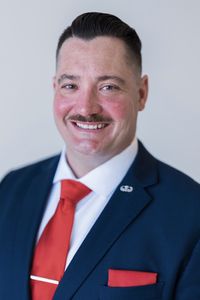
Background
Adam DeRito was born in Poughkeepsie, New York. He began serving in the U.S. Army Reserve in 2015. He earned a high school diploma from West Milford Township High School, as well as a bachelor's degree and a graduate degree from the University of Colorado. His career experience includes working as a teacher, medical technician, firefighter, search and rescue technician, and energy consultant. DeRito has been affiliated with the following organizations:
Turning Point USA
Leatherwood Development Group
Colorado Hispanic Republicans
Veterans of Foreign Wars
American Legion
Knights of Columbus[1]
- Graduate:
- University of Colorado, Denver, 2015
- Bachelor's:
- University of Colorado, Denver, 2013
- High school:
- West Milford Township High School
Campaign money
- Raised
- $29K
- From individuals
- $8K
- From PACs & party
- $0
- Own money
- —
FEC filings through June 30, 2026.
View on FEC.gov(opens in new tab)In their own words
Who are you? Tell us about yourself.
Adam DeRito is a Colorado Army Reserve Civil Affairs officer, oil and gas professional, Catholic school teacher, farmer, and national advocate for military justice reform. He is running for Congress in Colorado’s 8th District to bring honesty, courage, and real problem solving back to DC.
Adam served as an intelligence analyst during Operation Inherent Resolve and Operation Spartan Shield, experiences that shaped his commitment to defend those who defend the nation. After returning home, he became a substitute teacher at a local Catholic school, choosing service and community as a path toward healing.
In the energy industry, Adam has worked alongside Colorado’s farmers, ranchers, and oil field workers. He understands the importance of good union jobs, reliable energy, water security, and responsible economic growth. He believes Colorado’s 8th District should lead the nation in energy innovation and agricultural strength.
Nationally, Adam is known for his work exposing corruption in the military and championing justice for service members through the Military Mental Health Protection and Justice Act. His mission is simple. Truth. Accountability. Real protection.
Adam represents a new generation of leadership. Bold. Proven. Principled. He is committed to kitchen table issues, real conversations, and the courage to do what is right, even when it is not easy. He will serve veterans, working families, teachers, tradesmen, farmers, ranchers, and every citizen of the district.
Please list below 3 key messages of your campaign. What are the main points you want voters to remember about your goals for your time in office?
Veterans: Keeping Our Promises and Standing Up for Those Who Served
Colorado veterans deserve more than applause. They deserve action. I will fight to expand VA health care access, improve mental health support, and ensure faster claims processing. No veteran should struggle to get the care they earned. I will strengthen oversight, protect whistleblowers, and support policies that give service members real pathways to recovery and stability. Our duty to them does not expire.Food Sovereignty: Protecting Local Farms and Feeding Our Families
Northern Colorado farms feed the state and the nation. I will protect water rights, invest in modern irrigation, and defend local producers from federal overreach. Families should not depend on foreign markets for basic food supplies. I will champion agricultural innovation, support ranchers and critical infrastructure unions that keep food moving, and push for federal programs that lower costs for producers so communities remain strong and self-sustaining.Energy: Lower Costs, Good Jobs, and an Economy That Works for Families
Colorado can lead America in affordable and responsible energy. I will expand domestic production, support new development in oil, gas, and emerging technologies, and secure federal investment in infrastructure that keeps energy reliable. Families deserve lower utility bills and stable jobs. I will back the critical infrastructure unions that power our communities and ensure Colorado workers are at the center of our nation’s energy future.
What areas of public policy are you personally passionate about?
I am committed to serving Colorado with bold and principled leadership. I fight for veterans by expanding health care, protecting mental health services, and keeping every promise made to those who served. I support food sovereignty by defending local farms, water rights, and the unions that sustain our food supply. I champion affordable energy, responsible development, and good jobs for working families. I believe in strong borders, ending illegal immigration, and stopping illegal drugs and human trafficking. I stand for transparency, due process, and a government that answers to regular people. I am a blue collar union worker who will be accessible and accountable to everyone I represent.
Who do you look up to? Whose example would you like to follow, and why?
There are several people I look up to because they shaped my character, my resilience, and my belief in service.
One of the earliest influences in my life was my sixth grade teacher, Mrs. Kissack. She was the first person outside my family who believed I could earn an appointment to the United States Air Force Academy. She encouraged my ambition, pushed me to aim higher, and taught me that discipline and integrity matter long before anyone notices your efforts. Her faith in me helped set the course for my future.
On the field, my football coaches Shawn Poppe and Mike Koger taught me how to fight through adversity. They always told me to kick adversity in the teeth the moment it greets you at the door. That mindset stayed with me through the toughest moments of my military career and personal life. They taught me toughness, accountability, and the value of refusing to quit.
In the Army, I was shaped by leaders who saw the soldier I was and the leader I could become. SGT Immer, SFC Grimes and 1SG Bussey were the NCOs who taught me what real leadership looks like. They demanded excellence, but they also stood beside me in the hardest moments, treating me with fairness and respect throughout my deployment in the Middle East.
My commanders, 1LT Kraft, CPT Glenn, LTC Nysse, and LTC Gabbard, believed in my potential even when the system made it difficult. They helped me fight through injustices inside the military, and they stood with me as I worked to earn my commission. Their trust and guidance made it possible for me to lead soldiers in the greatest fighting force in the world.
I look up to these individuals because they showed me the power of mentorship, courage, and conviction. They shaped the leader I am today and strengthened my belief that service is about lifting others the way they lifted me.
What characteristics or principles are most important for an elected official?
The most important qualities for an elected official are honesty, courage, and a willingness to put people before politics. An official must listen more than they speak, respect due process, and ensure every citizen is treated fairly. They must be transparent, accountable, and unafraid to make tough decisions that protect families, taxpayers, and the Constitution. Service should come before ego. A representative must be accessible, grounded in real life experience, and connected to the workers, veterans, farmers, and families they serve. Above all, they must have the integrity to do what is right even when it is unpopular, and the discipline to defend American values with consistency and humility.
What do you believe are the core responsibilities for someone elected to this office?
The core responsibility of an elected representative is to serve the people with honesty, loyalty, and measurable results. My duty is to protect the Constitution, secure the safety of our communities, and ensure every family in Colorado’s 8th District has a voice in Washington. That means fighting for veterans, strengthening local agriculture, lowering energy costs, and supporting the workers who keep our critical infrastructure running.
An elected official must create laws that reflect the will of the people, not special interests. They must oversee federal agencies, demand accountability, and ensure taxpayer dollars are used wisely. They must enforce strong borders, stop illegal drugs and human trafficking, and defend due process so government never oversteps its authority.
Above all, the responsibility is to be accessible, transparent, and present. To listen to constituents, answer their concerns, and represent them with integrity every single day.
What legacy would you like to leave?
I want my legacy to be one of service, courage, and integrity. I want people to say that I showed up when it mattered, that I fought for them with everything I had, and that I never compromised the values that define who we are as Americans. I want to leave a legacy where veterans received the care they earned, families felt heard and represented, and workers, farmers, and small communities finally had someone in Washington who understood their struggles because he lived them.
I want to be remembered as someone who stood up to injustice, who challenged broken systems instead of becoming part of them, and who defended due process and accountability when others looked the other way. I want the next generation of soldiers, students, and young leaders to know that one person can make a difference when they refuse to back down.
Most of all, I want to leave behind a culture of leadership rooted in service rather than ambition. Leadership that listens first, acts boldly, and keeps its word. If people can look back and say that I made their lives a little better, strengthened their communities, and honored the sacrifices of those who came before us, then that is the legacy I want to leave.
What is the first historical event that happened in your lifetime that you remember? How old were you at the time?
The first major historical event I remember from my lifetime was the Oklahoma City Bombing in 1995. I was eight years old. I did not understand terrorism or ideology, but I understood that something terrible had happened. It was the first time I saw adults shaken by a national tragedy, and it showed me how quickly the world could change.
Later that year, I followed the story of Captain Scott O’Grady being shot down over Bosnia. I was still eight. His survival, courage, and dramatic rescue captured my imagination. Watching a fighter pilot evade capture, rely on his training, and trust his country to bring him home inspired me deeply. It was the moment I first felt called to become a fighter pilot in the United States Air Force.
The defining historical event of my youth was September 11, 2001. I was fourteen. That day changed the world, and it changed my family forever. My cousin, Michael McHugh, was killed in the attacks. At the same time, my uncle on my mother’s side survived by escaping the towers and walking miles from Manhattan to the northern edge of New York City just to find a working pay phone to let the family know he was alive. Losing one loved one and nearly losing another made the tragedy painfully real. It was not just a national event. It became a personal turning point. It shaped my understanding of sacrifice, service, and the responsibility we have to protect our country.
These events taught me what danger looks like and what courage requires. They shaped my view of leadership, commitment, and duty. They showed me the threats our nation faces and the strength Americans can summon when everything is on the line.
What was your very first job? How long did you have it?
My first job was doing private landscaping when I was twelve years old. I started with a push mower and a few neighbors who trusted me to take care of their yards. It taught me responsibility, work ethic, and the pride that comes from earning your own money at a young age.
When I turned sixteen, I took on more roles at Camp Ocawasin in West Milford, New Jersey. I worked as a paintball referee, a camp counselor, an EMT, a lifeguard, and a grounds maintenance employee. Each job taught me something different. Paintball refereeing taught me fairness and how to stay calm under pressure. Being a counselor taught me leadership and patience. Working as an EMT and lifeguard taught me how to keep people safe and respond to emergencies. Grounds maintenance taught me the value of hard, physical labor.
I kept those jobs until I was eighteen and left home to join the U.S. military. Those early experiences shaped my work ethic and sense of duty. They grounded me in the belief that serving others is one of the highest callings, and that nothing replaces honest, hands-on work.
What is your favorite book? Why?
My favorite book is "One Bullet Away" by Nathaniel Fick. I connected with it because it captures the reality of military service, leadership, and personal transformation in a way that feels honest and relatable. Fick’s journey from training to combat shows how quickly young leaders have to grow up, make life or death decisions, and carry the weight of responsibility for the people they lead.
The book does not romanticize war. It shows the pressure, the moral challenges, and the moments when character matters more than rank. I saw parts of my own story in his. The uncertainty, the determination, the desire to serve with honor, and the struggle to stay true to your values when the world around you becomes chaotic.
What I appreciate most is how the book highlights the impact of good leadership and the consequences of bad leadership. Those lessons influenced how I approached my own career, how I fought through injustice in the military, and how I lead soldiers today.
"One Bullet Away" is a reminder that service is not just about missions. It is about integrity, sacrifice, and the belief that one person can make a difference when they refuse to back down.
If you could be any fictional character, who would you want to be?
If I could be any fictional character, I would choose Captain America. Not because of the superpowers, but because of what he represents. He is a character defined by service, humility, and unwavering commitment to doing what is right, even when it is unpopular. He leads with integrity, protects the vulnerable, and never forgets the responsibility that comes with strength.
Captain America stands up to corruption, defends freedom, and refuses to compromise his values for convenience or politics. He believes in the goodness of the American people and fights for them no matter the cost. That is the kind of leader I strive to be. Someone who carries the weight of duty with honor, who looks out for his team, and who is willing to face adversity head on for the sake of others.
His story is a reminder that true power comes from character, not rank or status. Courage, loyalty, and sacrifice are the qualities that make a hero in any generation.
What is something that has been a struggle in your life?
One of the greatest struggles in my life has been fighting through injustice inside the military and rebuilding my life after it. I worked for years toward a dream of serving as an Air Force officer, only to face retaliation, a wrongful diagnosis, and career sabotage that nearly destroyed everything I had worked for. It was not just a professional setback. It shook my sense of identity, purpose, and trust in the institutions I believed in.
The aftermath was even harder. I had to rebuild my reputation, fight through legal barriers, and learn how to keep moving forward when it felt like powerful systems were aligned against me. There were days when the weight of it felt overwhelming. But that struggle also changed me. It deepened my faith, strengthened my resolve, and taught me what real resilience looks like.
What kept me going was my commitment to the soldiers, veterans, and service members who faced similar injustices but felt they had no voice. I refused to walk away. Instead, I chose to keep fighting, to hold systems accountable, and to turn my struggle into a mission that could help others.
This challenge shaped who I am today. It taught me humility, empathy, and the importance of standing up for what is right, even when it costs you. It is a struggle I would never wish on anyone, but it is also one that made me a stronger leader and a more determined advocate.
What qualities does the U.S. House of Representatives possess that makes it unique as an institution?
The House of Representatives is unique because it is the institution closest to the people. It was designed by the framers to reflect the voice, concerns, and daily realities of ordinary citizens. Members stand for election every two years, which forces accountability and keeps representatives grounded in the needs of their districts. The House is where local issues become national conversations.
The House also holds the power of the purse. No tax, spending plan, or major federal investment can move forward without the consent of the people’s representatives. That makes the House the first line of defense for fiscal responsibility, government transparency, and protecting taxpayers.
It is also the chamber where debate is most open and where diverse viewpoints can be heard. The House gives smaller communities and working families a direct seat at the table. It protects the principle that government should be responsive, accessible, and rooted in the lives of everyday Americans.
To me, the House is the purest expression of representative democracy. It is where a blue-collar worker, a veteran, a teacher, or a farmer can send someone who shares their values to speak for them. It is the institution that ensures Washington never forgets who it works for.
Do you believe that it's beneficial for representatives to have previous experience in government or politics?
I believe experience can be helpful, but it is not the most important qualification for serving in Congress. What matters most is integrity, real world understanding, and the willingness to put the people first. Too many career politicians have decades of experience but have forgotten who they work for. Government experience alone does not guarantee good judgment or accountability.
Representatives with backgrounds outside of politics bring something Washington desperately needs. Veterans, teachers, farmers, energy workers, and union members understand the daily challenges families face. They know what it means to work hard, live responsibly, and see the consequences of bad policy firsthand.
Experience in public service can help someone navigate the system, but true leadership comes from character, service, and a commitment to constitutional principles. I believe Congress benefits most when its members reflect the diversity of real American life, not just the political class. I bring experience in the military, the classroom, the energy sector, and community service. That perspective is valuable, and it is exactly what Washington needs more of.
What do you perceive to be the United States' greatest challenges as a nation over the next decade?
Over the next ten years, the United States will face challenges that will determine our strength as a nation. The first is national security at home. We must secure the border, stop illegal immigration, and dismantle the flow of illegal drugs and human trafficking that threaten families and communities. Protecting our sovereignty is the foundation for every other priority.
We also face growing international threats from adversarial nations that seek to weaken American influence and global stability. China, Russia, Iran, and non state actors will continue to test our military, economic, and diplomatic resolve. The United States must rebuild its defense posture, support its allies, and maintain strong leadership abroad to protect American interests.
Artificial intelligence is another emerging challenge that will shape our economy, our security, and our daily lives. AI can strengthen the nation, but it can also be misused by hostile governments and criminal networks. We must ensure AI serves the American worker, supports national defense, protects our critical infrastructure, and does not replace the human dignity of meaningful labor. America must lead in innovation while also safeguarding personal rights and national security.
At home, we must rebuild trust in government. Many Americans believe Washington no longer listens to them. Restoring transparency, accountability, and respect for due process will be essential for renewing faith in our institutions and returning power to the citizen.
Economically, we must secure energy independence, strengthen supply chains, and protect the food and water resources that sustain local families. Supporting domestic energy development, critical infrastructure unions, and the farmers and ranchers of Colorado will be vital for long term stability.
After decades of conflict, many veterans continue to struggle to receive proper care. Expanding access to health care, fixing the VA, and honoring their service is a moral duty.
Do you believe that two years is the right term length for representatives?
I believe two years is the right term length for members of the House of Representatives. The framers designed the House to stay directly accountable to the people, and two year terms ensure that representatives never lose sight of who they serve. Frequent elections keep members close to their communities, responsive to local needs, and grounded in the realities that families face every day.
The short-term length prevents Washington from becoming insulated and forces representatives to earn the trust of their district on a regular basis. It also gives voters the ability to course correct quickly when leaders stop listening or fail to deliver results.
While two-year cycles require discipline and hard work, they reinforce the most important principle in our system. Power comes from the people, not from politicians. If someone wants stability in office, they must earn it through service, accountability, and real results.
What are your thoughts on term limits?
I believe term limits are essential for a healthy and accountable government. No one should make a lifelong career out of representing the people. When politicians stay in Washington too long, they stop listening to the communities they serve and start protecting their own power. Term limits create fresh leadership, prevent entrenchment, and restore public trust.
New voices bring new ideas. Regular citizens deserve the chance to step forward and lead, not just the political class. I support term limits for both the House and Senate because public service should be a temporary duty, not a permanent occupation. Representatives should serve with urgency, humility, and purpose, then return home to live under the laws they helped create.
Is there a particular representative, past or present, whom you want to model yourself after?
There is not a particular representative that I would model myself after, however, I believe every representative should look to leaders who served with integrity, courage, and a deep respect for the Constitution. I have always admired members of Congress who put country before party, who were willing to challenge their own institutions, and who never forgot the people they represented. Compiling multiple positive attributes from across the spectrum is a positive way to develop my own model that best represents Colorado's 8th District, as well as my own experiences as a private citizen and U.S. Army Veteran.
I look to veterans in Congress who carried the values of service, duty, and personal sacrifice into public office. I respect representatives who fought for accountability in government, stood up for whistleblowers, defended due process, and worked relentlessly for veterans, working families, and the men and women who keep our country running.
What I want to model most is not a personality, but a standard. Honesty. Accessibility. Hard work. A representative who shows up in the community, listens to everyone, and tells the truth even when it is difficult. A leader who refuses to be controlled by lobbyists or party insiders and who measures success by the impact on regular people, not political gain.
I want to follow the example of those who understood that public service is a duty, not a career, and who fought every day to protect American freedoms with humility and strength.
Both sitting representatives and candidates for office hear many personal stories from the residents of their district. Is there a story that you’ve heard that you found particularly touching, memorable, or impactful?
Yes. One of the most impactful stories I have heard came from a veteran who was diagnosed with stage four brain cancer. He had survived multiple deployments and endured injuries, trauma, and years of service to this country, yet when he needed help the most, the system failed him. His representative ignored his pleas for assistance. He was left to fight both his illness and the VA alone.
He told me how long he waited for appointments, how many claims were delayed or denied, and how often he felt like a burden rather than a hero who had earned his care. What struck me most was that in the middle of the hardest battle of his life, he still worried about younger service members coming home after him. He said no one should ever have to face what he faced, and he wanted someone in Congress who understood the responsibility we owe to those who served.
His story represents the quiet suffering of far too many veterans across Colorado’s 8th District. It is a reminder that leadership is not about press releases or symbolic votes. It is about being there when people need you, especially when the stakes are life and death.
This veteran’s courage, even in the face of terminal illness, strengthened my resolve to expand veteran health care, reform the VA claims process, protect mental health services, and make sure no veteran is ever abandoned by their elected officials again. His story stays with me. It is one of the reasons I am running.
Do you believe that compromise is necessary or desirable for policymaking?
I believe compromise can be useful in policymaking, but never at the expense of core conservative values. A representative should be willing to work with anyone if it benefits the people they serve, lowers costs for families, strengthens national security, or improves the lives of veterans, workers, and farmers. Cooperation is part of good governance, but it must be grounded in principle.
There are issues where compromise is possible, such as infrastructure, energy development, mental health care for veterans, and support for working families. On these matters, finding common ground can move our country forward and deliver real results for Colorado.
However, I will not compromise on the Constitution, border security, public safety, parental rights, or the sovereignty of the American worker. I will not trade away the values that define our nation or the rights that protect our people. Compromise should never mean surrender. It should be a tool to build solutions, not weaken them.
My goal is to lead with strength and clarity. I will listen, negotiate in good faith, and stand firm when it matters. A representative must know when to find agreement and when to draw a line to protect the district and defend the country.
The Constitution says that all bills for raising revenue must originate in the House. What role would this power play in your priorities if elected?
The House’s power to originate all revenue bills is one of the most important tools a representative has, and it would play a central role in my priorities. This authority ensures that decisions about taxes and federal spending begin in the chamber closest to the people. It gives the House the responsibility to protect families, workers, and small businesses from reckless fiscal policies.
For me, this means using the power of the purse to lower costs for working families, support domestic energy production, strengthen food security, and invest in veterans’ health care. It means ensuring taxpayer dollars go toward improving critical infrastructure, not wasteful programs or special interest agendas.
It also means demanding transparency and accountability from federal agencies. If an agency is failing veterans, ignoring border security, or allowing drugs and trafficking to flow into our communities, Congress must use its budget authority to correct it.
Above all, this constitutional power reinforces the idea that representatives answer to their districts, not Washington insiders. I would use it to make sure Colorado’s 8th District gets a fair share of federal investment and that every spending decision reflects the values and needs of the people I serve.
How should the U.S. House use its investigative powers?
The House should use its investigative powers to protect the American people, defend the Constitution, and hold government agencies accountable. These powers are not tools for political theater. They are a responsibility the framers built into the system so Congress can expose failures, corruption, waste, or abuse wherever it occurs.
To me, this means focusing investigations on issues that directly impact families and national security. The House should hold the VA accountable when veterans are denied care. It should investigate failures in border enforcement, the rise of drug trafficking, and the systems that allow fentanyl and criminals to enter our communities. It should demand transparency from agencies that waste taxpayer dollars or overstep their authority.
Investigative power should also be used to protect whistleblowers, defend due process, and ensure the federal government never operates without oversight. No agency should be immune from scrutiny, and no elected official should hide from accountability. This includes our U.S. military, where from my experience, there needs to be significant reform to the Uniform Code of Military Justice to protect our service members from retaliation for doing the right thing.
The goal is simple. Restore trust in government by making sure the truth comes first, politics comes second, and the American citizen is always the priority.
Candidates
On the 2026 ballot
Links
Compiled from the candidate’s published profile as of September 30, 2026 and FEC filings.
Source(opens in new tab)